How big are old house borers?
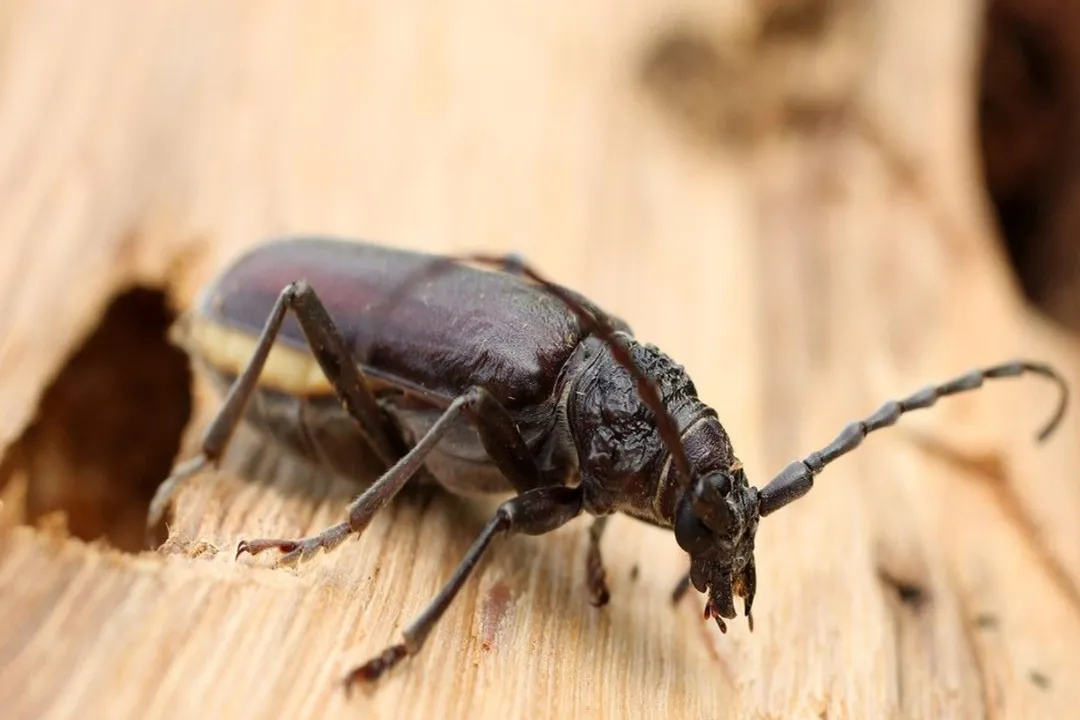
The size of the Old House Borer (Hylotrupes bajulus) is a frequent concern for homeowners investigating potential wood-destroying insect infestations, primarily because this species is capable of causing significant structural damage over time. Determining how large these pests grow—both as adults and as destructive larvae—is key to identifying an active infestation and differentiating them from smaller wood borers.
# Adult Beetle Size
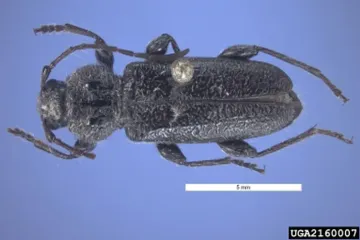
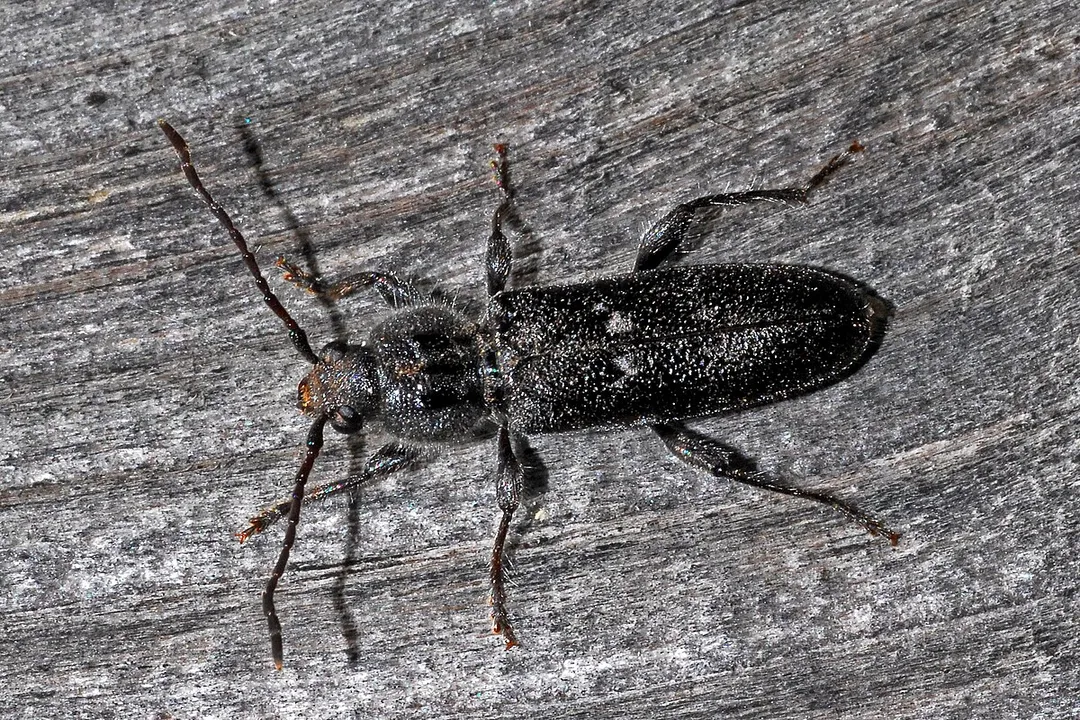
When observing the adult stage of the Old House Borer, homeowners are looking at a fairly substantial beetle compared to many common household pests. These beetles generally measure between inch and $1$ inch in body length. Looking at the metric measurements provided across entomological resources, this range translates to approximately $12$ to $25$ millimeters in length. More precisely, some sources narrow the adult length down to between $12$ and $22$ mm. An adult specimen reaching the upper end of this scale, near a full inch, is quite noticeable when crawling on a surface or exiting a piece of wood.
Visually, the adult beetle is typically black or dark brown, often featuring two prominent, pale transverse bands or spots across the thorax, which can help distinguish it from other dark-colored insects. Their overall shape is elongated, and they possess long antennae. Knowing the to $1$-inch range gives an immediate benchmark; if you find a beetle significantly smaller than inch, it is highly likely you are dealing with a different kind of wood pest, such as a powderpost beetle, which rarely exceeds inch in length. This size distinction is an immediate identification clue for anyone examining fallen specimens.
# Larval Dimensions
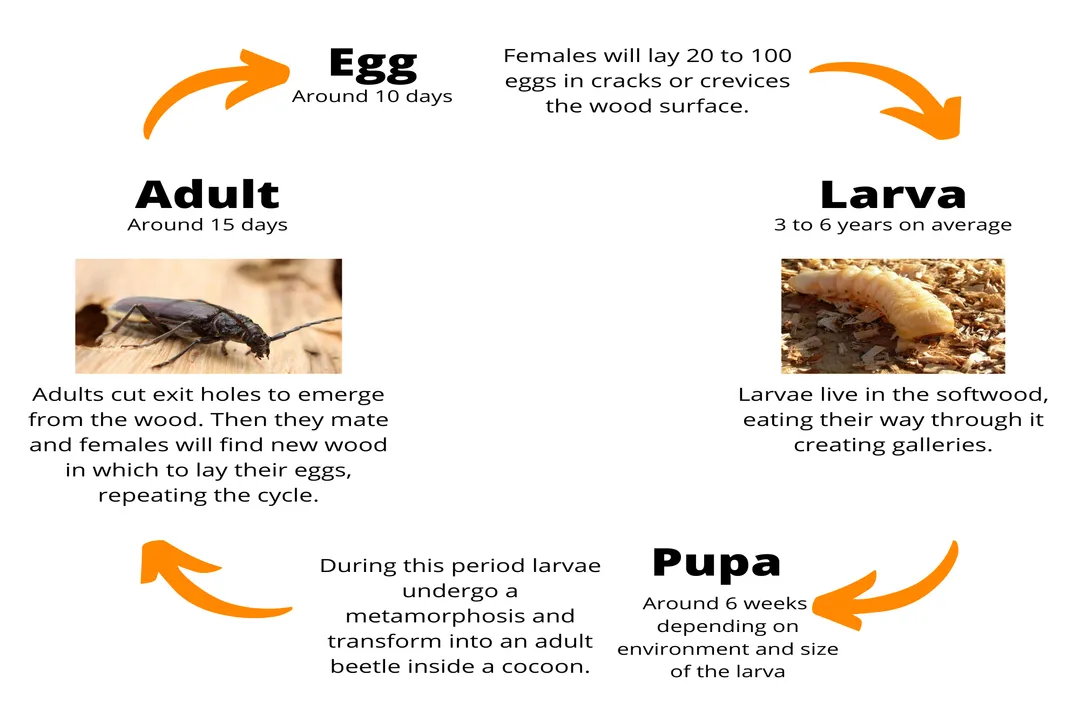
While the adult beetle is the stage responsible for reproduction and flight, the larval stage is the one responsible for the actual destruction within the wood structure. The larvae of the Old House Borer are large and powerful borers, capable of chewing galleries deep into seasoned lumber, especially softwood like pine, spruce, or fir.
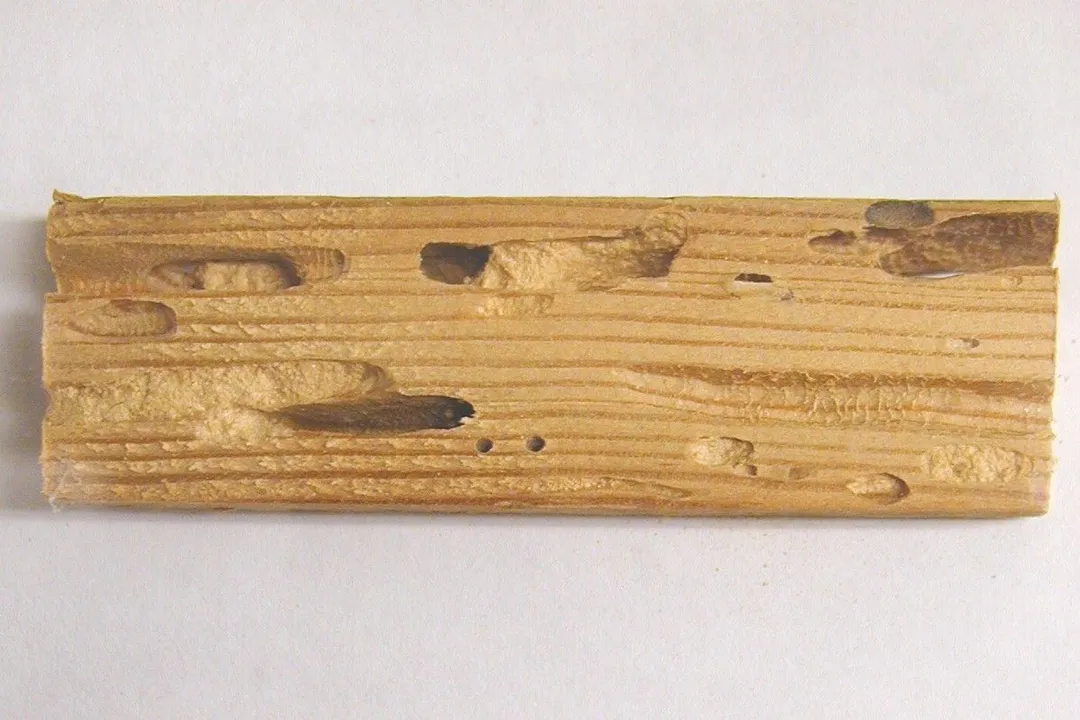
The size attained by the mature larva before it pupates is impressive. These grubs can grow to be nearly as long as the adult beetles, reaching up to $1$ inch in length, or about $25$ mm. They possess thick, creamy white bodies, and their tunneling activity produces very characteristic, coarse, wood-dust-like material called frass, which is often tightly packed into the tunnels or pushed out of exit holes. When homeowners investigate damage, finding large, almost inch-long tunnels filled with this coarse material is a strong indicator that the pest causing the damage is the large larval form of the OHB, rather than the much smaller larvae of powderpost beetles which leave a finer, flour-like dust.
# Size Correlation
It is helpful for an inspector or homeowner to correlate the size of the insect with the size of the evidence it leaves behind. The relatively large size of the larva—up to $1$ inch—means it requires significant space to tunnel. This leads to larger galleries within the wood than might be created by many other wood-boring pests. Furthermore, the adult exit holes, which are typically oval or round and measure between and of an inch in diameter, must accommodate the full to $1$-inch body of the emerging adult. If you find exit holes noticeably smaller than inch, the borer responsible is almost certainly not the Old House Borer.
When considering the life cycle, it is important to remember that the larval stage can last for several years, sometimes $2$ to $10$ years depending on wood moisture content, temperature, and species of wood. During this extensive feeding period, the larva increases dramatically in size from hatching to its final $1$-inch stage, meaning the extent of internal damage is cumulative over a long period, even if the adult beetles themselves are only present for a short time each summer. This extended growth phase explains why older homes built with unseasoned lumber are particularly susceptible to this pest.
# Identification Aids
For practical identification in the field, it can be useful to have a mental image of the adult beetle's scale. At to $1$ inch long, the OHB is generally larger than most common beetles found around the home, excluding large ground beetles or click beetles, which look structurally different. A quick comparison point: many standard metal paperclips are about $1.25$ inches long. An adult OHB is therefore slightly shorter than a paperclip laid end-to-end, but significantly thicker and bulkier. If a specimen is found that measures just over $20$ mm, you are almost certainly looking at an adult OHB, as this measurement sits squarely in the known size range for the species.
A crucial distinction from a homeowner's perspective is knowing what not to confuse it with. Powderpost beetles, for example, are tiny by comparison, usually maxing out around inch, and their exit holes are minuscule, often less than of an inch. If the evidence points to holes the size of a pencil tip or smaller, the $1$-inch borer is unlikely to be the culprit. The size difference between the -inch powderpost beetle and the $1$-inch OHB larva means the associated galleries and frass deposits are vastly different in texture and volume, directly influencing the structural risk posed by each infestation.
# Pest Comparison Table
To further clarify size differences, a quick comparison between the Old House Borer and a common, smaller wood pest proves illuminating regarding potential damage assessment:
| Pest | Adult Length (Approximate) | Larval Length (Maximum) | Frass Texture |
|---|---|---|---|
| Old House Borer (H. bajulus) | to $1$ inch ($12-25$ mm) | Up to $1$ inch ($25$ mm) | Coarse, wood-like powder |
| Powderpost Beetle (General) | to inch ($3-6$ mm) | Much smaller, tunnel size reflects adult | Fine, flour-like powder |
This table highlights that the size difference is not trivial; the OHB adult is up to four times longer than a powderpost beetle, and its larvae create much larger voids within the wood structure during their extended feeding period. Understanding that the larva can attain a full inch in size before transformation underscores why prompt identification based on size clues is so important when assessing wood integrity in older structures.
Related Questions
#Citations
Old House Borer - UK Entomology
The Truth About Old House Borers - Aiken Pest Control
Hylotrupes - Wikipedia
Old House Borer - Veseris
Old House Borer - Urban and Structural Entomology Program at ...
Old House Borers - Wood destroying organisms - MABI USA
Old House Borers vs. Powderpost Beetles: How to Identify
Old House Borer - Hylotrupes bajulus - NatureSpot