Do Catahoulas have a wolf in them?
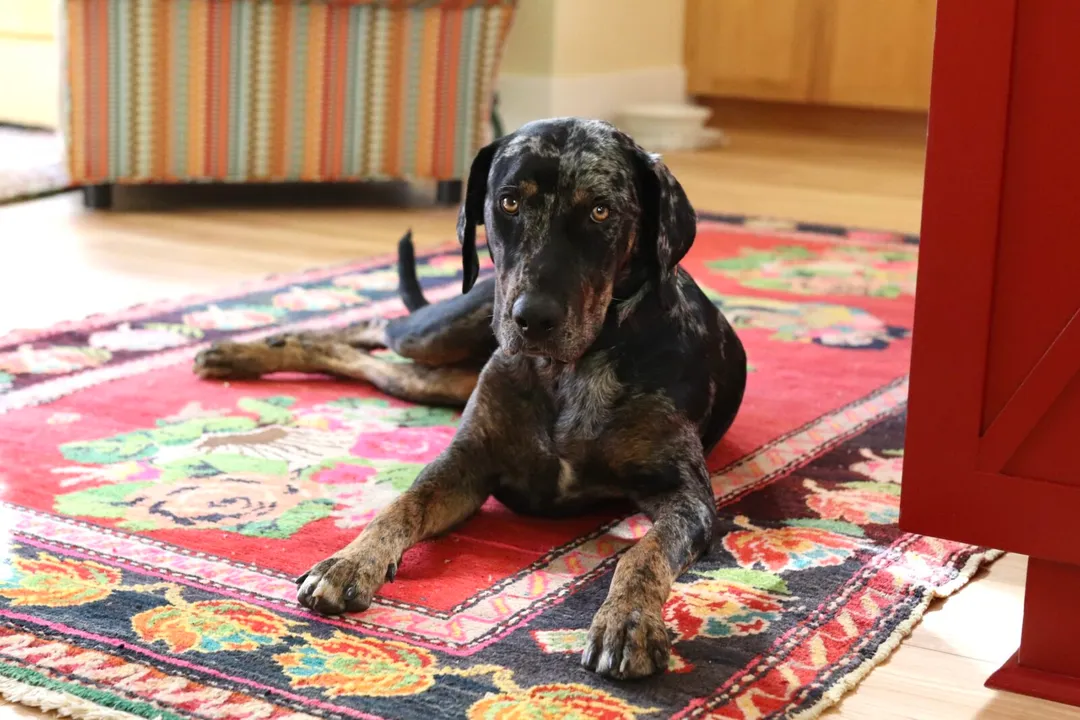
The Catahoula Leopard Dog carries a distinct mystique rooted deeply in the swamps and pine forests of Louisiana, making its precise genetic makeup a frequent topic of fascination for admirers and owners alike. When people look at the breed’s striking eyes, mottled coat, or powerful build, the question of whether there is a wild streak—specifically, wolf ancestry—often arises. This curiosity isn't unfounded; the breed’s very nature is untamed, built for hard work in challenging environments, which suggests a history far removed from pampered kennel dogs.
# Louisiana Roots
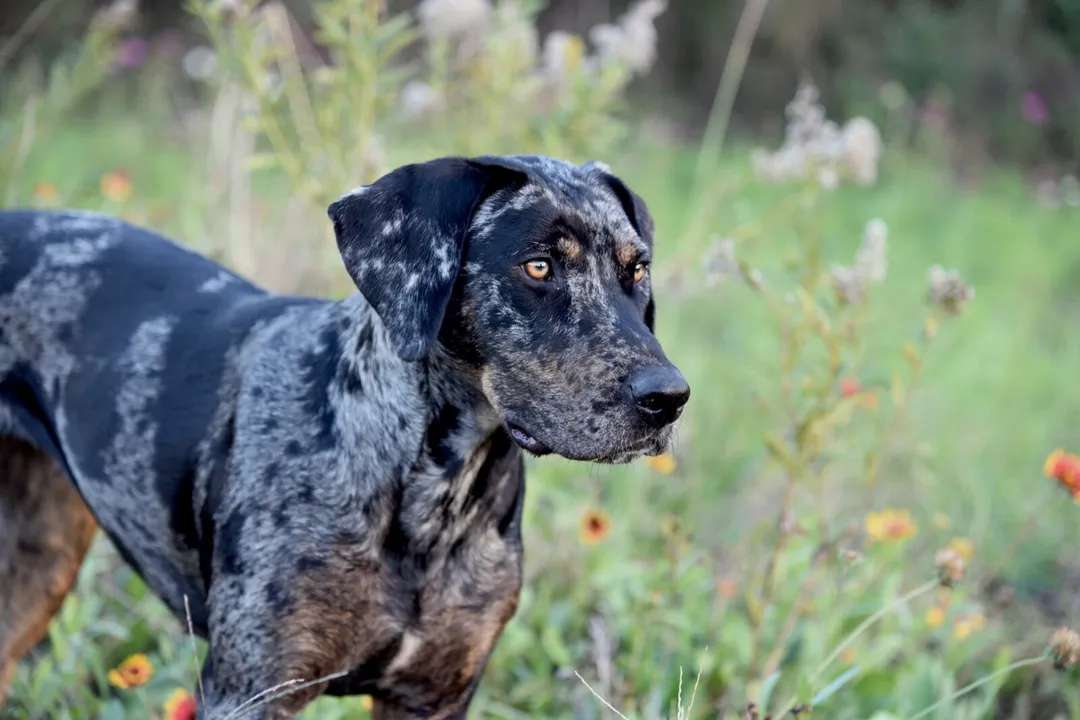
The development of the Catahoula Leopard Dog is intrinsically tied to the early history of the Gulf South, particularly the region surrounding present-day Louisiana. They were bred by European settlers who needed a versatile, rugged dog capable of handling the difficult task of herding semi-wild hogs and cattle in the dense, often wet terrain of the area. Unlike many breeds developed through formalized kennel clubs, the Catahoula evolved out of necessity, with breeders selecting primarily for function and tenacity rather than adherence to a strict visual standard in the earliest days. This pragmatic approach to breeding often means the historical documentation is less about written pedigree and more about working results over generations.
# Ancestral Mix

The generally accepted history points to a complex combination of breeds brought to the Americas by the early European colonists. Spanish dogs are often cited as a major foundational influence, likely arriving with the explorers and settlers centuries ago. These dogs were mingled with working breeds from Europe, specifically mastiffs and greyhounds, which would contribute to the Catahoula's strength, build, and speed.
Some accounts suggest that the dogs owned by the local Native American tribes, such as the Catahoula Indians, were also integrated into the gene pool as settlers began working in close proximity with the local populace. While Native American dog lineages in North America can sometimes trace back to ancient populations or even interbreeding with wild canids over millennia, the direct historical documentation for the Catahoula focuses heavily on the European utility dogs mixed with these local canines. It is this blending of European working dogs with the established dogs of the region that forms the backbone of the breed’s recognized heritage.
The established breed standard itself focuses on utility, intelligence, and specific physical traits like the unique coat pattern, often called "leopard," but it does not name Canis lupus as an official ancestor.
# Visual Confusion

The visual appeal of the Catahoula certainly fuels the speculation regarding lupine blood. Their intense, often glass or mismatched eyes (heterochromia), combined with a lean, muscular physique and the striking merle coat coloration, can give them an undeniably wild appearance. Anecdotally, owners often remark on how their dog strongly resembles a wolf or a mix involving breeds like the Siberian Husky, leading many to believe a wolf cross must have occurred at some point in their development. This appearance often causes confusion, especially since the common terms for coat color, such as "merle," are shared across multiple breeds, including those with suspected distant wolf heritage.
A common point of confusion arises when owners look at a dog that exhibits physical traits one might associate with wild canids—perhaps a more angular head or a specific gaze—and immediately attribute it to a direct wolf crossing. However, many of the physical characteristics admired in the Catahoula, such as endurance and keen eyesight, are simply the result of intense selection for demanding hunting and herding tasks over hundreds of years, traits that are also present in ancient wild canids, but not exclusive to them. Think of it this way: selecting for superior tracking ability in tough cover will result in a dog visually distinct from a sedentary lapdog, and that distinction might mimic the physique of a predator, even without that predator in the ancestral line.
# Genetic Testing
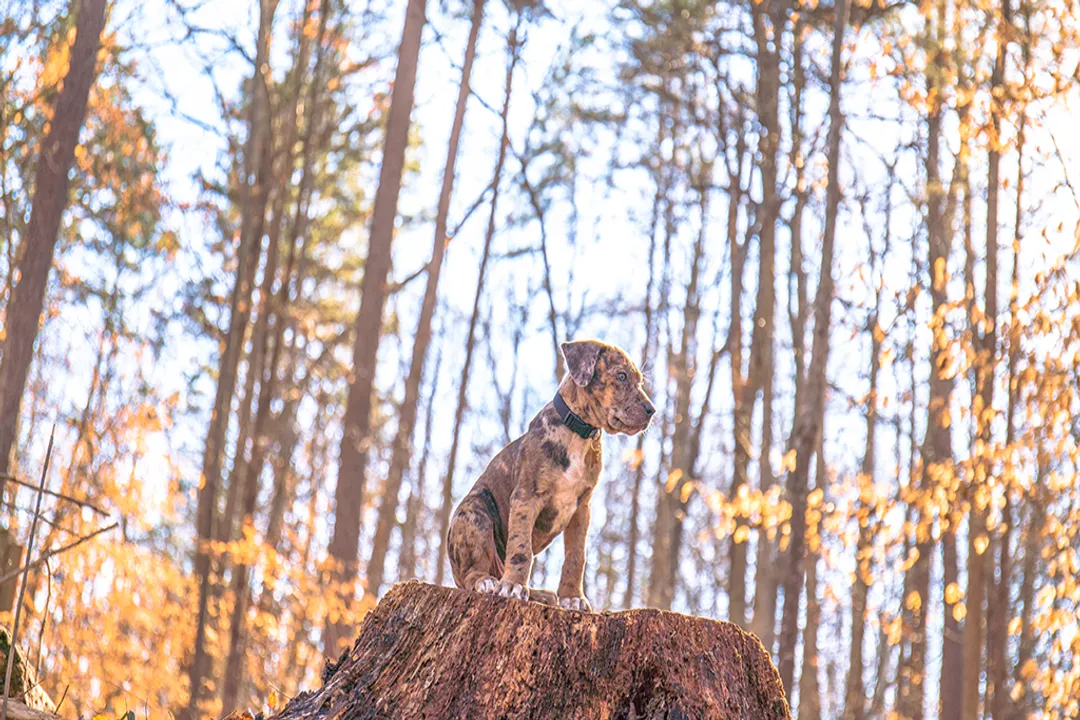
Modern DNA testing offers a window into the complex genetic makeup of mixed breeds, and the Catahoula Leopard Dog, which developed largely outside of formal registry control, often shows evidence of admixture with other recognized breeds. Wisdom Panel testing has frequently revealed components of breeds like the German Shepherd Dog or the Siberian Husky in Catahoula mixes. It is the presence of breeds like the Husky—which are visually similar to wolves and share some very distant ancient ancestry with them—that might provide a partial explanation for the persistent "wolf in them" narrative, even if the direct wolf contribution is absent or too diluted to register clearly against the modern breed population.
If you receive a DNA report showing a percentage of Husky or even a small percentage of "unknown" or "ancient breed" lineage, it is crucial to contextualize that finding against the established breed history. The Catahoula’s foundation relied on utility, meaning that when settlers needed a dog that could track boar across rough terrain, they bred the best available dogs, regardless of pure registration papers. If a dog with wolf-like features (perhaps from a stray population) happened to excel at the job, it would have been bred into the local lines, but this is an inferred possibility rather than a documented historical fact from the primary sources detailing the breed's origin. The true story is likely a fascinating, unrecorded blending of utility dogs from multiple sources in colonial Louisiana.
Related Questions
#Citations
Breed Standards : Louisiana Catahoula Leopard Dog
Anybody recognize their beloved 'houla in a Red Wolf? ...
Catahoula Leopard
The Catahoula Leopard Dog
Louisiana Catahoula Leopard Dog
Catahoula Leopard Dog Facts
Catahoula Leopard Dog
Catahoulas: A Hardworking Dog with a Curious Origin
Catahoula History, A Factual Account Of the Louisiana ...
An Ode to the Catahoula Leopard Dog, Louisiana's Swamp ...