Can a mouse and a rat crossbreed?
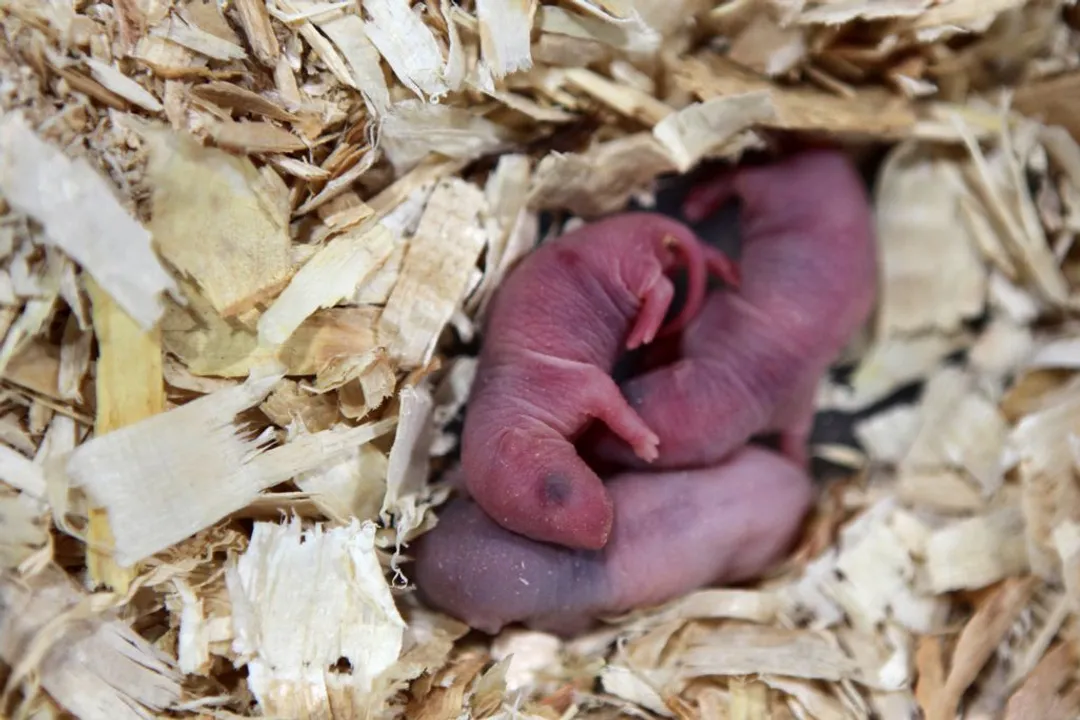
The confusion surrounding the possibility of a mouse and a rat producing offspring is common, given that both are small, prolific rodents often found in similar environments, yet the short answer remains a definitive no when discussing natural, reproductive breeding. [2][8] While they share the broad classification of being part of the Muridae family, mice and rats are separated by significant biological distinctions that prevent them from successfully crossbreeding to produce viable, fertile young. [2][8] They belong to different genera—mice typically fall under Mus, while common rats are generally Rattus—and this separation reflects deep evolutionary divergence. [2]
# Biological Barriers
The primary reason reproductive failure occurs between a mouse and a rat lies in fundamental genetic incompatibility. When two different species attempt to mate, various physiological and chromosomal barriers usually stop fertilization or prevent the resulting embryo from developing past the earliest stages. [2][8] Even if the physical act of mating were to occur, the resulting gametes—sperm and egg—are not chemically or structurally recognized by the other species' reproductive systems, acting as a powerful pre-zygotic barrier. [2]
In the context of mammalian genetics, species that are closely related, like different types of domestic dogs or specific species within the deer family, might occasionally produce infertile or weak offspring. However, the gap between a Mus species and a Rattus species is much wider, making hybrid survival virtually impossible under natural circumstances. [8]
# Genetic Counts
The internal machinery of reproduction relies on precise genetic alignment, particularly the number of chromosomes contained within the cells of each species. [3] A significant roadblock to creating a natural hybrid stems from this chromosomal mismatch. [2] For instance, the common house mouse (Mus musculus) typically possesses 40 chromosomes (20 pairs), while the Norway rat (Rattus norvegicus) has 42 chromosomes (21 pairs). [2]
If we consider common species like the Norway Rat () and the House Mouse (), this discrepancy in chromosome number, structure, and content makes the proper pairing and segregation of genetic material during meiosis—the process that creates sperm and eggs—exceedingly difficult, if not impossible, for a viable zygote to form and develop into an offspring. [2][3] The resultant cells would have an irregular, non-viable set of chromosomes, leading to early embryonic death. [8]
# Lab Chimeras
The main source of public confusion regarding mouse-rat hybrids often stems from sophisticated scientific research, which creates animals that contain cells from both species, but this is entirely different from sexual reproduction. [3][9] Scientists have successfully created chimeras in laboratory settings, often for the purpose of studying developmental biology or disease progression. [3]
In these advanced procedures, researchers might inject mouse stem cells into a developing rat embryo, or vice versa. [9] The resulting animal is a mosaic, an individual whose body is composed of cells originating from two different species. [3][9] For example, researchers have specifically bred mice whose brains contained a significant number of cells derived from rat tissue, leading to hybrid brains for research purposes. [9]
It is vital to understand this distinction: a chimera is an engineered collection of tissues, not a true genetic hybrid resulting from the union of a mouse sperm and a rat egg. The body parts, including organs, may be all mouse or all rat, or a mix, depending on where the injected cells settled and proliferated. [3] This process requires highly controlled laboratory conditions and advanced embryological manipulation, bearing no resemblance to how mice and rats might naturally interact in a field or home setting. [9]
# Cohabitation and Care
From a practical standpoint, anyone keeping rodents understands that mice and rats are distinct species requiring different care, which further underscores their biological separation. [10] A mouse is significantly smaller than even a young rat, and their behavioral patterns are different enough that housing them together can be problematic. [6][10] While keeping them in the same room might be manageable, their direct interaction needs careful supervision due to size and dominance differences. [6]
While you won't find a "rat-mouse" at the pet store, understanding the differences in their dietary needs and space requirements is key for humane animal keeping, as even small rats can intimidate or injure mice if housed improperly. [6][10] Rats generally require more space and different nutritional densities than mice, emphasizing that they occupy distinct ecological and husbandry niches. [10] A cage setup suitable for a thriving colony of Rattus would likely lead to stress or injury for a colony of Mus, reinforcing that their biological requirements have diverged over evolutionary time. [5]
The reality is that the animal kingdom maintains strict, multi-layered barriers—behavioral, physiological, and genetic—to keep species distinct. [2][8] The natural conclusion reached by biologists and geneticists is that while they may look superficially similar and share a family tree, the mouse and the rat remain reproductively separate entities. [2] Any report of a "crossbreed" is almost certainly a misidentification of a purebred animal or a misunderstanding of complex laboratory chimeric research. [3][9]
#Videos
Rat/Mouse Brain Hybrid Created: New CRISPR Method for ...
Related Questions
#Citations
Can mice and rats breed? If so what is the mix called?
Are rat-mouse hybrids possible?
Breeding and Housing Laboratory Rats and Mice in the Same ...
Murine hybrids - True Mice and Rats - Mammalian Hybrids
Fostering Rats onto Mice/Rat x Mouse = Rouse or Mat???
Can you have mice and rats at the same time?
Rat/Mouse Brain Hybrid Created: New CRISPR Method for ...
Hybrid Rodents & Lagomorphs
Researchers Breed Mice With Hybrid Brains Containing ...
Breeding Rats and Mice (Part 1): Setting up for Success