Are Australian Shepherds alpha dogs?

The strong-willed nature of the Australian Shepherd often leads owners down a rabbit hole of questioning their dog’s perceived authority in the household, frequently framed by the outdated concept of the "alpha dog". [1][2] When an Aussie exhibits behaviors like challenging commands, trying to control movement, or generally acting bossy, it’s easy for a novice owner to conclude they have a dominant or alpha dog that needs to be "put in its place". [1][2] However, understanding this breed requires looking past simplistic labels and delving into their deep-seated genetic programming as an intelligent herding animal. [5][6]
# Herding Roots
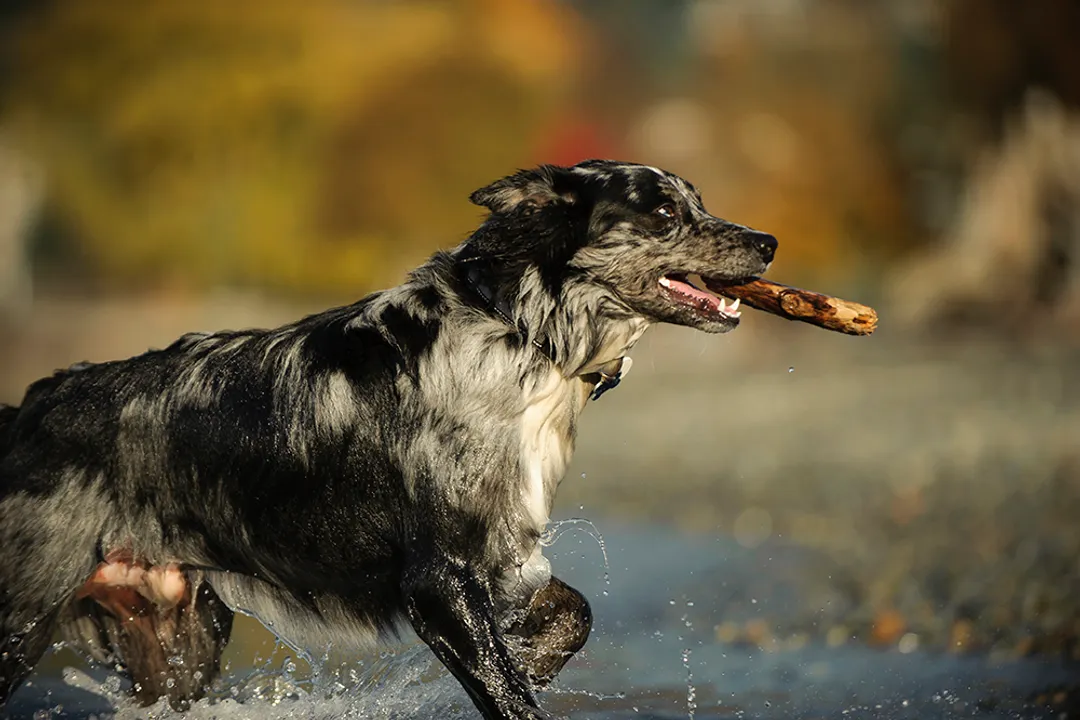
The behaviors that often trigger the "alpha" concern are directly tied to the Australian Shepherd’s history and primary function. Bred in the American West for herding livestock, these dogs were developed to work autonomously and manage large animals—a task that demands independent thinking, high intelligence, and a strong desire to control movement and pace. [5][6] Their ancestors were selected not for blind obedience, but for the ability to assess a situation (like a scattered flock) and implement a solution without constant human input. [5]
This inherent need to manage the environment translates into domestic life as a desire to dictate the rules of engagement. [5] An Aussie might try to "herd" family members by nipping at heels or maneuvering people from one room to another; this is instinctual control, not necessarily a power struggle against a human leader. [6] A dog that exhibits this level of attentiveness and control over its surroundings is simply being an Aussie, utilizing the skills it was bred to possess. [3]
# Decoding Dominance
The term "alpha dog" itself stems from outdated wolf pack studies that have since been largely discredited when applied to domestic dogs and their relationship with humans. [1] Modern canine behaviorists generally agree that dogs do not view the human family as a structured wolf pack hierarchy, making the constant attempt to prove you are the "alpha" counterproductive and often damaging to the bond. [1]
When an Aussie challenges a command, it is less likely they are consciously trying to overthrow the human leadership and more likely they are:
- Bored or under-stimulated. [3]
- Confused by inconsistent training signals. [6]
- Acting on an ingrained herding impulse that needs redirection. [5]
For example, if an Aussie pushes past you through a doorway, an owner steeped in "alpha" theory might see this as asserting dominance. In reality, the dog might just be eager to get where it wants to go, a manifestation of their forward-driving, action-oriented nature. [5] The issue isn't aggression toward a leader, but a lack of learned manners and boundary setting, which is the owner's responsibility to teach. [6] One common scenario reported by owners is a puppy that seems to think it runs the house, often stemming from giving the young dog too much freedom too soon without clear boundaries established. [6]

# Energy And Will
Australian Shepherds are renowned for their high intelligence and energy levels. [3][5] They are not content to simply exist; they require a job to do, whether that job is herding sheep, mastering advanced obedience, or learning complex tricks. [5] A bored Aussie will create its own job, which often involves testing limits or "managing" the household's activities, activities that mimic dominance but are rooted in mental stagnation. [3]
This intelligence means they are highly capable of learning but also highly capable of learning the wrong things if guidance is weak or inconsistent. [5][6] They thrive on routine and predictability. If an owner is inconsistent—sometimes allowing jumping, sometimes punishing it—the dog will default to the behavior that has worked most often, which can look like defiance or an attempt to assume command. [6] They need a handler who is confident, fair, and consistent, providing structure rather than confrontation. [5]
It is vital to recognize that an Aussie's need for a task means that simply providing physical exercise is often not enough. Their minds need engagement too. A failure to provide sufficient mental work will result in behavioral issues that owners often misinterpret as alpha behavior. For instance, an Aussie that constantly nudges or paws at you for attention isn't necessarily trying to dominate your space; it's trying to engage you in an activity because its internal need for purpose is unmet. [3]
# Loyalty Dynamics
Loyalty is a defining trait of the Australian Shepherd. [4] They often form incredibly strong, deep bonds with their primary caregivers. [4] This powerful attachment can manifest in ways that might seem controlling to an outside observer. They are not typically described as a breed that showers affection on everyone they meet; instead, they tend to be reserved with strangers. [3][4]
This intense loyalty can lead to protectiveness over their people or home territory, which is a function of guarding instinct rather than a desire to be the pack leader of the human family. [5] If a dog is overly possessive of its owner, demanding attention only from them and acting protective when others approach, it's an expression of attachment and guarding, not necessarily a declaration of superiority over the owner. [4] Managing this requires teaching appropriate greetings and reinforcing that the owner manages all interactions with outsiders, which is leadership, not dominance warfare. [6]
To put this into perspective, consider how a high-drive herding dog approaches life versus, say, a breed known for its laid-back sociability.
| Trait Category | Perceived "Alpha" Behavior | Underlying Aussie Need |
|---|---|---|
| Control | Inserting self between owner and guest | Strong desire to manage "flock" proximity [5] |
| Demand | Persistent pawing/barking for play | Extreme need for mental engagement/work [3] |
| Defiance | Ignoring a 'Stay' command | Independent problem-solving capability [5] |

# Structured Partnership
Effective partnership with an Australian Shepherd hinges on becoming the source of all good things, which builds trust and respect, rather than relying on confrontation. [6] If you are perceived as the provider of food, safety, exciting activities, and clear direction, the dog will naturally look to you for cues, rendering the "alpha" struggle irrelevant.
A key element in preventing perceived dominance issues, especially during puppyhood, involves structured introductions to novelty. [6] Because Aussies are intelligent and watch everything, early socialization must be positive and controlled. If a puppy is allowed to rush headlong into every new person or situation, they learn that they control the pace of engagement. A superior approach involves setting up brief, positive exposures where the dog must wait calmly for permission to greet or move forward. [6]
This concept of structured interaction is something many owners new to herding breeds miss. They might assume that since the dog is smart, it will naturally figure out how to behave in a busy world. In reality, their inherent drive to take charge requires an owner to proactively step into that leadership vacuum with calm management. For instance, implementing a "no free handouts" rule—meaning the dog must perform a simple task like "Sit" before receiving its food bowl, a favorite toy, or access out the door—teaches that cooperation leads to reward, which is a much more productive lesson than wrestling for a toy to prove strength. [6] This reinforces the owner as the manager of resources, a leadership role the dog respects, rather than an adversary it must fight. [1]
Their ability to think independently, while admirable, means they often excel in dog sports like agility or herding trials where they must make split-second decisions based on a handler's subtle cues. [5] Recognizing this capacity for complex partnership allows an owner to channel that need for control into productive outlets. If you feel your Aussie is trying to be the boss, try teaching them a complicated new trick that requires intense focus on you for ten minutes; often, the energy that fuels the bossiness can be successfully redirected into a shared mental challenge. [3]
In summary, while an Australian Shepherd possesses a formidable working drive and intelligence that can present as willful or challenging, labeling them as inherently "alpha dogs" is an oversimplification of their genetic blueprint. [5] They are dogs bred to think and manage. Their success as companions depends entirely on whether the human partner is willing to provide the equally strong, consistent, and mentally engaging leadership that their heritage demands. [6]
Related Questions
#Citations
HELP! My Aussie seems to think he is the Alpha, how do I submit him?
Aussie Shepherd Herding Behavior and Training - Facebook
Getting Know Australian Shepherd: Tips for Pet Parents
How loyal is an Australian shepherd? - Quora
Australian Shepherd DNA Traits & Breed Insights | AlphaDog DNA
Five Facts You Need to Know Before Choosing an Australian ...
Australian Shepherd - Wikipedia
Australian Shepherd - Dog Breeds - American Kennel Club