Where is the golden tanager native to?
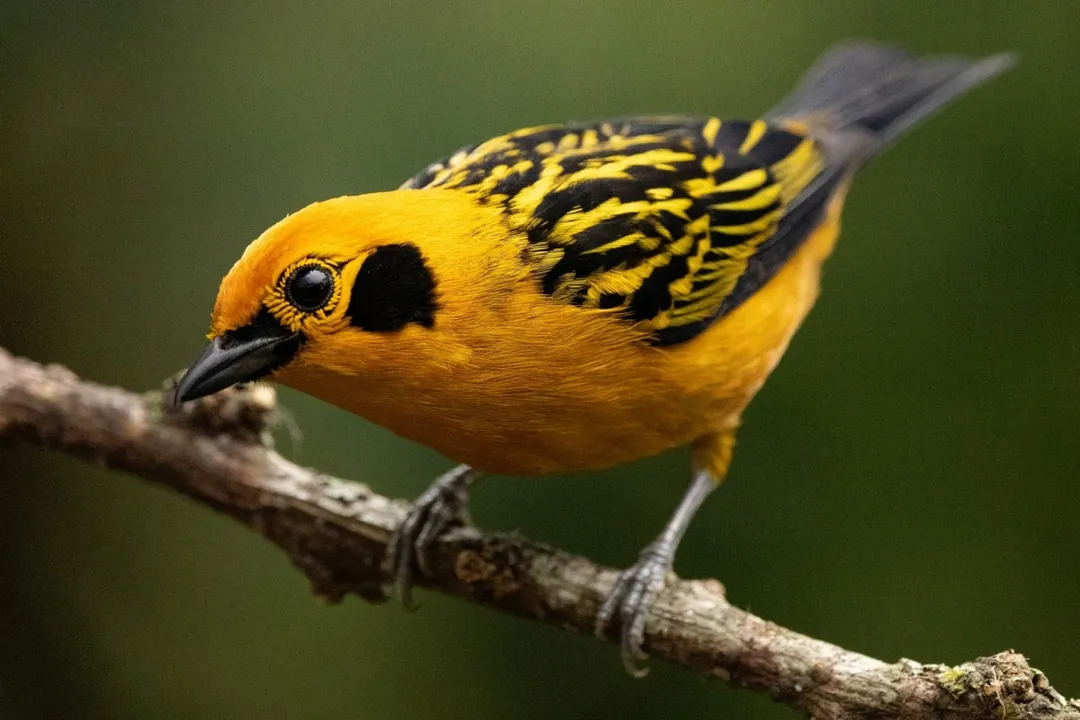
The vibrant Golden Tanager, scientifically known as Tangara arthus, commands attention across the western shoulder of South America due to its striking, brilliant golden-yellow plumage contrasted sharply with black markings. [2] When discussing where this species makes its home, we look deep into the complex topography of the Andes mountains, which dictates its entire geographic existence. This bird is not found globally; rather, its distribution is strictly confined to the Neotropical region, specifically inhabiting highland forests within a major mountain system.
# South American Corridor
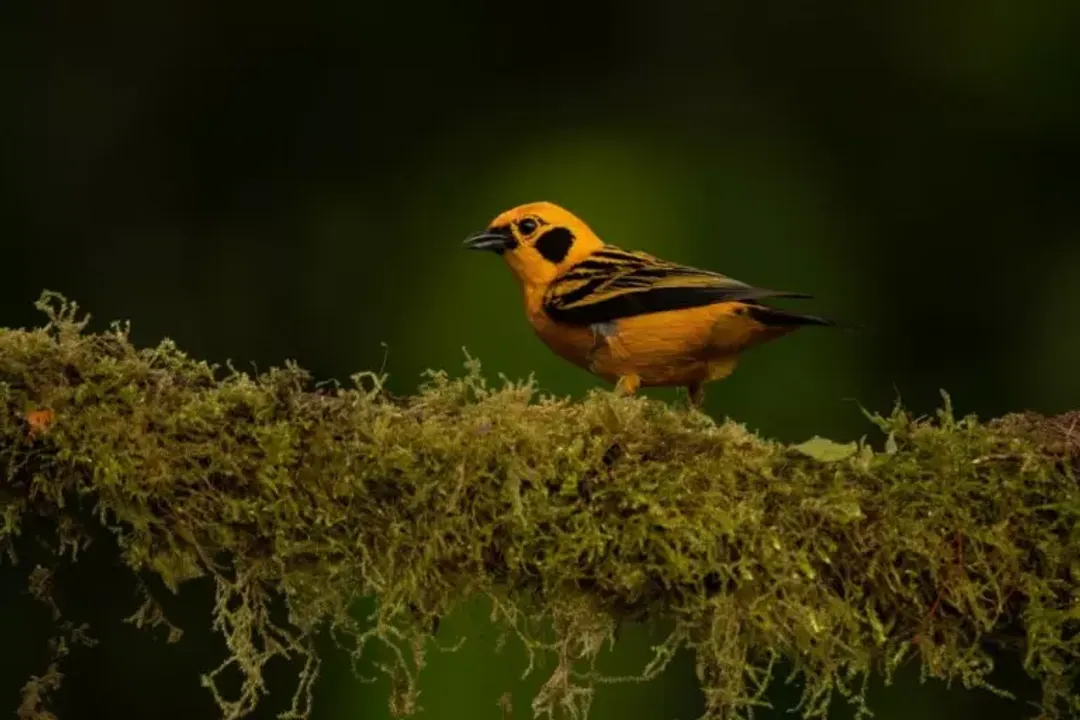
The native range of the Golden Tanager stretches across a significant portion of the northern and central Andes, beginning in the north and sweeping southward through several nations. [2] Specifically, this species is found from Venezuela all the way down to Bolivia. [2] This span involves five countries crucial to Neotropical ornithology: Venezuela, Colombia, Ecuador, Peru, and Bolivia.
It is essential to note that its distribution isn't confined just to the main Andean chain. The Golden Tanager also occupies the Venezuelan Coastal Range, demonstrating that while the Andes are its primary stronghold, it can utilize comparable, high-elevation ecosystems adjacent to the coast in the northernmost part of its territory. This bird is generally described as widespread and often common within these highland forest environments.
A fascinating aspect of its distribution is its presence across different faces of the topography. The Golden Tanager is known to inhabit both the eastern and western slopes of the Andes. [2] This bi-slope presence suggests a degree of adaptability to differing moisture regimes or microclimates found on either side of the Andean crest, which often presents dramatically different ecological zones over short horizontal distances. [2]
To put this geographic spread into context, consider the difference between a widely distributed species like T. arthus and one with a highly restricted area. For instance, the similar-sounding Golden-backed Mountain Tanager (Buthraupis aureodorsalis) is endemic solely to the eastern slope of the Andes in north-central Peru, covering a very limited stretch from La Libertad to Huánuco. [1] The Golden Tanager, by contrast, enjoys a distribution spanning thousands of kilometers of mountain habitat, which contributes to its general conservation status of Least Concern, a stark difference from the Endangered status of the more geographically constrained species. [1] This difference in range size is arguably the most significant factor separating the conservation outlook of these two vibrantly colored tanagers.
# Elevation Preference
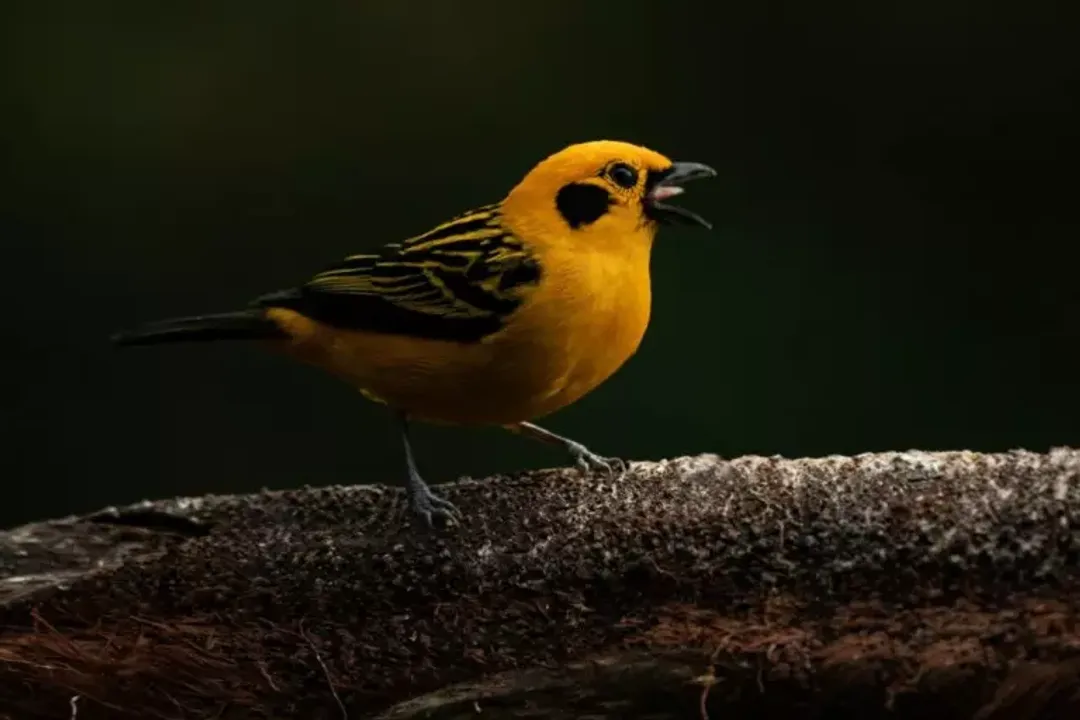
The Golden Tanager is not a creature of the lowlands or the highest páramos; instead, it occupies a distinct band of elevation within the tropical and subtropical zones. [2] It is predominantly a montane forest resident.
The documented altitude range for Tangara arthus is generally cited as being between 700 and 2,400 meters above sea level. However, this band is not uniformly occupied. The species exhibits a clear preference for a slightly narrower, more productive elevation bracket where it is considered most common. This sweet spot for observation often falls between 1,000 and 1,500 meters, or roughly 3,300 to 4,900 feet. Another source corroborates this, noting it is one of the most common tanagers in mixed flocks from around 900 to 2,200 meters. [2]
This vertical stratification is crucial for understanding its ecology. This elevation range typically corresponds to the cloud forest or upper subtropical/lower temperate zones—humid environments rich in epiphyte-laden trees. [2] They thrive in:
If you are planning an expedition specifically to seek out this species across its vast territory, knowing this elevation preference can save considerable time. Instead of spending days surveying the humid, hot valleys below 700m or battling the harsh conditions above 2,500m, focusing your search time on accessing roads or trails that cut across the 1,000 to 1,800-meter elevation band along the Andes in Colombia, Ecuador, or Peru will maximize your chances of encountering the characteristic golden flash of a foraging flock. [2]
# Geographic Nuances
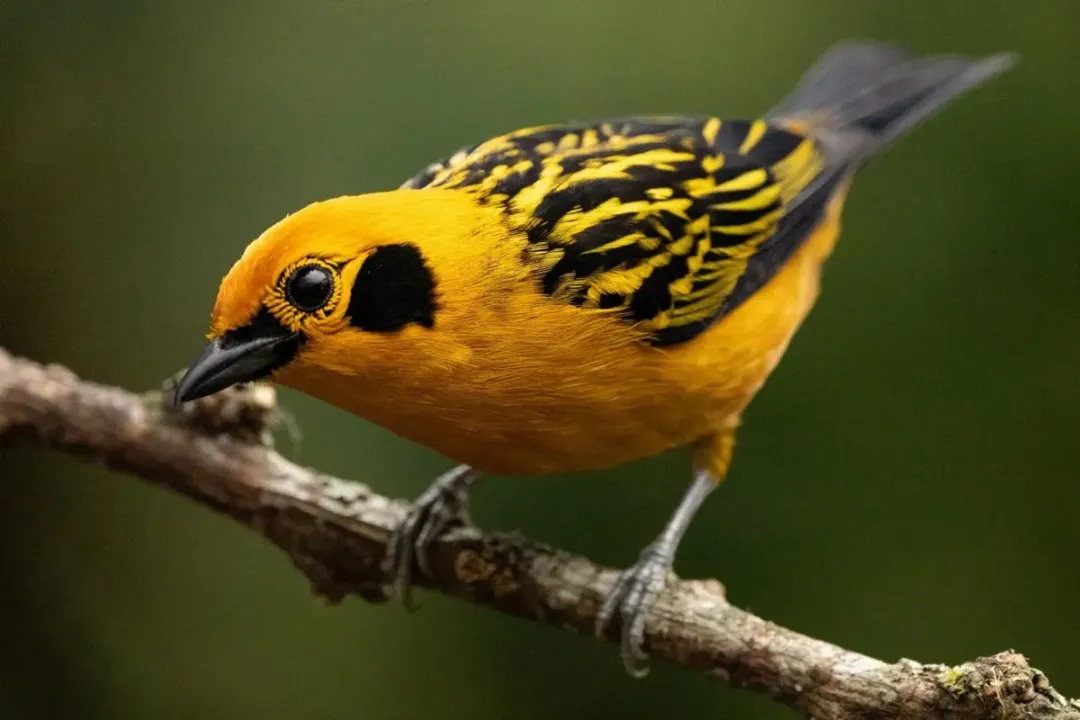
While the overall range description is consistent—Venezuela to Bolivia along the Andes—the bird itself shows variation across this distance, which is reflected in the existence of multiple subspecies. [2] These subspecies account for the observable differences in plumage noted by observers. For instance, some of the northernmost populations may exhibit a chestnut breast band and flanks, setting them apart from other regional forms. [2] This variation underscores a biological reality: even a widespread species is not uniform throughout its range. [2]
The differences in plumage among subspecies can sometimes lead to confusion with other, similarly named birds if one is not careful about location. For example, the Golden-backed Mountain Tanager, found only in Peru, is often referred to in field guides, but its extremely localized distribution contrasts with the broad distribution of Tangara arthus. [1] Understanding the political geography of the range—knowing exactly which country’s mid-elevation eastern slope you are on—becomes important for correctly identifying which subspecies, or even which distinct species, you are observing. [1]
# Species Status
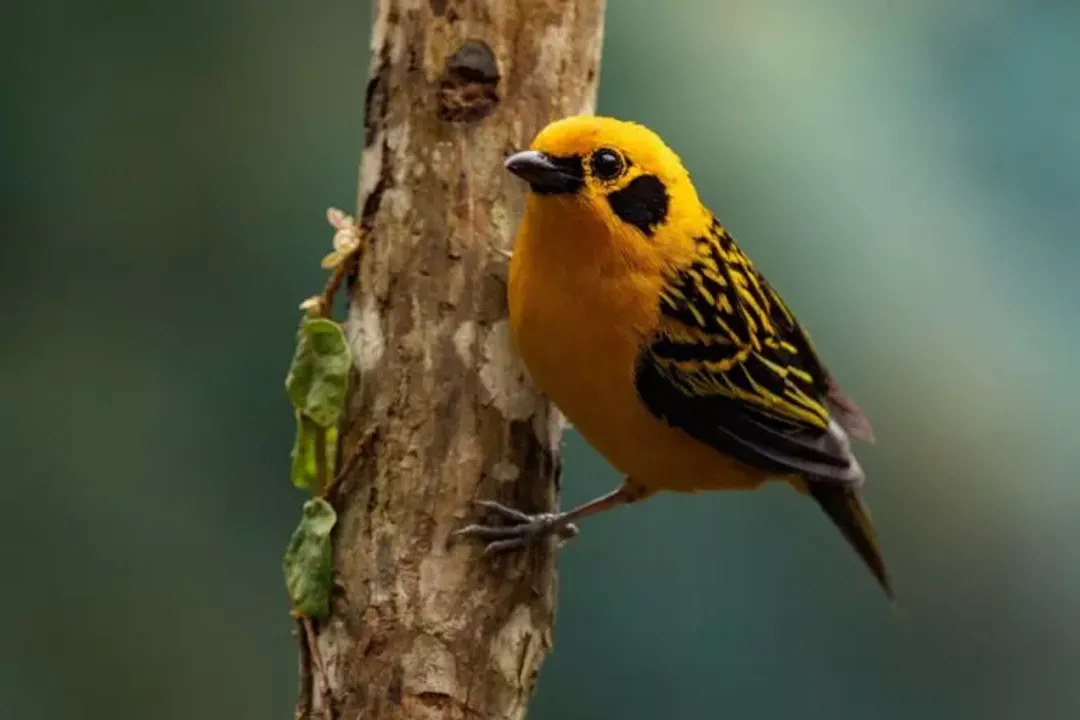
The residency status of the Golden Tanager is generally considered not a migrant; these birds tend to stay in their home ranges all year long. While the general population is doing well enough to merit an IUCN listing of Least Concern due to its large range and relative commonness, the threats that impact its habitat remain relevant. Deforestation and habitat fragmentation, driven by agriculture and expanding human settlements, pose ongoing risks to its specific montane forest home. [2] Protected areas and national parks within its distribution corridor are recognized as essential for maintaining the stability of its populations across the continent. [2]
| Country | Presence Confirmed? | Primary Andean Slope Usage | Notes |
|---|---|---|---|
| Venezuela | Yes | Coastal Range & Andes | Northern limit of range. |
| Colombia | Yes | East and West Slopes | Part of the core distribution. |
| Ecuador | Yes | East and West Slopes | Part of the core distribution. |
| Peru | Yes | East and West Slopes | Part of the core distribution. |
| Bolivia | Yes | Andes | Southern limit of range. |
This broad geographic footprint across five countries, while generally positive for the species' long-term outlook, means that conservation strategies must be coordinated internationally to protect the continuous corridor of suitable habitat that links these isolated mountain populations together. [2] The persistence of the Golden Tanager is tied directly to the health of these specific mid-altitude Andean ecosystems.
Related Questions
#Citations
Tangara arthus (Golden Tanager) - Avibase
Golden tanager - Facts, Diet, Habitat & Pictures on Animalia.bio
Golden Tanager - Wild Expedition
Golden-backed Mountain Tanager - Oiseaux-Birds
Golden tanager - The Dallas World Aquarium