What is the main food source for copperhead?
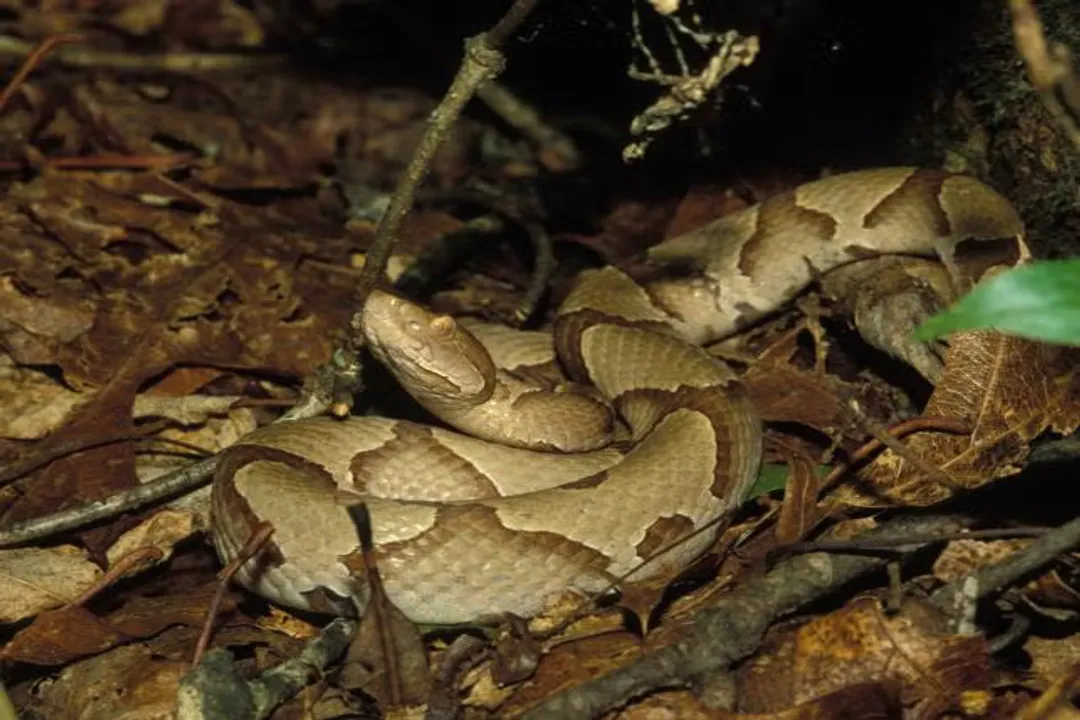
The copperhead snake, often recognized by its hourglass-shaped markings and often abundant presence across its range, maintains a diet centered heavily on readily available, high-energy food sources. While these pit vipers are opportunistic feeders known to consume a variety of creatures, pinpointing their main food source reveals a distinct preference that dictates their hunting strategy and habitat needs [cite: a-z-animals.com/blog/what-do-copperheads-eat-13-common-foods-in-their-diet/]. The most significant component of the adult copperhead's caloric intake comes overwhelmingly from small, warm-blooded animals.
# Mammalian Staples
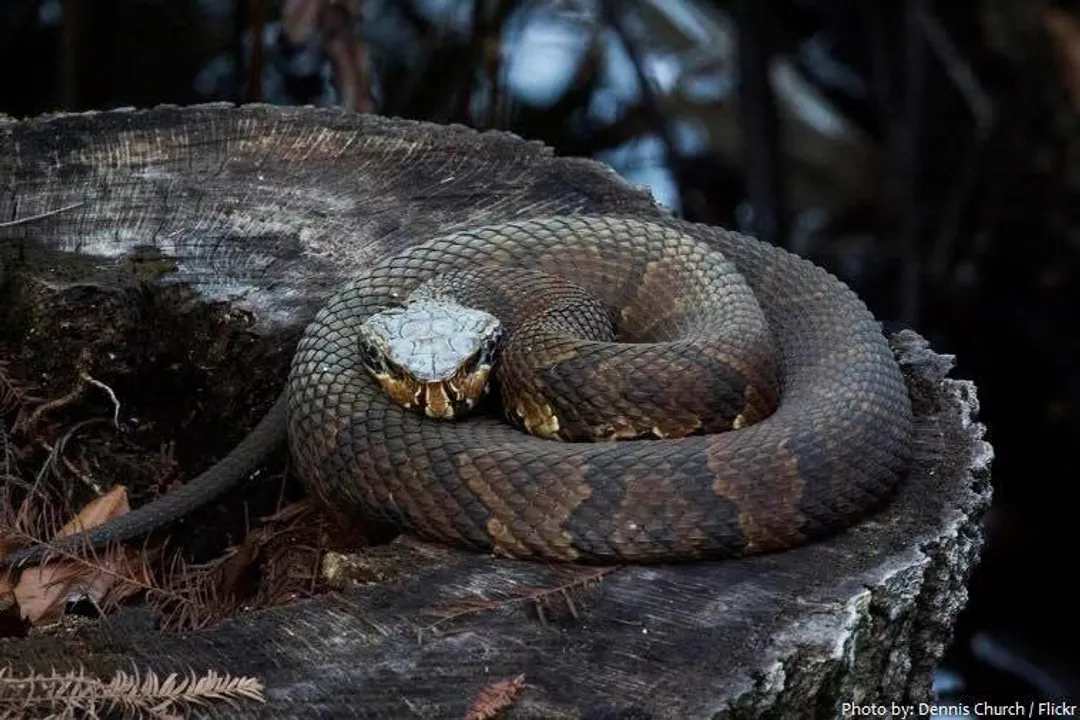
For the mature copperhead, small mammals form the foundation of their sustenance [cite: wildlife.department.com/wildlife/field-guide/reptiles/copperhead][cite: en.wikipedia.org/wiki/Eastern_copperhead]. This group primarily includes rodents such as mice, voles, rats, shrews, and chipmunks [cite: a-z-animals.com/blog/what-do-copperheads-eat-13-common-foods-in-their-diet/][cite: wildlife.department.com/wildlife/field-guide/reptiles/copperhead][cite: en.wikipedia.org/wiki/Eastern_copperhead]. In many regions, mice and voles are the most consistent staple, offering a relatively large, energy-rich meal that justifies the energy expenditure of an ambush predator [cite: nationalzoo.si.edu/animals/northern-copperhead][cite: mdc.mo.gov/discover-nature/field-guide/eastern-copperhead].
When we examine the energy density required to sustain a reptile, targeting endotherms—warm-blooded prey like mammals and birds—provides a superior caloric return compared to cold-blooded meals like frogs or insects. An adult copperhead often sits coiled, waiting for prey to wander within striking distance, a method that heavily favors encountering creatures that are active within their territory, which commonly includes small burrowing mammals [cite: tpwd.texas.gov/huntwild/wild/species/southerncopperhead/]. This preference means that habitats offering good cover near rodent populations, such as woodland edges, rocky areas, and suburban yards where mice thrive, become prime foraging grounds regardless of other available food types.
# Age Dietary Shift
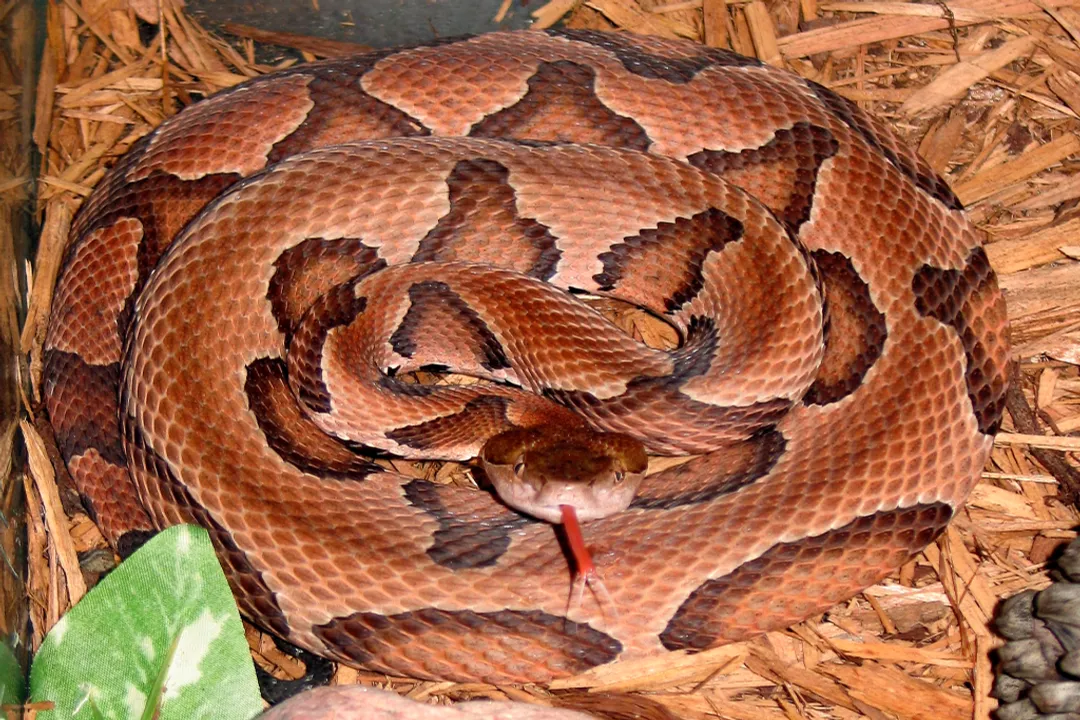
A critical distinction in understanding the copperhead diet lies in separating the needs of the juvenile from those of the adult [cite: en.wikipedia.org/wiki/Eastern_copperhead]. Very young copperheads, often measuring just a few inches long, are physically incapable of successfully subduing larger, often dangerous, prey like adult rodents or even large lizards [cite: nationalzoo.si.edu/animals/northern-copperhead]. Consequently, their initial menu focuses on much smaller fare.
Juvenile copperheads rely heavily on invertebrates, including insects, spiders, and earthworms [cite: mdc.mo.gov/discover-nature/field-guide/eastern-copperhead][cite: en.wikipedia.org/wiki/Eastern_copperhead]. They also consume small frogs and lizards when available [cite: wildlife.department.com/wildlife/field-guide/reptiles/copperhead]. This early diet allows them to gain size and venom potency while minimizing risk. As the snake matures, its hunting success rate and metabolic demand increase, necessitating a transition to a higher-value diet. The successful growth of a juvenile copperhead is directly tied to its ability to transition from an insectivorous diet to one dominated by vertebrates, marking a significant shift in resource utilization tied to body size.

# Varied Supplemental Menu
While small mammals secure their caloric needs, copperheads are not exclusive hunters of rodents. Their diet diversifies based on season, geography, and immediate opportunity, including several other common vertebrates and invertebrates [cite: a-z-animals.com/blog/what-do-copperheads-eat-13-common-foods-in-their-diet/].
# Birds and Amphibians
Birds are a consistent secondary food source, particularly the eggs, nestlings, or fledglings found on the ground or in low-lying nests [cite: wildlife.department.com/wildlife/field-guide/reptiles/copperhead][cite: livescience.com/43641-copperhead-snake.html]. Larger prey, such as adult small birds, may occasionally be taken [cite: en.wikipedia.org/wiki/Eastern_copperhead]. Amphibians, including frogs, are also part of the regular rotation, though perhaps less frequently consumed than mammals [cite: tpwd.texas.gov/huntwild/wild/species/southerncopperhead/]. In environments where rodent density might temporarily drop, these alternative vertebrate prey items become more crucial for maintaining energy levels.
# Reptiles and Insects
Copperheads have been documented eating other reptiles, including small snakes and lizards [cite: a-z-animals.com/blog/what-do-copperheads-eat-13-common-foods-in-their-diet/][cite: livescience.com/43641-copperhead-snake.html]. Furthermore, adults occasionally consume large insects when other food is scarce [cite: nationalzoo.si.edu/animals/northern-copperhead][cite: mdc.mo.gov/discover-nature/field-guide/eastern-copperhead]. It is worth noting that some sources indicate that copperheads will occasionally consume carrion, though this is generally considered a minor component of their feeding habits [cite: a-z-animals.com/blog/what-do-copperheads-eat-13-common-foods-in-their-diet/].
# Habitat Influence on Foraging
The precise makeup of a copperhead's diet changes considerably depending on where it lives. For instance, a copperhead residing near a suburban woodline will likely encounter a higher proportion of house mice, rats, and chipmunks attracted to human activity or stored food sources [cite: a-z-animals.com/blog/what-do-copperheads-eat-13-common-foods-in-their-diet/]. Conversely, a population living deep within a more remote, marshy area might see a higher frequency of frog or toad meals in their digestive tracts [cite: tpwd.texas.gov/huntwild/wild/species/southerncopperhead/].
To better visualize this, one might expect to see a difference in consumption frequency across a given range. If we were to loosely group potential prey types by the energy return rate (which is often difficult to quantify without direct study), the diet prioritization appears structured:
| Prey Category | Typical Size/Energy Return | Primary Consumer | Frequency Estimate |
|---|---|---|---|
| Small Rodents (Mice, Voles) | High | Adult | Primary Staple |
| Small Birds/Nestlings | Medium-High | Adult | Frequent Secondary |
| Lizards & Frogs | Medium | Both Ages | Opportunistic |
| Large Insects & Spiders | Low | Juvenile | Primary for Young |
This ecological reality means that a study analyzing stomach contents in a humid, forest-floor environment might show a higher percentage of amphibians, while a study near agricultural fields would heavily skew toward rodents [cite: mdc.mo.gov/discover-nature/field-guide/eastern-copperhead]. The snake adapts its generalized strategy to exploit the most reliable caloric input available in its immediate microhabitat.

# Hunting Strategy and Prey Size
Copperheads are generally not active pursuit hunters; they are classic ambush predators relying on camouflage and patience [cite: wildlife.department.com/wildlife/field-guide/reptiles/copperhead]. This waiting game strongly favors prey that moves predictably or frequently—characteristics often exhibited by small mammals navigating dense undergrowth or rock crevices. The venom of the copperhead is highly effective, designed to rapidly subdue prey that might otherwise fight back or escape into cover.
The snake's strike is fast and decisive. After injecting venom, the copperhead typically releases the prey, following its scent trail until the victim succumbs. This specialized hunting technique works best when the prey is large enough to provide significant nutrition but small enough to be managed quickly by the snake’s venom yield [cite: a-z-animals.com/blog/what-do-copperheads-eat-13-common-foods-in-their-diet/]. A meal that escapes after being bitten but dies hours later is easier for the snake to track than a tiny insect that might be consumed immediately without a secondary tracking phase. This points back to the caloric efficiency of targeting small, but substantial, vertebrates.
In summary, while the copperhead's menu includes a surprisingly long list of potential meals—from ants to baby birds—its survival as an adult is directly predicated on its ability to secure a steady supply of small rodents [cite: nationalzoo.si.edu/animals/northern-copperhead]. The rest of the available fauna simply fills in the gaps, sustains the young, or offers a backup when the primary staple proves temporarily elusive.
#Videos
Reptiles & Snake Identification : What Do Copperhead Snakes Eat?
Related Questions
#Citations
What Do Copperheads Eat? 13 Common Foods in Their Diet
Copperhead | Oklahoma Department of Wildlife Conservation
Copperheads primarily feed on small mammals - Facebook
Copperhead snakes: Facts, bites & babies - Live Science
Eastern copperhead - Wikipedia
Northern copperhead - National Zoo
Reptiles & Snake Identification : What Do Copperhead Snakes Eat?
Eastern Copperhead - Missouri Department of Conservation
Southern Copperhead (Agkistrodon contortrix contortrix)