What is special about golden tamarins?
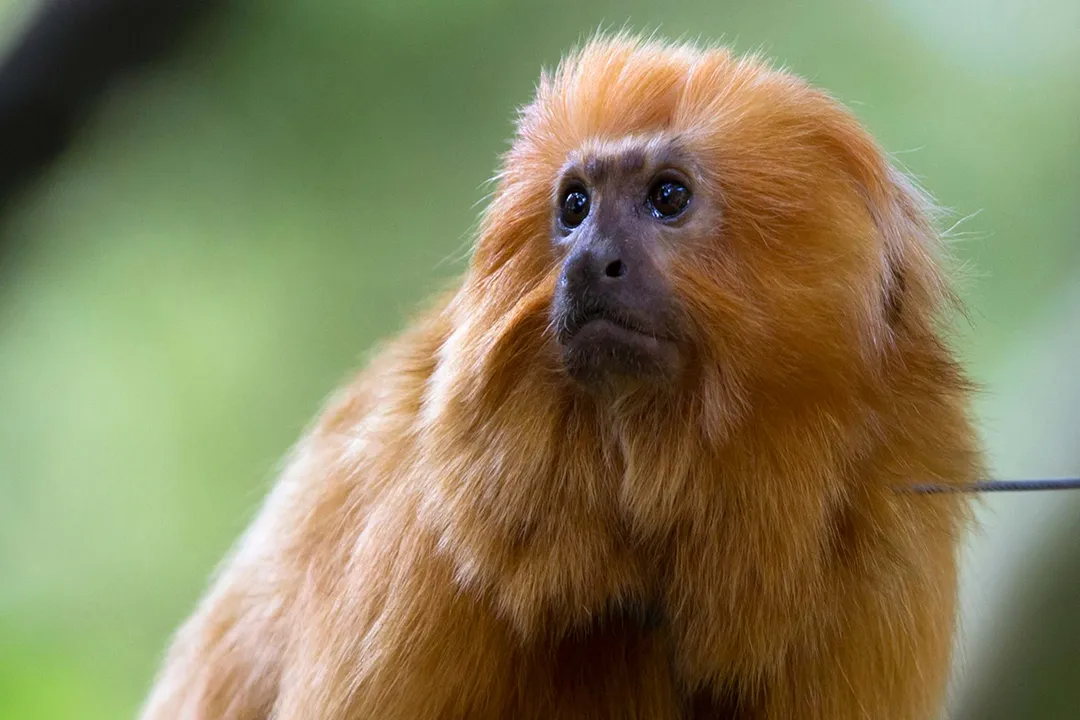
The creature most often associated with the vibrant colors of a tropical sunset is the golden lion tamarin. These small primates, instantly recognizable by their stunning, fiery orange-red coats, truly live up to their majestic name, sporting a thick mane of hair around their faces that mimics that of a male lion. [1][5] It is this brilliant coloration that immediately sets them apart from many other primates, making them one of the most visually striking residents of their native South America. [2] While their size is diminutive—often comparable to a common squirrel, weighing around one pound [4]—their impact on conservation circles is monumental. They are not just beautiful; they represent one of the most dedicated, successful species recovery stories in modern history. [1][6]
# Fiery Coats
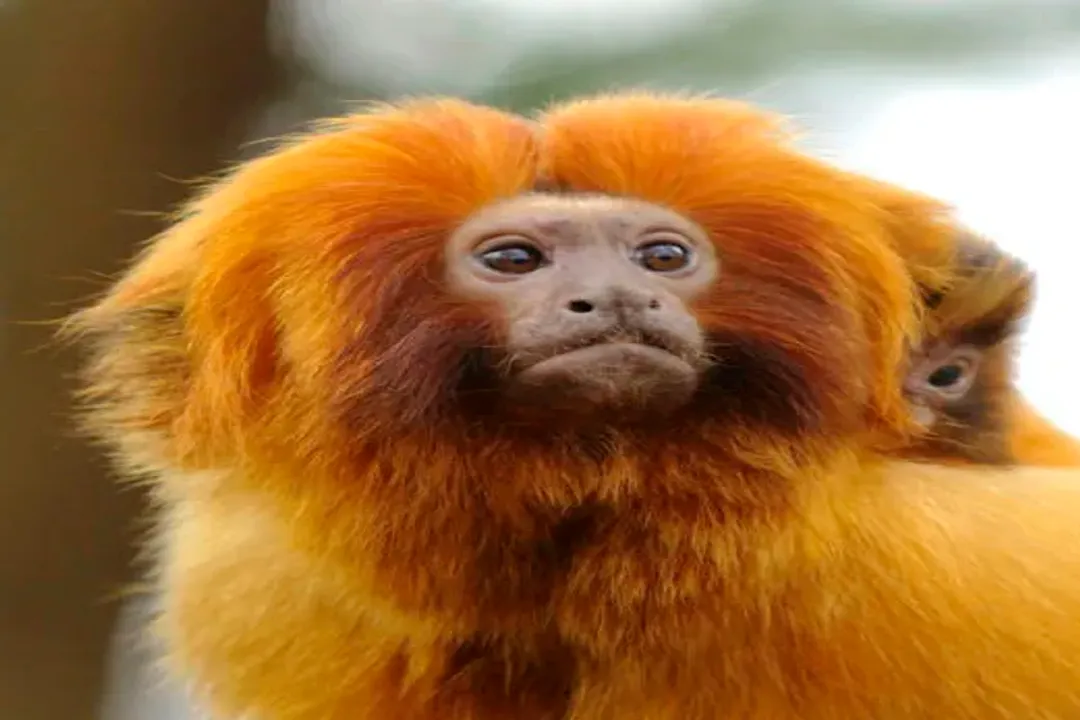
The golden lion tamarin, Leontopithecus rosalia, is a striking example of evolutionary artistry. [2] Their fur ranges from deep red to bright gold, a camouflage that seems counterintuitive in the dense green of their home but which perfectly suits the filtered light patterns of the rainforest understory. [4] These monkeys are relatively small, possessing long, slender bodies and long tails that aid in balancing as they leap through the canopy. [2]
A key physical feature, beyond the coloration, is their specialized hands. Tamarins possess long, thin fingers equipped with claws rather than flat nails (except on the big toe). [1][2] These claws function like little hooks, which makes gripping branches easier for an arboreal life—a necessary adaptation for moving quickly across thin supports high above the ground. [2] They are agile acrobats, capable of leaping distances greater than twice their body length. [4]
# Brazilian Forests
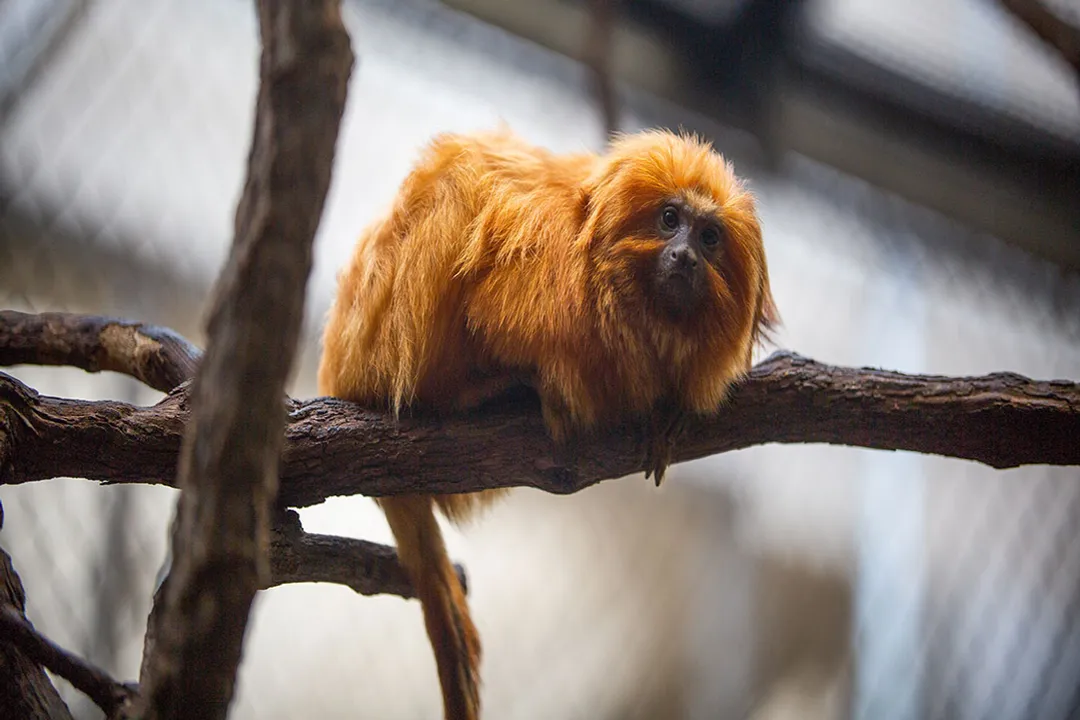
The entire wild population of the golden lion tamarin is restricted to a very small, specific region: the Atlantic coastal rainforests of southeastern Brazil. [1][2] Historically, their range was much wider, covering thousands of square miles, but extensive deforestation has reduced their habitat to fragmented patches of forest, primarily in the state of Rio de Janeiro. [4][7] They are highly adapted to life in the trees, known as being arboreal, preferring the primary and secondary growth forests, often staying close to the ground layer or sub-canopy. [2][4] Their dependence on continuous forest cover makes them extremely vulnerable to human encroachment and habitat fragmentation. [7]
When considering the environmental pressures in this region, it is interesting to note that these fragmented patches create isolated islands of survival for the tamarins. Their inability to easily cross open ground or developed areas means that each small forest remnant must be self-sustaining, placing immense pressure on the local food sources and breeding pairs. [4] This geographical limitation is the central reason their conservation status has been so precarious. [2]

# Family Units
Golden lion tamarins exhibit a fascinating and highly cooperative social structure, which is unusual among primates. [1][4] They live in small, tight-knit family groups, typically consisting of two adults, their offspring, and sometimes one or two older siblings from a previous birth. [1][4] These groups usually number between two and eight individuals. [4]
The social arrangement is generally monogamous, meaning one primary breeding pair bonds for life. [1][4] What makes this system particularly special is the level of alloparenting—shared caregiving. [4] Once an infant is born, often twins, the burden of carrying and protecting the baby is distributed among the entire group. [1] The father and older siblings will carry the infants most of the time, handing them to the mother only for nursing. [4]
This intensive cooperative strategy appears to be a direct response to their ecological pressures. In a scenario where resources are spread thinly across isolated forest patches, having multiple dedicated caregivers significantly increases the infants' chances of survival through infancy and early development. [4] If a group had only the mother to care for a set of twins while simultaneously foraging for enough calories for three, the entire unit might struggle. This shared investment in the next generation is a defining characteristic of their social life. [1]
# Foraging Habits
These small monkeys are omnivores with a diverse, yet specialized, menu. [1][4] While their diet heavily features insects and spiders—making them important local pest controllers—they also consume small vertebrates, nectar, flowers, and fruit. [1][4] They are not indiscriminate feeders; they are highly active foragers, often seen moving quickly through the middle and lower strata of the forest. [4]
The tamarins employ a specialized feeding technique known as gleaning. [4] Using their long, sensitive fingers, they probe into tree crevices, under bark, and into the centers of bromeliads to extract hidden invertebrates. [1][4] This behavior requires dexterity and patience, differing from monkeys that might rely more on simply plucking visible fruit. A group of tamarins might spend a significant portion of their day actively searching for these hidden protein sources, which are vital for their energy needs. [4] A fascinating side note is their ability to drink nectar, supplementing their diet when insects are scarce. [1]

# Conservation Success
Perhaps the most special aspect of the golden lion tamarin is the incredible effort invested in saving it from total extinction, a story that provides hope for many other endangered species. [1][6] By the early 1970s, the population had dwindled dramatically due to habitat loss, pushing them onto the endangered species list. [1][2] They were once classified as Critically Endangered. [1][2]
What followed was a sustained, international conservation effort involving zoos, governments, and local communities. [1][6] Zoos worldwide participated in a managed breeding program, carefully managing the genetic diversity of the captive population. [1][6] Simultaneously, on-the-ground efforts in Brazil focused on reforestation and habitat protection. [1][6] Scientists worked on reintroducing captive-born tamarins into secure wild areas and ensuring the connectivity between existing forest fragments. [1]
This long-term commitment yielded tangible results. The wild population has shown a significant recovery, leading to their reclassification from Critically Endangered to simply Endangered on the IUCN Red List. [1][2][6] While they remain threatened and require constant monitoring and protection of their shrinking range, their comeback represents a triumph of focused biological and political will. [2][6] Observing this shift, from the brink of disappearance to a measurable increase in numbers, demonstrates how intensive, multi-faceted conservation programs can actually reverse severe decline trends, setting a high standard for endangered species management globally. [1]
# Threats Remain
Despite the remarkable progress, the golden lion tamarin is far from safe. [1] Their primary threat remains the ongoing loss and fragmentation of the Atlantic Forest. [7] Even with protective measures, if the existing forest patches become too small or too isolated, inbreeding can become a serious genetic concern, potentially weakening the population's ability to adapt to future changes. [2]
Furthermore, the tamarins face dangers from human activity, including illegal capture for the pet trade, although this risk has lessened as conservation awareness has grown. [4] Maintaining the ecological health of the remaining habitat—ensuring a stable food supply and minimizing contact with domestic animals and human settlements—is a continuous undertaking. [1] The ongoing success story hinges not just on breeding, but on protecting every square mile of the Brazilian coastal rainforest that remains their home. [7]
Related Questions
#Citations
Golden lion tamarin - National Zoo
Golden lion tamarin - Wikipedia
Golden Lion Tamarin - Zoo Atlanta
Fourteen Fun Facts About Golden Lion Tamarins
Golden Lion Tamarin - Our Animals - Henry Vilas Zoo
Golden Lion Tamarin - Animals - Minnesota Zoo
Golden Lion Tamarin | Rainforest Alliance
Golden lion tamarin | London Zoo
Golden Lion Tamarin - ZooTampa at Lowry Park