What exactly are skuas?
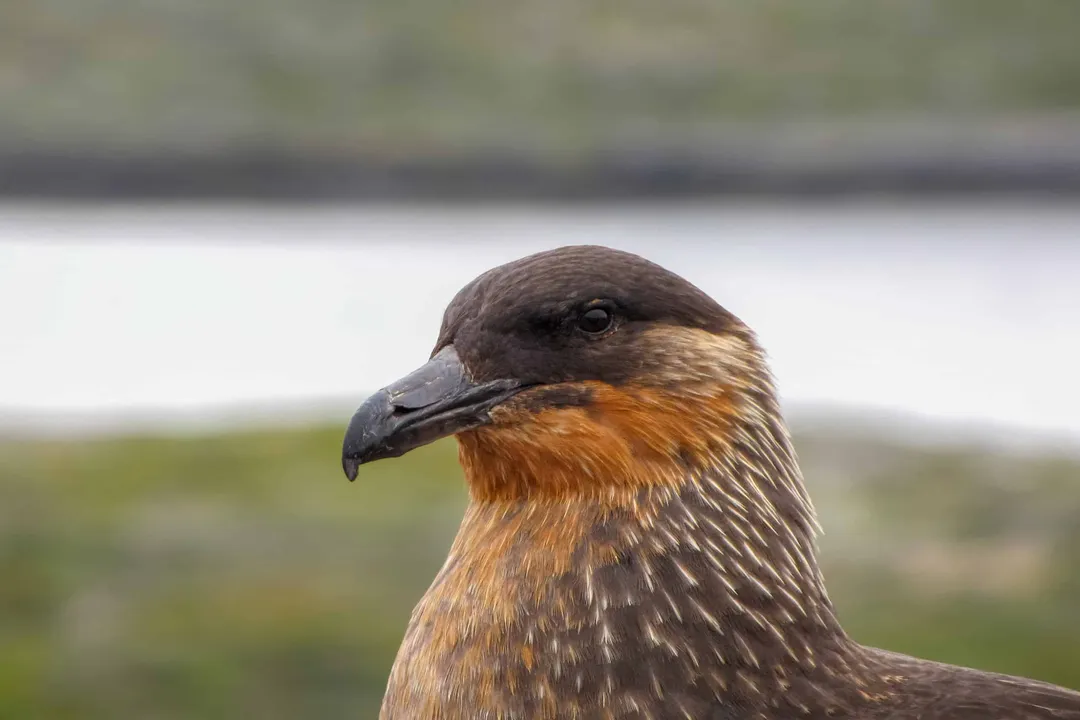
Skuas are formidable seabirds recognized globally for their sheer power and often intimidating presence when near the coast or over the open ocean. These birds command attention whether they are soaring on broad wings or engaged in their infamous aerial food pursuits. [1][3] Though they share aquatic environments with gulls and terns, skuas possess a distinct reputation built on aggressive, opportunistic behavior that sets them apart from their feathered neighbors. [1][7]
# Bird Family
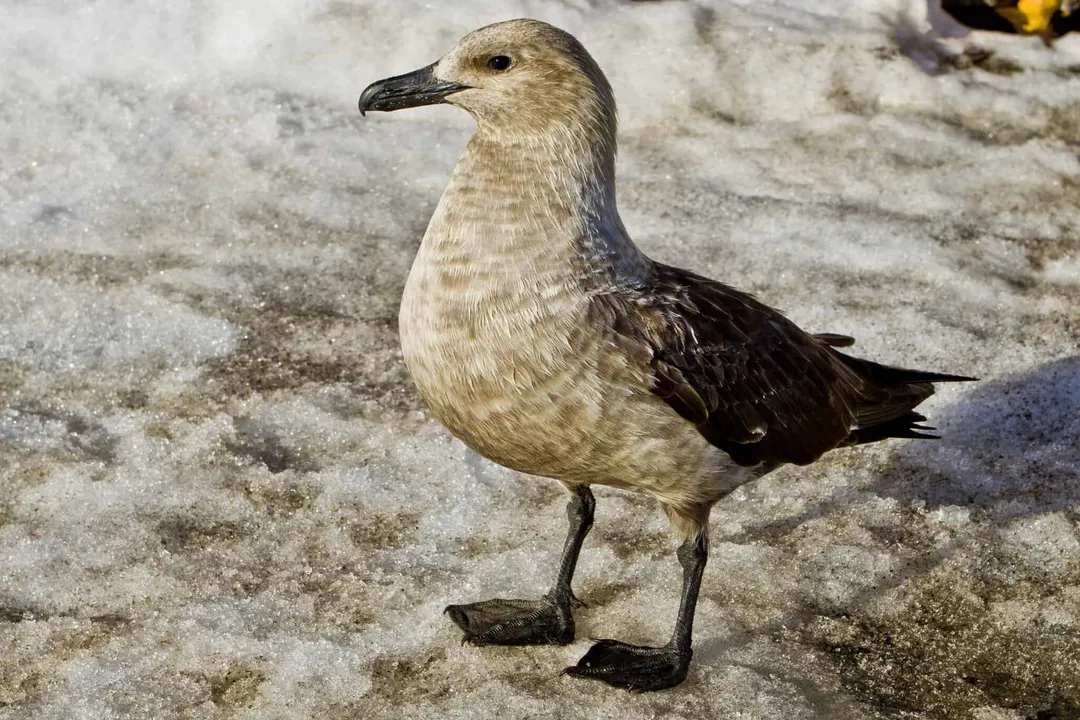
The group of birds we refer to as skuas belongs formally to the family Stercorariidae. [7] This family is relatively small, comprising all the true skuas and their relatives, often called jaegers when discussed in North American contexts. [1][7] Placing them within the broader avian classification, skuas are members of the order Charadriiformes, the same order that encompasses familiar shorebirds, gulls, and terns. [1] Despite this shared ancestry, the evolutionary path of the skua has favored a more predatory lifestyle compared to many of its relatives. [1]
# Physical Marks
In appearance, skuas generally present as medium to large seabirds, possessing long, pointed wings built for long-distance travel and powerful flight. [1] Their build tends to be somewhat stocky, giving them an imposing silhouette against the sky. [1] A key identifying feature, particularly noticeable in breeding plumage, involves the central tail feathers, which are distinctly elongated. [1] Plumage across the various species is highly variable; birds can range from very pale to almost entirely dark brown or black. [1] Even within a single species, lighter morphs and darker morphs often coexist. [1] Many species exhibit a noticeable pale patch on the underside of their wings, sometimes visible only in flight. [1] Furthermore, their bills are robust and distinctly hooked, a clear adaptation for their carnivorous habits. [3]
The largest of the group, the Great Skua (Stercorarius skua), provides a powerful example of this morphology. [4] This species, which breeds heavily in the UK, can weigh over and possesses a darker, bulkier profile compared to the sleeker jaeger types. [4][9] Observing a Great Skua alongside a common gull immediately reveals the difference in stature and bearing; the skua looks less like a scavenger and more like a dedicated avian predator. [4]
# Food Theft
What truly defines the skua's reputation is its skill at kleptoparasitism. [1] This complex behavior involves harassing other birds—often gulls, terns, or even smaller puffins—in mid-air until the victim is forced to drop its recently caught meal. [1][3] The skua then swoops down with incredible speed to retrieve the falling fish or invertebrate before it hits the water. [1]
While this aerial piracy is dramatic, it is interesting to consider the energy budget involved. A bird expending energy in a sustained, high-speed chase after another bird might seem inefficient compared to diving for food itself. [1] However, when one accounts for the high success rate and the fact that the victim bird has already done the hard work of locating and catching the prey, the energy saved by stealing often outweighs the energy expended in the harassment itself. [7] This strategy allows skuas to secure high-value meals without the risk or effort associated with deep dives or complex foraging maneuvers in rough seas. [1] It is an expert utilization of the success of their neighbors.
# Menu Variety
Although stealing food is characteristic, skuas are not purely reliant on the ill-gotten gains of others. [1] Their diet is quite broad, reflecting their opportunistic nature. [3] They consume a variety of fish and crustaceans they manage to catch themselves. [1] Additionally, they are known to scavenge carrion when the opportunity arises. [3]
Their predatory instincts extend beyond just chasing other birds for their food. Skuas are also known to raid the nests of other seabirds, preying on eggs and even young chicks. [1] In the context of breeding colonies, this makes them a significant, constant threat to ground-nesting species. For instance, where Great Skuas are abundant, they can heavily influence the breeding success of other local birds on the islands they share. [4]
# Global Distribution
Skuas occupy diverse environments across the planet, showcasing impressive migratory capabilities. [1] The family is distributed across both the Northern and Southern Hemispheres. [1] Northern breeders, such as those in the Arctic and subarctic regions, migrate extensive distances after their breeding season concludes. [1] Conversely, Southern Hemisphere populations breed on sub-Antarctic islands. [1]
For many readers, seeing a skua might involve encountering the species that breeds in more temperate northern zones, like the British Isles. [4] The Great Skua, for example, has established major breeding colonies on islands like Shetland, Orkney, and the Hebrides. [4] When observers visit these specific nesting locations, particularly on remote islands, it is wise to maintain a respectful distance, especially during nesting season. [4] Because these birds are fiercely protective of their nests and territories, a sudden approach can trigger defensive behaviors, including loud vocalizations and aggressive swooping displays aimed at the intruder. [4] Remembering that their powerful build is backed by a strong territorial instinct helps ensure both bird safety and human enjoyment of the wildlife viewing experience.
# Species Diversity
While the general characteristics of predatory flight and kleptoparasitism link them, there is variation among the different species categorized as skuas or jaegers. [1][7] The precise count and naming can vary slightly based on geographical context, but generally, the group includes four or five primary types. [1]
In North America, the smaller species are typically referred to as jaegers: the Parasitic Jaeger (known elsewhere as the Arctic Skua), the Long-tailed Jaeger (Long-tailed Skua), and the Pomarine Jaeger (Pomarine Skua). [1][7] These birds often spend most of their lives far out at sea, making them challenging to observe away from their breeding grounds. [1]
The Great Skua, as mentioned, is the largest and arguably the most robust of the group, often seen making aggressive moves even against much larger prey items or rivals. [4][9] Its size grants it a different level of dominance within its feeding territory compared to the smaller, more agile jaegers that specialize in harassing terns. [1] The distinction between a large "skua" and a smaller "jaeger" often reflects size and the typical scale of their kleptoparasitic targets. [7]

# Breeding Cycles
The breeding habits of skuas align them closely with other northern seabirds, relying on the abundance of food available during the short Arctic and subarctic summers. [1] They typically form small to moderate colonies for nesting. [4] Their nests are rudimentary, often little more than a scrape on the ground, sometimes lined with vegetation. [4]
The timing of breeding is critical, coinciding with peak availability of both fish stocks and vulnerable chicks of other seabird species. [1] This strategic timing ensures that when the young skuas hatch, there is an ample, high-energy food supply available to fuel their rapid growth. [1] A successful nesting season for a skua pair can mean feeding their single or double chick almost exclusively on stolen fish during the first few weeks, illustrating the effectiveness of their specialized feeding technique. [4]
#Videos
Skua facts: Sky Pirates | Animal Fact Files - YouTube
Related Questions
#Citations
Skua - Wikipedia
Skuas (Europe) Species Guide - Birda
Skua Bird Facts - A-Z Animals
Great Skua Bird Facts | Stercorarius Skua - RSPB
Skua facts: Sky Pirates | Animal Fact Files - YouTube
Skua | Antarctic, Seabird, Predator | Britannica
Stercorariidae – Skuas - BTO
SKUA Definition & Meaning - Dictionary.com
Great Skua | Audubon Field Guide
Skua Facts for Kids