Do doxiepoos bark a lot?

The vocal tendencies of a Doxiepoo often spark considerable curiosity among prospective and current owners. Since this designer breed mixes the Dachshund, known for its loyalty and alert nature, with the Poodle, an intelligent and sometimes sensitive companion, the resulting sound level is rarely uniform across the breed. [1][4] Predicting exactly how vocal an individual Doxiepoo will be relies heavily on which parent's characteristics surface most strongly in their personality. [9]
# Breed Mix
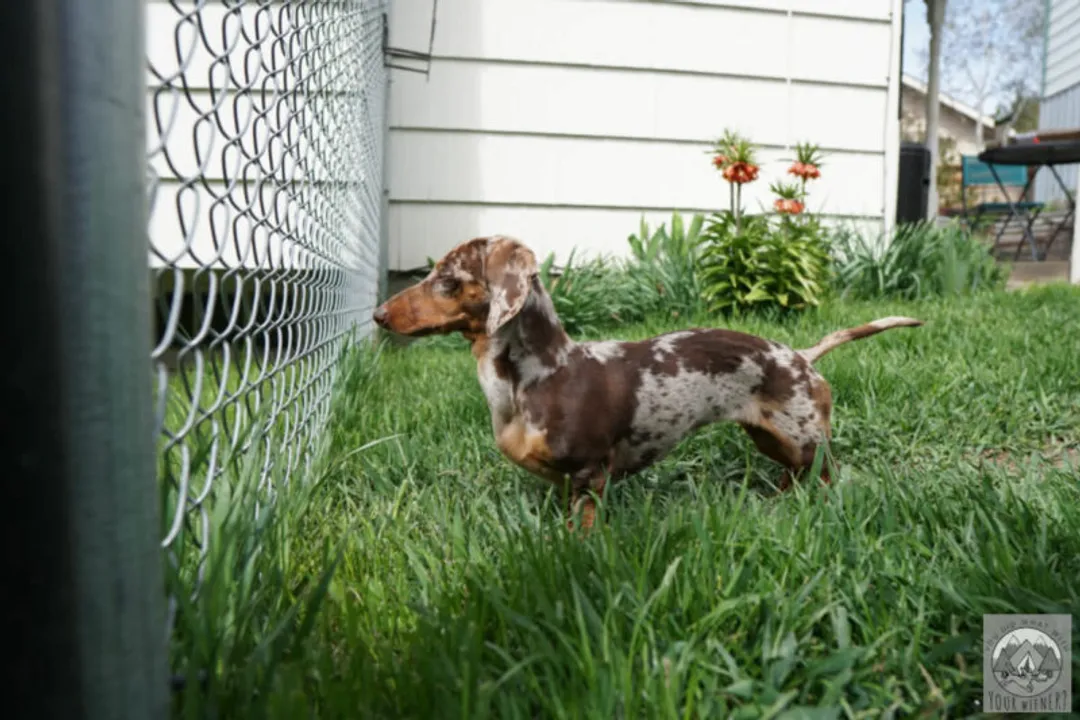
To understand the barking potential, one must first look at the parents. Dachshunds were historically bred as hunters, often used to flush out badgers, a job that naturally required them to alert their owners with a loud, distinct bark. [5][7] This instinctual drive to announce anything unusual remains prominent in many purebred Dachshunds, making them very aware and vocal about their surroundings. [7]
Poodles, on the other hand, are highly intelligent dogs often valued for their trainability and adaptability. While they can certainly be barkers, especially when bored or anxious, their vocalization pattern might differ from the sharp, territorial bark of a Doxie parent. [4] When these two lines merge into a Doxiepoo, you end up with a small dog packing a big personality and, potentially, a corresponding sound output. [9] Owners frequently report that the Doxiepoo acts as an excellent, if occasionally overzealous, watchdog. [1]
# Temperament Mix

The actual level of noise a Doxiepoo produces can range from surprisingly quiet to quite persistent. This variability is a hallmark of many mixed breeds where genetic expression is less predictable than in standardized purebred lines. [4] If a Doxiepoo inherits a stronger line of the Poodle’s calmer disposition or a less assertive Dachshund heritage, the dog might only bark to signal genuine needs or unusual activity. [1]
However, if the dog strongly exhibits the alert, high-energy nature common to the Dachshund side, residents might find themselves dealing with frequent alerts concerning squirrels, mail carriers, or passing shadows. [7] One observation often made in communities discussing these mixes is that the volume often seems disproportionate to the dog’s small stature, making even moderate barking seem more intrusive in an apartment setting than a similar level of noise from a much larger breed. [2] The expectation needs to be managed; while some Doxiepoos are relatively quiet companions, the genetic predisposition for alertness is certainly present. [9]

# Noise Causes

When a Doxiepoo does start barking, discerning the reason behind the sound is the first step toward management. The barking typically falls into a few recognizable categories, often reflecting an underlying need or emotional state. [3]
# Alert and Territoriality
As previously noted, the alert barking trait is a strong possibility due to the Dachshund lineage. [7] This type of barking is usually sharp, directed toward a specific stimulus outside the home, or in response to someone approaching the door. This is often the "guard dog" instinct kicking in—they are letting you know someone is there. [5] While this serves a purpose, owners must teach the dog when an alert is sufficient and when to stop.
# Boredom and Attention Seeking
The intelligence inherited from the Poodle parent means that a Doxiepoo requires mental stimulation. [4] A bored Doxiepoo is a creative Doxiepoo, and often that creativity manifests as nuisance barking aimed at soliciting attention or play. [7] If the dog learns that barking results in you looking at them, petting them, or even scolding them, the behavior is reinforced, as any attention is better than none. [5]
# Separation Distress
A significant contributor to excessive barking in small companion breeds like the Doxiepoo is anxiety, particularly separation anxiety. [3] If barking only occurs when the dog is left alone, it is highly likely rooted in distress over being separated from their primary attachment figure. This type of vocalization can be incessant, frantic, and often accompanied by other destructive behaviors. [3] Recognizing anxiety barking is crucial because the management strategy—which involves counter-conditioning and desensitization—differs significantly from managing simple territorial alerts.
When working to address frequent vocalization, it can be immensely helpful to keep a log for the first few weeks. Rather than just noting that the dog barked, try to log the precise trigger and the duration. For instance, logging "Barked 10:15 AM, duration 45 seconds, trigger: recycling truck," provides data that helps you differentiate between a passing noise alert and sustained, anxiety-driven noise. This differentiation is key because treating an anxious barker like a defiant alarm-ringer only exacerbates the underlying fear.
# Vocalization Control

Managing the vocal tendencies of a Doxiepoo hinges on consistency and early intervention. [1] Because they are intelligent dogs, they are usually highly responsive to structured training, provided the owner is persistent. [4]
# Training Foundations
Training should begin immediately upon bringing the puppy home. Consistency is non-negotiable; everyone in the household must respond to barking the same way every single time. [7] If the dog is barking for attention, the absolute rule should be to ignore the behavior entirely until a brief pause in barking occurs, at which point the dog is rewarded with attention or a treat. This teaches the dog that silence, not noise, earns the desired outcome. [5]
For alert barking, owners should teach a "Quiet" command. After the dog barks once or twice in response to a trigger, present a high-value treat. As soon as they stop barking to sniff or take the treat, firmly say "Quiet" and immediately reward them. [7] Repeat this until you can cue the "Quiet" command before they stop barking naturally.
# Environment Adjustment
Because the Doxiepoo can be sensitive to external stimuli, environmental management plays a large role in reducing unwarranted barking. If your dog barks incessantly at outdoor activity, increasing visual barriers is a practical management step. [3] This might involve using privacy film on windows or keeping blinds closed during peak activity hours. Reducing their visual access to the triggers often reduces the need to alert. [1]
It is also worth considering how the dog's physical needs are being met. A Doxiepoo needs regular exercise appropriate for their small size, but they also need significant mental engagement. [9] Structured puzzle toys, short training sessions focused on new tricks, or interactive feeding methods can burn off mental energy that might otherwise manifest as demand barking. One interesting factor in smaller breeds is that owners sometimes unintentionally permit more barking because a small dog's bark is less startling than a Great Dane's. This inadvertent permission curve can set a higher barking threshold early on, making it harder to curb later when the dog matures. Owners who start training with the assumption that the dog is just as vocal as any larger breed often see better results because they enforce boundaries sooner and more strictly.
For those dealing with potential separation anxiety barking, the process requires more patience and might benefit from professional consultation. [3] Leaving the dog alone for very short periods while providing a highly engaging, long-lasting chew toy can help reframe alone time as a positive opportunity. The dog begins to associate your departure with a special reward, rather than distress.
Related Questions
#Citations
Doxiepoo Dog Breed Information and Characteristics - Daily Paws
Does every dachshund bark a lot? - Reddit
Doxiepoo Anxiety 101: What To Know And How To Help
Doxiepoo | Dog Breed Facts and Information - Wag! Dog Walking
Do Doxies bark constantly? We have a first-time Doxie - Facebook
Why Does My Dachshund Bark So Much and How Can I Stop It?
Do miniature dachshunds bark a lot? - Quora
The Doxiepoo: Little Legs, BIG Personality! - Rocky Kanaka
Doxipoo Breed Information and Buying advice - Puppies.co.uk