Why are Parasaurolophus cool?
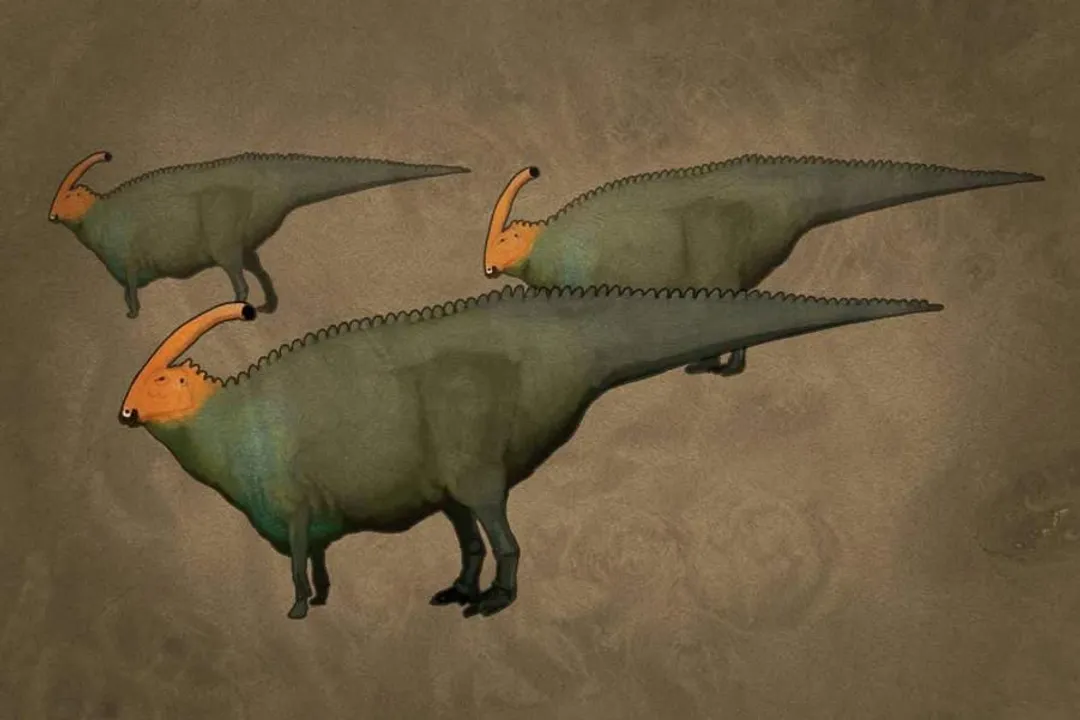
The image of a Parasaurolophus immediately conjures up a very specific, almost alien silhouette in the prehistoric world, almost entirely due to that unmistakable, magnificent cranial protrusion. It is a creature whose very existence seems defined by its plumbing—a massive, sweeping tube extending backward from its skull that sets it apart from nearly every other dinosaur known to science. This feature, rather than sheer size or ferocity, is what cements its place in the public imagination as one of the coolest dinosaurs to have ever walked the Earth. [1][2]
# Crest Anatomy
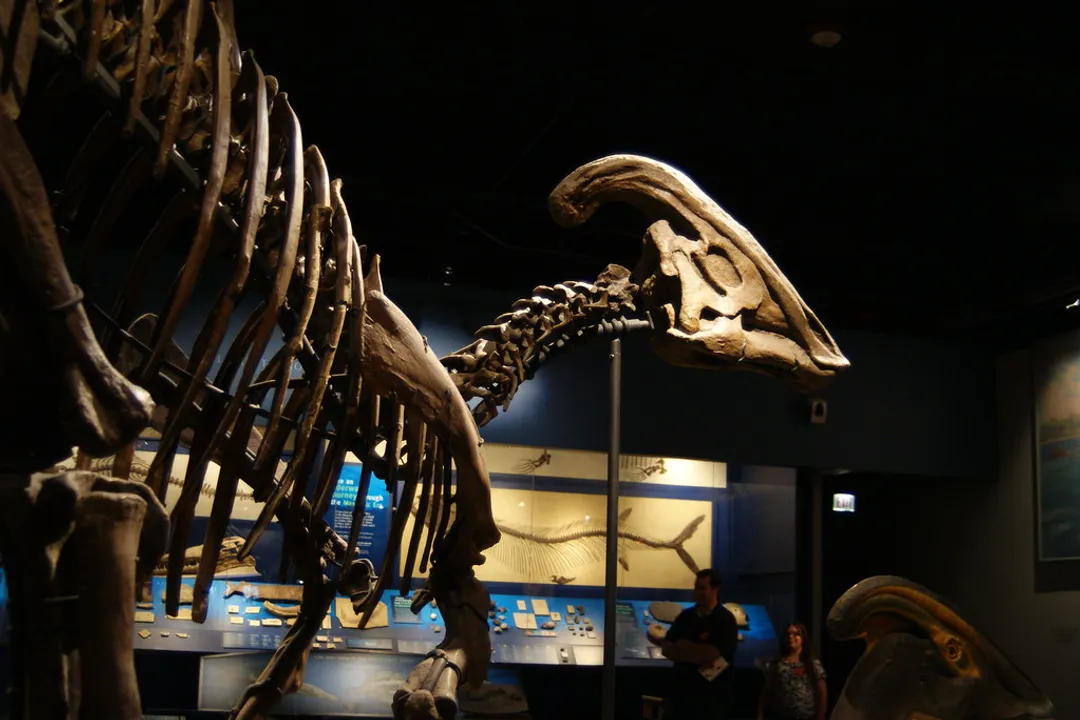
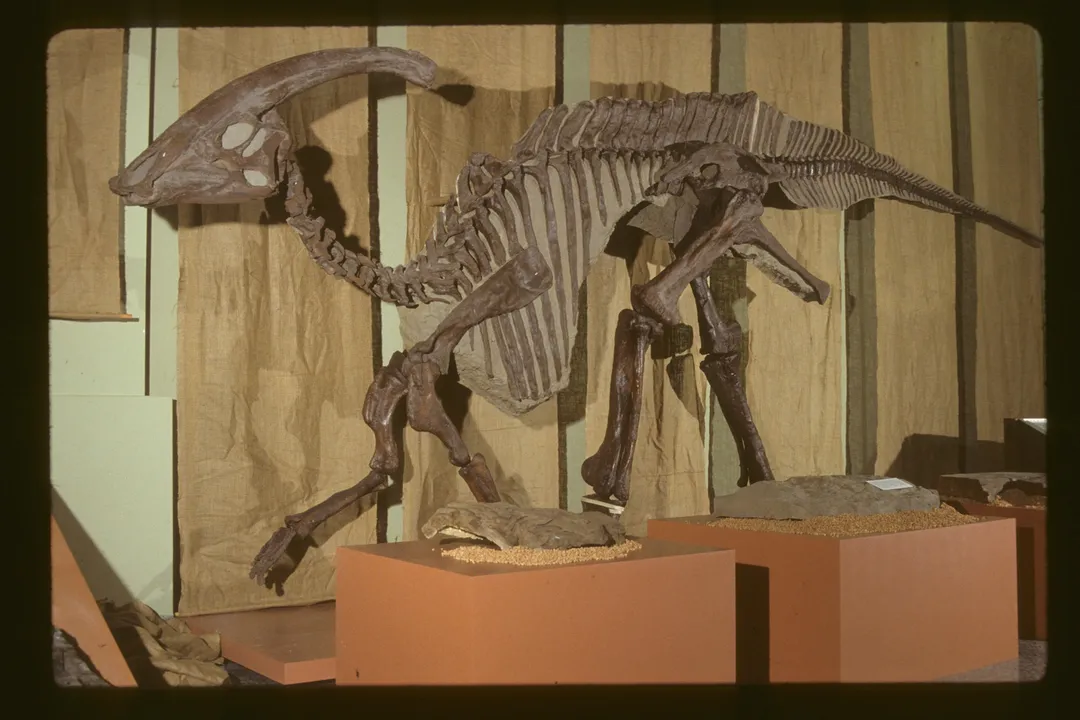
The most defining characteristic of Parasaurolophus is, without question, its elaborate crest, which can measure up to three feet long. [1] This structure is not merely a solid piece of bone protruding from the back of the head; rather, it is a sophisticated, hollow extension, curving backward and downward over the animal's neck. [1][5] Paleontologists have determined that this hollow structure is essentially an elongated, complex extension of the nasal passages. [1][2][7]
When Lawrence Lambe first described this dinosaur in 1922, the unique nature of the skull immediately set it apart, leading to its name which translates roughly to "Crested lizard near the Y-shaped bone," referencing the nearby ischiopubic structure in its skeleton. [5] The exact dimensions and curvature of this crest varied, which is why paleontologists have recognized several species within the genus, though they all share the fundamental architecture. [5] While we often picture a single look, the differences in crest shape might reflect sexual dimorphism—differences between males and females—or simply variations across different species of Parasaurolophus that lived around the same time. [5]
The internal structure of the crest is key to understanding its purpose. It contains a labyrinth of bony tubes and passages that snake through the crest before emptying into the external nostrils. [1][8] This intricate piping system suggests a function far more specialized than simple display. [2]
# Sound Generation
The connection between the crest's convoluted internal tubing and the animal's vocalizations is one of the most exciting areas of paleontological study surrounding this animal. [8] Imagine a trombone player possessing an extremely long, curved slide that begins inside their bell; the Parasaurolophus crest acted similarly, modifying the sound produced by the animal's respiratory system. [1][7]
Researchers have hypothesized, and sometimes modeled, that when an animal exhaled forcefully through this structure, the air rushing over the nasal passages—now channeled through a much longer route—would create deep, resonating, low-frequency sounds. [1][2][8] These sounds would have traveled significant distances across the landscape. [1] Considering that Parasaurolophus lived during the Late Cretaceous period, around 76 to 73 million years ago, in environments that might have included dense forests or broad floodplains, the ability to communicate across distance would have been essential for survival. [2][5]
If an entire herd was moving through thick vegetation, visual signals might be obscured, but a loud, low booming call could keep the group cohesive, warn of predators, or advertise territory. [3] It is fascinating to consider that the complexity of the plumbing suggests a level of acoustic control; this was not just a simple honk, but potentially a range of modulated tones. [7] This ability to produce distinct, recognizable calls is a hallmark of highly social animals, implying a rich group life for these herbivores. [3]
# Visual Display
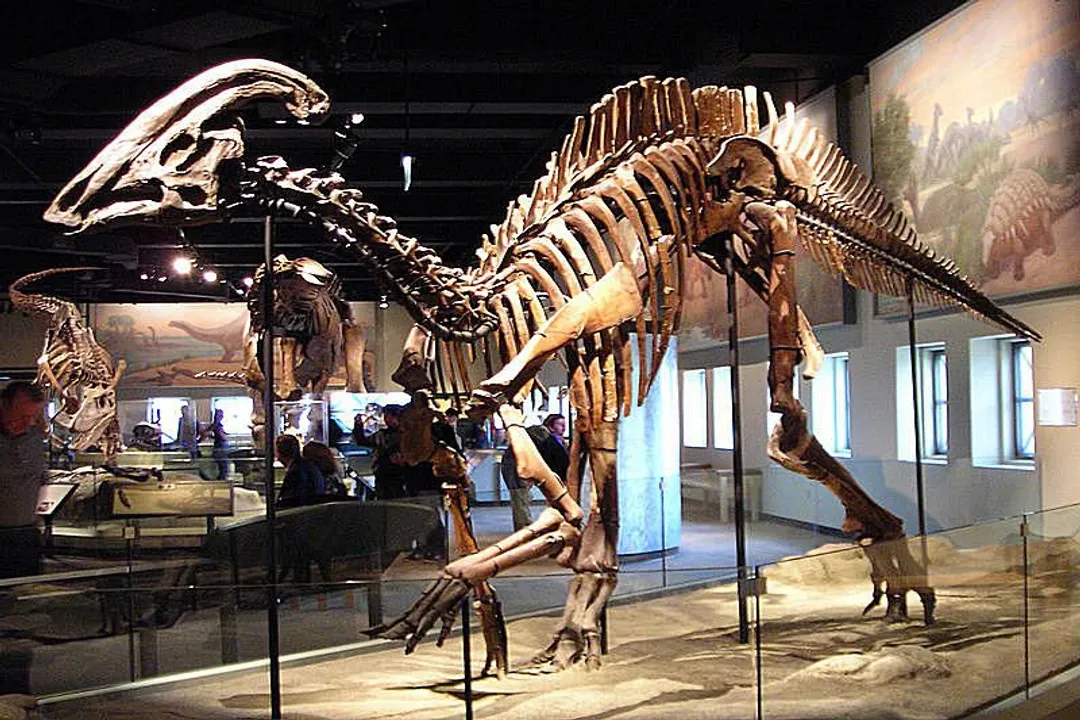
While the auditory function is compelling, the crest's sheer size and striking shape made it an unmissable visual tool as well. [2] It would have been brightly colored in life, much like modern birds or reptiles use elaborate plumage or skin flaps for communication. [8] This visual element speaks to social dynamics, particularly mate selection.
In the competitive arena of dinosaur reproduction, having the largest, brightest, or most perfectly formed crest might have signaled superior health, genetic fitness, or dominance within a group. [1] The variation in crest morphology across different species or individuals suggests that visual identification was critical. A Parasaurolophus seeing another crest approach would instantly know if it was a potential mate, a rival, or perhaps even a member of a different, closely related hadrosaur species. [5]
It serves as a perfect example of evolutionary specialization where a single anatomical feature pulls double duty: serving as both a biological speaker system and a magnificent banner.
# Hadrosaur Life
Beyond the crest, Parasaurolophus was fundamentally a large, successful member of the ornithopod group, earning the nickname "duck-billed dinosaur" due to the shape of its mouth. [3][6] Its size was considerable; estimates place its length around 30 feet (or about 9 meters). [2][5] This placed it among the larger of the North American hadrosaurs of its time. [5]
Like other members of its family, it was strictly an herbivore. [6] Its diet consisted of plants, which it processed using a highly efficient dental system. [3] These animals possessed what are known as dental batteries—hundreds of tightly packed teeth that continuously replaced themselves. As the outer teeth wore down from grinding tough, fibrous vegetation, new ones rotated up from below to take their place. [4] This specialized dental machinery was an adaptation to a diet that required significant mechanical breakdown, suggesting they were cropping tough ferns, cycads, or perhaps coniferous needles common in their habitat. [4]
In terms of movement, Parasaurolophus was adaptable, capable of moving around its environment on two legs (bipedal) or dropping down onto all fours (quadrupedal). [6][2] This dual mode of locomotion would have been advantageous; perhaps it stood on two legs to reach higher foliage or scan the horizon, and walked on four for steady grazing or traveling long distances. [2] The fact that they lived in herds, as suggested by the density of bone beds and the need for vocal communication, implies a social structure where coordinated movement was a regular requirement. [3]
To better visualize the scale of this creature and its contemporaries, one can consider the environment it inhabited.
| Feature | Parasaurolophus Specimen | Estimated Value | Source |
|---|---|---|---|
| Estimated Length | Maximum Size | meters ($30$ feet) | [2][5] |
| Time Period | Late Cretaceous | $76-73$ Million Years Ago | [5][2] |
| Crest Length | Maximum Projection | meter ($3$ feet) | [1] |
| Locomotion | Primary Stance | Bipedal/Quadrupedal | [2][6] |
A potential insight arises when comparing the need for such loud communication with the environmental pressures of the Late Cretaceous North American ecosystems. For an animal reaching thirty feet in length, the energy expenditure required to maintain and operate that massive vocal apparatus, perhaps frequently to keep a large herd together, must have been significant. This suggests that the plant resources available to them were exceptionally plentiful and reliable, providing the necessary caloric surplus to fuel a complex social life centered around acoustic signaling. Had resources been scarce or unpredictable, the evolutionary pressure might have favored less conspicuous, perhaps solitary, herbivores. [3]

# Evolutionary Neighbors
Parasaurolophus belongs to the family Hadrosauridae, cementing its status as a "duck-billed dinosaur". [3][6] Within this large and diverse family, it has specific relatives that help define its place in the evolutionary tree. It is closely related to genera such as Edmontosaurus and Maiasaura, though its distinct cranial ornamentation immediately sets it apart from its cousins. [5]
While Edmontosaurus was massive and often crested only with bony knobs or small spikes, and Maiasaura is famous for its nesting behavior, Parasaurolophus occupies the niche defined by extreme cranial specialization. [5] Looking at museum specimens, one notices that the crests of closely related species, such as Lambeosaurus or Corythosaurus, are also elaborate but distinct in shape—the former often resembling a hatchet, and the latter a deep, rounded helmet. [5] This diversity within the hadrosaur group, all living in overlapping timeframes, highlights an incredible burst of evolutionary experimentation focused on cranial ornamentation for communication and display within that particular lineage. [5]
Another way to appreciate its distinctiveness is to consider the sheer scale of its specialized anatomy relative to its close kin. While a Maiasaura might have had a smaller, solid bump for display, Parasaurolophus went the route of complexity and length. This suggests a slight difference in ecological partitioning or mating rituals between these successful contemporary herbivores. The tube-crested Parasaurolophus may have dominated the low-frequency communication spectrum, leaving other hadrosaurs to utilize different signaling methods or frequencies. It's like having multiple radio stations broadcasting in the same city—each station needs a unique frequency to avoid interference, and Parasaurolophus certainly had its own unique channel. [1][8]
The very existence of such an elaborate, seemingly fragile structure on a large, ground-dwelling herbivore speaks volumes about the perceived safety within its immediate environment, even as large predators like tyrannosaurs roamed the same landmasses. The payoff for that evolutionary risk—the benefits of improved mating success or group coordination—had to dramatically outweigh the inherent vulnerability of an exposed, bony tube projecting a meter off the skull. This calculation required an exceptionally stable ecosystem, which the Late Cretaceous, at least in parts of North America, seemingly provided. [5]
Ultimately, the Parasaurolophus is cool because it embodies the bizarre, beautiful extravagance that evolution can produce when given the right set of environmental and social pressures. It was not just a big, plant-eating lizard; it was a specialized communicator, a sounding board walking the Earth millions of years ago, whose very bones tell a story of sound, sight, and survival in a lost world. [1][2]
Related Questions
#Citations
What are some cool facts about Parasaurolophus? : r/Dinosaurs
8 Fascinating Parasaurolophus Facts Valuable To You
Parasaurolophus | National Geographic Kids
Parasaurolophus characteristics and depiction in paleontology
Parasaurolophus - Wikipedia
Facts About Parasaurolophus - ThoughtCo
The Real Parasaurolophus - Philip J. Currie Dinosaur Museum
Parasaurolophus Facts For Kids | AstroSafe Search - DIY.ORG