Is a tapir a pig or elephant?
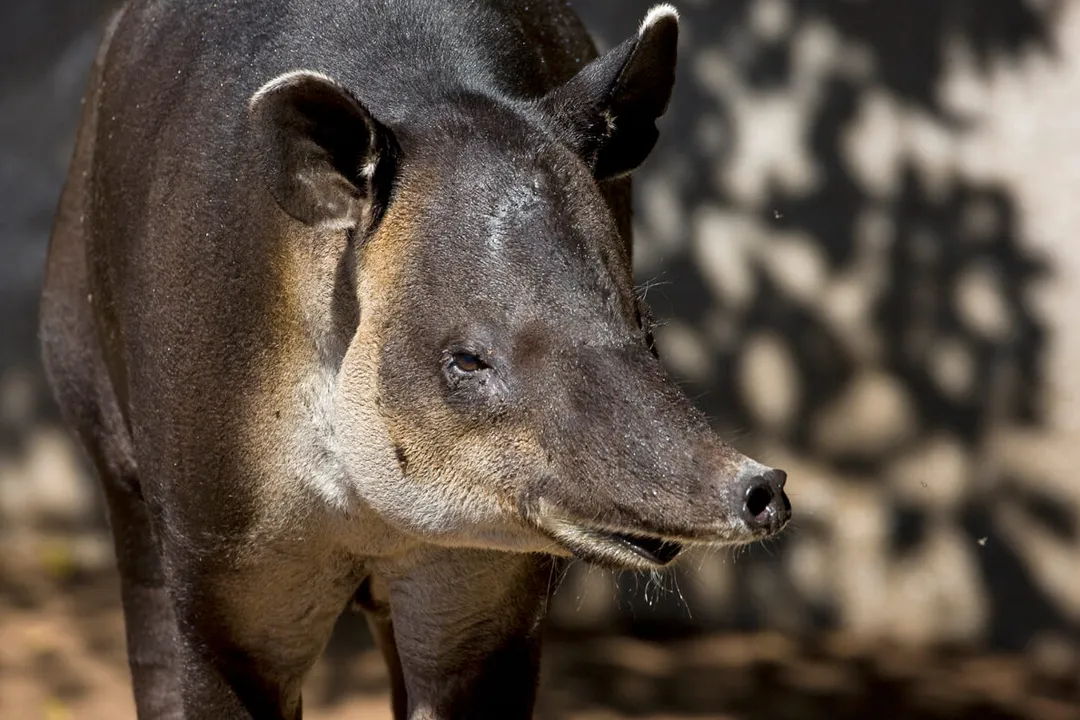
The animal that often sparks this common confusion—a creature stout like a hog but bearing a snout reminiscent of a miniature elephant trunk—is the tapir. This unique mammal, inhabiting the forests of Central and South America as well as Southeast Asia, certainly possesses features that lead observers to categorize it incorrectly among more familiar farm animals or megafauna. [1][2] Visually, the tapir presents a study in evolutionary compromise, appearing somewhat sturdy with a compact body, short, strong legs, and a slightly humped back. [1][4] Its most defining characteristic, however, is its flexible, elongated nose, or proboscis, which is a soft, prehensile structure used for smelling, grasping leaves, and foraging. [1][5] This snout is shorter than an elephant’s trunk but much more developed than a pig’s snout, making the visual comparison easy to understand, even if taxonomically misleading. [7]
# Appearance Blend
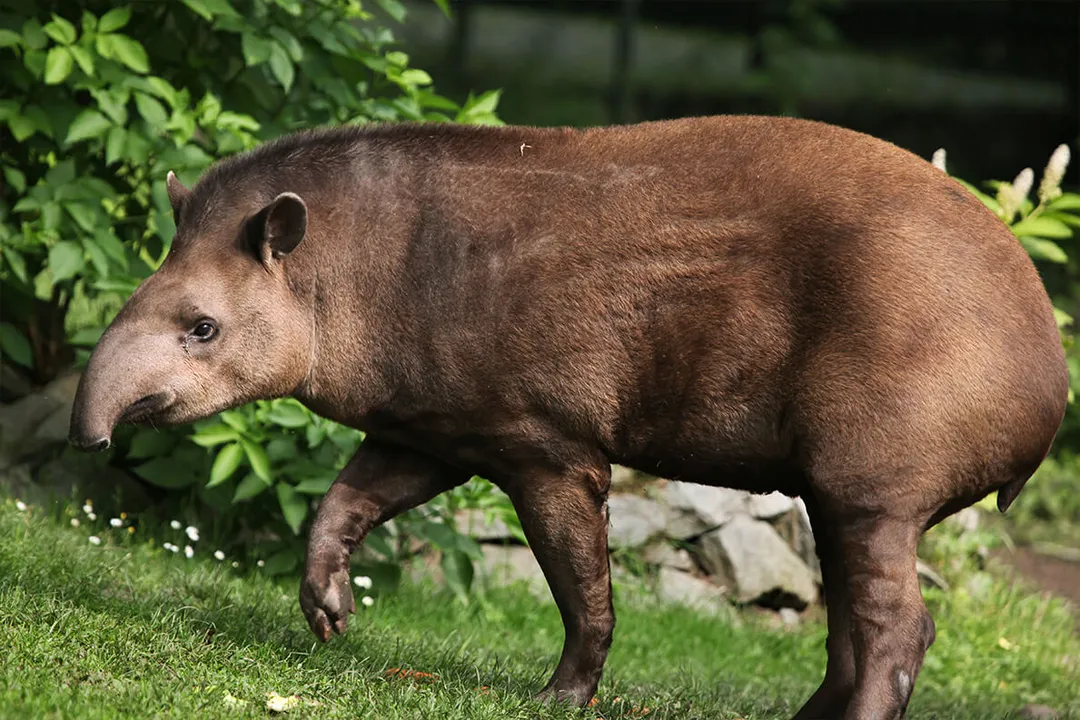
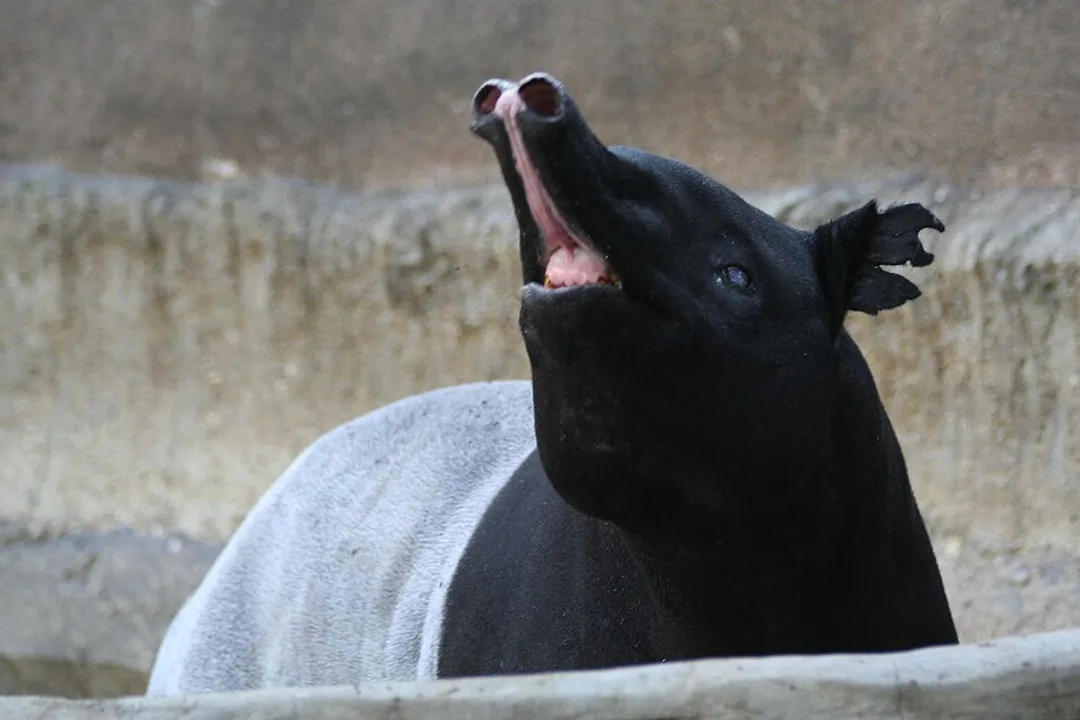
When first encountering a tapir, the comparison to a pig is perhaps the most immediate, largely due to its general build: a stocky, barrel-shaped body, small ears, and short legs. [7] They are terrestrial herbivores, and this general silhouette groups them mentally with swine in the layperson’s mind. [7] The Malayan tapir, in particular, stands out due to its striking black front and white hindquarters, a pattern that helps break up its outline in the moonlight, but the body shape remains solidly "pig-like" in its proportions. [3] However, the elephant connection comes purely from that distinctive nose. While the elephant's trunk is an enormously elongated upper lip and nose used for breathing, smelling, drinking, and grasping objects, the tapir's proboscis is a much simpler appendage, though equally specialized for feeding. [1][5] It functions as a snorkel when they wade and a handy grabber when they browse the undergrowth. [2] A closer look reveals that tapirs do not have tusks like many boars, nor the massive scale of an elephant, placing them in a category of their own when morphology is scrutinized. [1]
# Lineage Split
Despite the superficial similarities to both pigs and elephants, the tapir is evolutionarily distant from both groups. Pigs belong to the order Artiodactyla (even-toed ungulates), which also includes deer, cattle, and hippos. [5] Elephants belong to the order Proboscidea. [5] The tapir, on the other hand, belongs firmly in the order Perissodactyla, or the odd-toed ungulates. [1][5][2] This places them in a much smaller, more exclusive club, whose living members include only rhinoceroses and horses. [5] This kinship with horses and rhinos is far more significant genetically and anatomically than their resemblance to swine. [5] This distinction is rooted in their foot structure; while Artiodactyls generally bear their weight on two toes, Perissodactyls—like the tapir—have an odd number of toes on each foot, typically three toes on each hind foot and four on the front (though the number can vary slightly by species and anatomy). [1][5]
To clarify this relationship, considering the evolutionary branches can be helpful. While a pig is a close cousin to other even-toed mammals, the tapir shares an ancient common ancestor with the horse family, separating from that line millions of years ago. [5]
| Animal Group | Order | Defining Feature | Notable Relatives |
|---|---|---|---|
| Tapir | Perissodactyla | Odd number of toes | Horses, Rhinoceroses |
| Pig | Artiodactyla | Even number of toes | Deer, Cattle, Hippos |
| Elephant | Proboscidea | Specialized trunk | Sirenians (manatees/dugongs) |
| [1][5] |
This means that while a pig is closer to a cow than it is to a tapir, the tapir's closest living relatives are creatures that look significantly different—the rhinoceros and the horse—underscoring how misleading surface appearance can be in taxonomy. [5]

# Species Variety
The family Tapiridae is relatively small in terms of extant species, comprising five distinct types found across two continents. [1][2] Understanding these species helps illustrate the range of adaptation within this single family. [1]
The four species found in the Americas—Baird's Tapir, the Mountain Tapir, and the Lowland Tapir (also called the Brazilian Tapir)—inhabit the rainforests, cloud forests, and swampy areas of Central and South America. [1][2]
The Baird’s Tapir (Tapirus bairdii) is the largest Neotropical species, often found near water sources in Central America, and it plays a significant role in its ecosystem. [2]
The Lowland Tapir (Tapirus terrestris) is the most numerous and widespread of the South American species. [1]
The Mountain Tapir (Tapirus pinchaque) is the hairiest of the group, an adaptation for surviving the colder, high-altitude cloud forests where it lives. [2] Its thick, woolly coat is a distinct feature that sets it apart from its lower-altitude relatives. [2]
Then there is the outlier, the Malayan Tapir (Tapirus indicus), found in Southeast Asia. This species is instantly recognizable due to its unique coloration: a pale, grayish-white saddle across its back contrasting sharply with the rest of its body, which is dark black. [3] This bizarre pattern is thought to confuse predators by making the animal look like a shadow or a large, floating log in dim forest light. [3] Though visually distinct, it shares the same core anatomy and evolutionary heritage as its American cousins. [1] A fifth species, the Kabomani Tapir, is sometimes recognized, although its status as a distinct species from the Lowland Tapir is debated among scientists. [1]
# Jungle Role
Tapirs are generally described as solitary and exceedingly shy creatures, often preferring to forage alone under the cover of darkness. [1][4] They are primarily nocturnal or crepuscular, meaning they are most active at dawn and dusk. [1] This secretive nature contributes to why they are not frequently observed in the wild. They enjoy water, are strong swimmers, and frequently take to rivers and swamps to cool off or escape predators. [2][1]
Their diet confirms their non-aggressive nature; tapirs are herbivores classified as browsers, meaning they consume foliage rather than grazing on grass. [1] They use their versatile snout to pull down leaves, buds, shoots, and fruit from the underbrush. [1] This dietary habit makes them incredibly valuable to the health of their forest homes. Because they consume large quantities of fruit, they become major seed dispersers. [9] A seed eaten in one location might be deposited many miles away in a pile of fertilizer, allowing the plant to colonize new areas. [9] This vital function has earned them the moniker "gardener of the jungle". [9][8] The removal of tapirs, even from a localized area, can disrupt the reproductive cycles of numerous tree species, impacting the forest structure over time. This quiet work as a primary dispersal agent is perhaps the most significant ecological contribution of this mammal, far outweighing the initial confusion caused by its appearance. [8]
# Threats Status
Despite their adaptations and importance to the ecosystem, all tapir species are facing significant challenges to their survival. [1][2] Nearly every species is classified as vulnerable or endangered on the IUCN Red List. [1] The primary drivers of this decline are consistent across their ranges: habitat loss due to deforestation for agriculture, logging, and human settlement. [1][2] Furthermore, tapirs are often hunted by humans for meat, which adds direct pressure on already declining populations. [2] The fragmentation of their forest habitat isolates populations, making them more susceptible to local extinction events and reducing genetic diversity. [1] Protecting the tapir, therefore, is not just about saving an odd-looking animal; it is about safeguarding the ecological processes, such as seed dispersal, that keep tropical forests healthy and functional. [9][8] Conservation efforts must therefore focus intensely on habitat preservation and combating illegal hunting to ensure this ancient lineage survives the pressures of the modern world. [1]
#Videos
Tapir Facts - The Elephant Pony Pig - Animal a Day T Week - YouTube
Related Questions
#Citations
Tapir - Wikipedia
Tapir | San Diego Zoo Animals & Plants
Malayan Tapir - The Rainforest
* Tapirs are large, herbivorous mammals belonging to the family ...
All About the Terrific Tapir | Tapir Specialist Group
Tapir Facts - The Elephant Pony Pig - Animal a Day T Week - YouTube
15 Fascinating Tapir Facts | World Animal Protection
The tapir: The shy gardener of the jungle - EarthSky