Can you touch an anole?
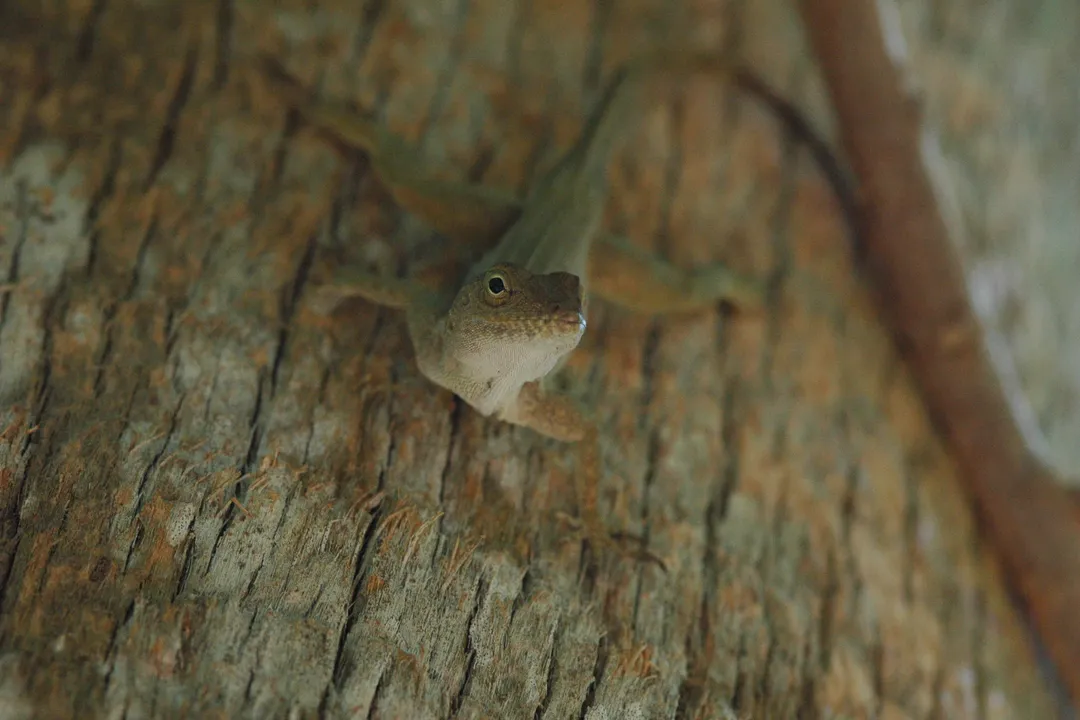
The desire to connect with a small, vibrant reptile like the green anole often leads owners and observers to the same basic question: can you actually touch one? The answer isn't a simple yes or no; it requires understanding the lizard's inherent nature as a wild animal, even when housed in a domestic environment. [4] An anole's primary defense mechanism involves speed and camouflage, making direct physical contact a high-stress event for them. [5]
# Wild Instincts
Even a lizard purchased from a pet store carries strong wild instincts. For anoles found naturally in the backyard, the concept of taming in the way one might tame a dog or cat is generally unrealistic. [4] These creatures are wired to perceive large moving shadows—like a human hand—as a threat. [1][9] Because of this, any interaction should prioritize minimizing the animal’s perceived danger level. [5]
While anoles are not inherently aggressive, their response to being handled is usually fear-based, resulting in frantic movements. [1] A good rule of thumb, especially for newly acquired lizards, is that handling should be kept to an absolute minimum, perhaps only when necessary for cage cleaning or health checks. [9] They are creatures best appreciated visually, through the glass of their enclosure, where they can exhibit their natural behaviors without constant stress. [4]
# Building Trust
If the goal is to achieve a level of comfort where the anole tolerates or even accepts brief handling, the process requires immense patience and consistency, often taking weeks or months. [1][3] Taming an anole is less about teaching it affection and more about teaching it that a specific human presence does not equal imminent peril. [1]
The foundation of this process relies on associating your presence with positive stimuli, primarily food.
- Acclimation Period: Allow the lizard several days, perhaps even a week, to settle into its new habitat before attempting any close interaction. [3] Ensure its environment is set up correctly with appropriate heat, light, and humidity, as sickness or discomfort will halt any progress.
- Hand Introduction: Begin by simply placing your hand inside the enclosure, perhaps near a favorite basking spot, without attempting to touch the lizard. [1] Keep your movements slow and deliberate. [3] The goal here is desensitization; they must learn the hand is stationary and harmless. [1]
- Food Association: Once the lizard seems less alarmed by your hand's presence, use feeding time to your advantage. [1] Offer common prey items, such as crickets, using tongs initially, and then try offering them directly from your fingers. [1][3] If they take food from your fingers, it’s a significant step toward building a positive association. [3]
- The Perch Method: As trust develops, the next step involves encouraging the anole to climb onto your hand willingly, rather than trying to pick it up. [3] Position your hand flat or cupped gently inside the enclosure, perhaps offering a favorite treat near your fingers, allowing the lizard to voluntarily step onto your hand to reach it or simply explore. [1]
It is important to note that while some keepers achieve a point where their lizard will perch calmly, this is generally considered tolerance rather than true affection. The relationship is transactional; you provide safety and food, and in return, they tolerate proximity. [4] The expectation should be one of quiet coexistence, not playful interaction. [1]
# Handling Safety
When the time comes to actually move the lizard—for example, moving it to a temporary container for cage cleaning—the technique matters greatly for the lizard's well-being. [5] Improper capture can lead to tail dropping, which, while often survivable, is a massive energy expenditure and a sign of severe distress. [5]
Veterinary guidelines stress the importance of gentle handling when it is necessary. [9] If you must pick up your anole, it is generally advised to scoop it up from underneath, rather than grabbing from above, which mimics a predatory strike. [3][5] A common technique is to gently approach from the side and use both hands to scoop the lizard, supporting its entire body weight securely. [3] If the lizard is climbing on a branch, you can sometimes slide the branch out carefully, allowing it to step onto your waiting hand. [3]
For the keeper, there are minor considerations as well. While green anoles are not venomous, they can certainly bite if frightened or handled roughly. [5] Their bite is generally considered harmless to humans, more of a quick pinch than a damaging wound. [5] However, the risk of tail autotomy (dropping the tail) is the primary physical concern for the animal during handling. [5]
# Sensory World
Understanding how an anole perceives its environment helps frame why touch is so intimidating. While we focus on touch, their other senses are quite tuned in. For instance, while their vision is excellent for spotting insects, their hearing has limitations. [7] Anoles cannot hear very low-frequency sounds, as their middle ear structure seems to filter out frequencies below about . [7] This means very low rumbles or deep vibrations might not register consciously, but sudden, sharp sounds or nearby, large movements will certainly startle them. [7] This reinforces the need for slow, predictable movements around their habitat. [1]
# Assessing Success and Boundaries
When working toward a positive handling relationship, how do you know if you are succeeding or if you are pushing too far? Anoles give subtle signals. If the lizard is calm, perhaps licking its eyes or sitting relaxed on your hand, this suggests a good moment. [1] Conversely, if its body is rigid, its dewlap (the throat fan) is rapidly displayed, or it is frantically trying to dart away, the session needs to end immediately. [1]
Here is a way to think about setting realistic boundaries based on captive environment versus wild observation:
| Interaction Goal | Frequency Recommendation | Primary Rationale |
|---|---|---|
| Visual Observation | Daily | Primary mode of interaction, zero stress. [4] |
| Feeding by Hand | 2–3 times per week (if acclimated) | Builds positive association. [1][3] |
| Cage Cleaning Move | As needed | Necessary maintenance, must be brief. [9] |
| Free Roam Time | Rare, only if fully comfortable | High risk of escape or stress if not fully tame. [3] |
If you keep anoles outdoors in a screened enclosure, the dynamic might shift slightly because they are exposed to more natural stimuli, but the core rule remains: they are not domesticated. [4] The commitment required to make an anole tolerate handling is significant, and it's important to evaluate whether that effort serves the animal's welfare or just the owner’s desire for close contact. [1] If the interaction causes stress or repeated tail drops, the focus should immediately revert to observation only. [5] A good practice to develop is to always approach their enclosure from the side where they have the most escape room, never directly above, as this minimizes the "predator shadow" effect, making even necessary handling less shocking for them. [5]
Ultimately, whether you can touch an anole depends on how much time and patience you invest, and how low you can manage to keep the stress level throughout that process. For many keepers, the most rewarding interaction is learning to co-exist peacefully with these fast, delicate neighbors in their glass homes. [9]

#Videos
How to Handle a Green Anole - YouTube
Related Questions
#Citations
Any tips for socializing your anole to yourself? : r/Anoles - Reddit
How to Handle a Green Anole - YouTube
How to Tame a Green Anole: 8 Steps (with Pictures) - wikiHow
I have dozens of cool little lizards in my backyard. Can you tame ...
[PDF] Green Anole - Specialized Care for Avian & Exotic Pets
Anole lizard FAQs - The Wannabe Naturalist
Anole Hearing: Much to Learn
Green Anole - Exo Terra
A Vet-Approved Guide to Caring for the Green Anole