Why don't zebras get bitten by mosquitoes?
The sight of a zebra, a creature draped in bold, high-contrast black and white stripes, immediately raises questions about its evolutionary path, especially when considering its savanna environment teeming with biting insects. While theories about camouflage for predator evasion have long been popular, a compelling body of recent scientific work suggests that the primary, or at least a major, function of these distinctive markings is far more immediate: keeping blood-sucking pests at bay. [4][9] Living in areas where insects like tsetse flies and mosquitoes transmit serious diseases, the zebra's coat offers a surprising form of personal defense against constant harassment. [4]
# Insect Defense
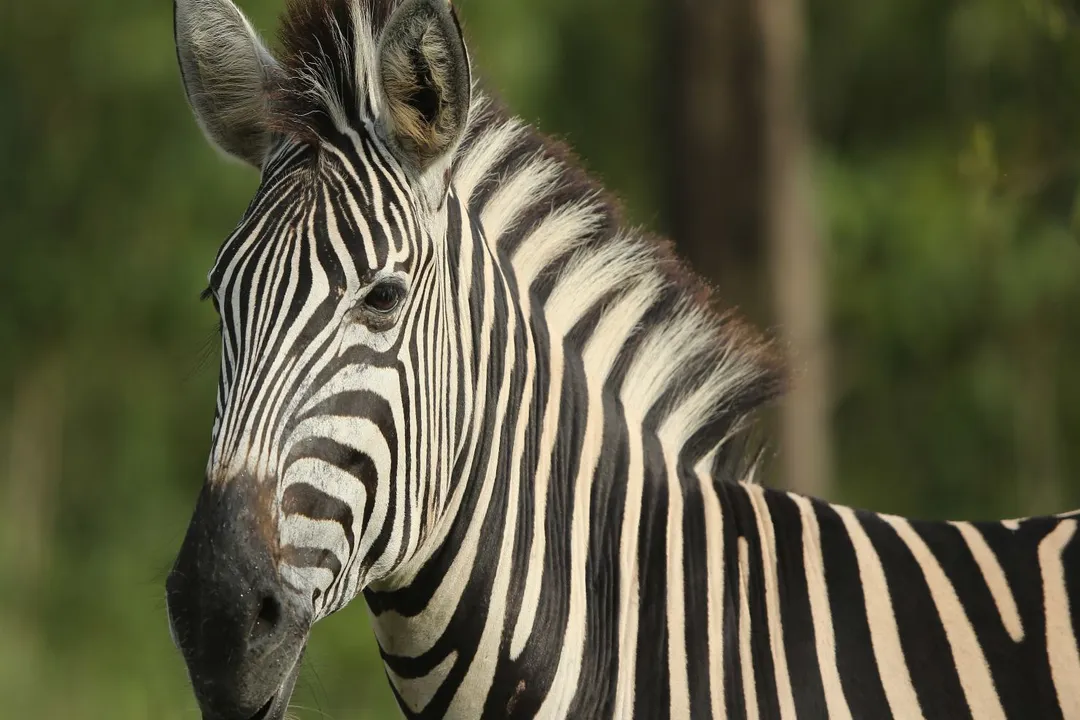
The consensus among many researchers points toward the stripes acting as a physical deterrent to specific insects. [9] This defense mechanism seems particularly tuned to species that rely heavily on visual cues to locate a host, such as horseflies, tsetse flies, and mosquitoes. [1][4] These pests don't just bother the animals; they can spread debilitating illnesses, meaning that even a small reduction in bites could translate to a significant survival advantage over time. [6] Consider the environmental reality: a large mammal standing still in the African bush presents an obvious target, yet the zebra seems to manage the irritation better than its similarly sized, solid-colored neighbors. [5]
# Vision Confusion
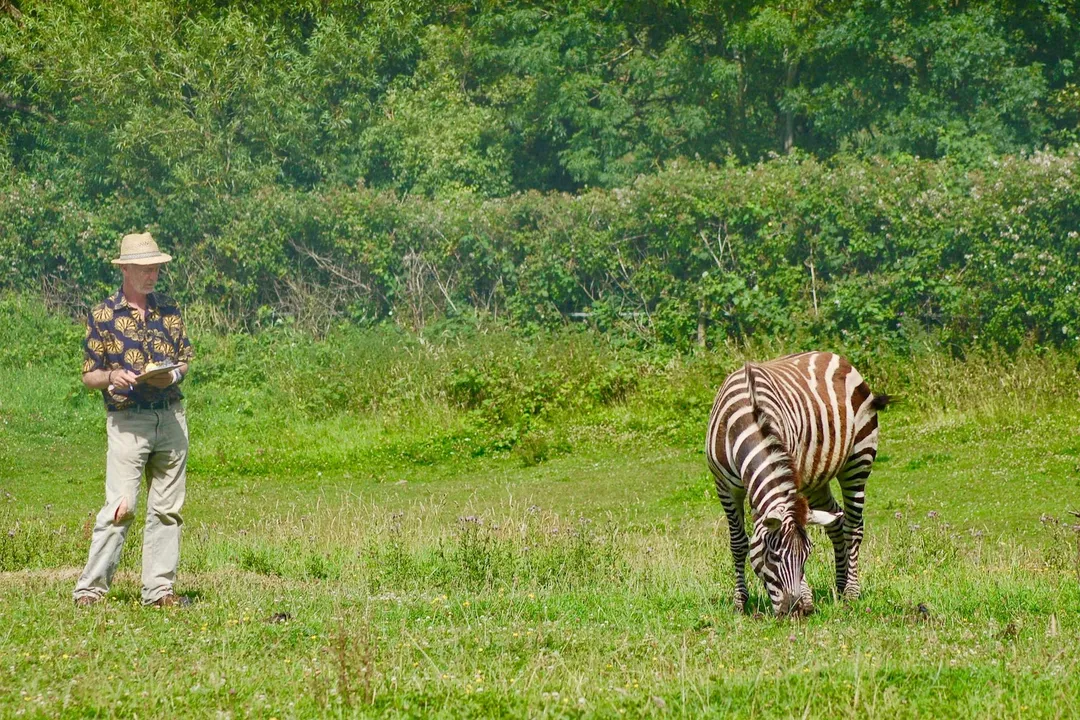
The mechanism behind this repulsion centers on confusing the insect's visual processing system. [1] When an insect, like a horsefly or mosquito, approaches a potential meal, it typically locks onto the uniformly dark silhouette of a large mammal. [9] The striking pattern of the zebra, however, seems to break up this simple target image. [1] Experiments have shown that these stripes disrupt the way light reflects off the animal’s body, making it difficult for the flies to judge their final approach. [1] Instead of a solid object, the fly encounters a confusing visual field.
This visual confusion directly impacts their flight behavior. Studies observing insects approaching striped surfaces versus plain surfaces demonstrated that when flies targeted the stripes, their flight patterns became erratic and uncontrolled just before landing. [1] They seem unable to execute the final, delicate braking maneuver required to successfully alight on the surface. [1] It’s less about making the zebra invisible and more about making it an impossible landing pad. For a biting insect, a successful landing is everything; if the stripes can consistently prevent that final touchdown, the zebra effectively becomes unappetizing or untouchable to them. [4] While the effectiveness against mosquitoes specifically is a key area of study, the principle is the same as for other related biting flies. [4]

# Light Interaction
Another layer to this defense involves how the striped pattern interacts with polarized light. [9] Insects, particularly those that bite, use polarized light—light waves vibrating on a single plane—as a navigational cue to find water sources or suitable hosts. [9] A large, uniformly dark surface absorbs and reflects polarized light in a predictable way, signaling an ideal landing zone to the insect. [9] The alternating black and white bands of the zebra coat scatter this polarized light in a complex, seemingly random fashion. [9]
This scattering effect essentially muddles the visual signal that the insect is keyed into. While a uniformly black horse or a solid brown wildebeest might present a clear, polarized "landing strip," the zebra's pattern scrambles that signal. [9] It is hypothesized that the black stripes absorb the light, while the white stripes reflect it, creating a visual "static" that obscures the true nature of the surface for the approaching insect. [1][9] This interference with polarized light perception is thought to be a crucial reason why the stripes are so effective where solid colors fail. If you were to design a highly conspicuous pattern that specifically confuses insect navigation based on light physics, you might arrive at something very similar to zebra stripes—a fascinating example of evolutionary convergence on a physical solution.
# Pattern Specificity
The specificity of this adaptation is remarkable, leading some to wonder how such a precise solution evolved. [6] It’s not just any pattern; it’s a high-contrast, narrow-stripe arrangement. Research suggests that the width of the stripes matters significantly. In studies using artificial coatings on horses, researchers found that while solid coats or very broad stripes were ineffective at deterring flies, the specific stripe width seen on natural zebras proved most successful at limiting bites. [4][1] This suggests a strong selective pressure favoring the precise spacing that maximally disrupts the optical system of common biting pests in their ecosystem. [1]
If you were to look at the common ungulates sharing the zebra’s habitat—like solid-colored wildebeest, gazelles, or even the solid-coated horses and donkeys that zebras share ancestry with—the difference in fly harassment is often noticeable, reinforcing the idea that this specific coat pattern provides a tangible, measurable benefit beyond other coats. [5][6] The fact that zebras often venture into areas where the risk of fly-borne illness is high, areas that other, similarly sized herbivores might avoid, further underscores the protective value of their unique fashion sense. [7] The evolutionary trade-off here is significant: while the stripes make the zebra highly visible to predators in some lighting conditions, the consistent benefit of reducing disease and blood loss from parasitic insects likely outweighed the increased predation risk over millennia.
# Experimental Proofs
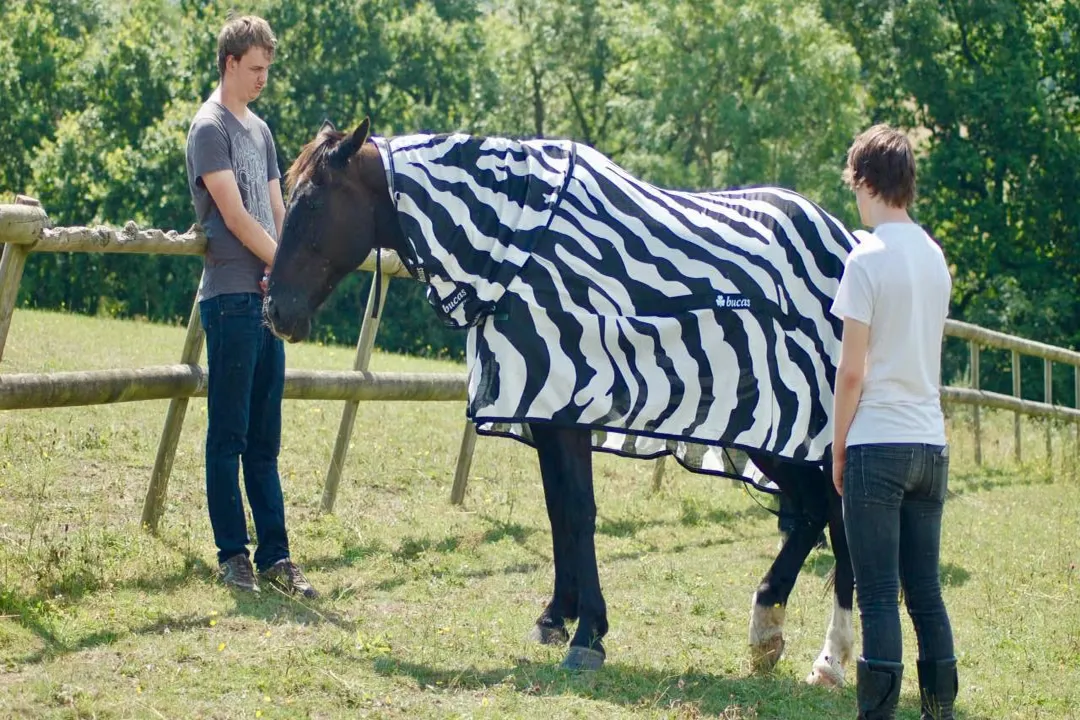
The scientific confirmation of this theory involved careful experimental design, often moving beyond mere observation. [4] One common method involves comparing the number of insects landing on artificially prepared surfaces or on animals whose coats have been experimentally altered. [1][4] For example, researchers have used blankets or paint to mimic different coat patterns on horses. [4] The results consistently show that when the horses are covered in patterns that replicate the zebra's stripes, they experience significantly fewer landings and bites from flies compared to when they are covered in solid black, solid white, or even broad, widely spaced stripes. [4][1]
These controlled tests move the hypothesis from interesting correlation to established causation regarding the disruption of landing behavior. [1] It also helps separate the visual effect from other potential factors, like skin temperature or odor, by controlling the visual stimulus while keeping the animal the same. [2] The consistent data across different studies and different types of biting flies strongly supports the notion that the visual disruption caused by the narrow, high-contrast pattern is the primary driver of the repellent effect. [4]
# Beyond Mosquitoes
While the question often focuses on mosquitoes, it is important to recognize that the stripe pattern provides broader protection. The insects most actively deterred by the stripes appear to be those in the Tabanidae family (horseflies and deer flies) and the Glossinidae family (tsetse flies). [1][4] Mosquitoes, which transmit malaria and other diseases, are also affected, though the effect might vary slightly depending on the species of mosquito and its specific visual acuity and landing strategy. [4]
For instance, tsetse flies are known vectors for trypanosomiasis, a serious threat to both livestock and wildlife, making avoidance particularly critical for survival in certain regions. [7] Therefore, the zebra's evolutionary investment in stripes likely serves as a general defense against multiple vectors, ensuring better health and survival rates in disease-endemic zones. [6] When evaluating the fitness benefit, reducing the risk of multiple deadly diseases from different vectors through one coat pattern represents an incredibly efficient biological adaptation. It’s a single visual strategy tackling a complex, multi-faceted environmental threat.
#Videos
How do zebra stripes keep them safe? | A closer look at zebras
Related Questions
#Citations
How Zebra Stripes Disrupt Flies' Flight Patterns | UC Davis
Scientists believe that a function of a zebra's stripes is to deter ...
How do zebra stripes keep them safe? | A closer look at zebras
Zebra stripes could prevent insect bites in humans | CNN
mosquitoes are attracted to black, so if you wear striped clothes, you ...
How can adaption be so specific? Zebra stripes are to repel flies?
[PDF] HYPNOTIC STRIPES - Reid Park Zoo
Why Mosquitos Can't Bite a Zebra? - Instagram
The truth behind why zebras have stripes - BBC