What is Whimbrel?

The Whimbrel, an elegant shorebird known for its unmistakable silhouette against the sky, belongs to the curlew family and presents a fascinating case study in global distribution and adaptation. This mid-sized wader, technically classified within the order Charadriiformes, captures the imagination of birders across continents. The name itself, "Whimbrel," is widely believed to have originated in England as an onomatopoeic imitation of the bird's characteristic call—a rippling whistle or a series of piping notes.
# A Divided Species
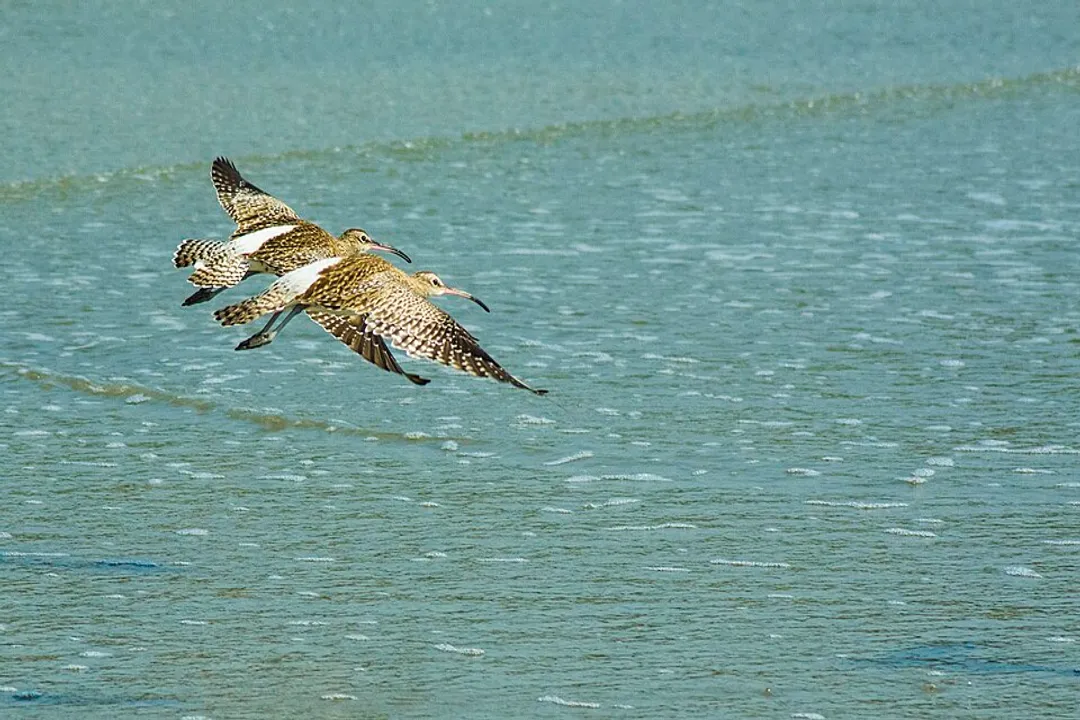
For much of ornithological history, the Whimbrel was treated as a single, cosmopolitan species (Numenius phaeopus) that bred across the subarctic regions of both the Palearctic and North America, wintering globally. However, recent analysis has led to a significant taxonomic change: the species complex has been formally split into two distinct entities as of 2025. The population found across the Americas is now recognized as the Hudsonian Whimbrel (Numenius hudsonicus). Conversely, the populations breeding across Eurasia and wintering across the Old World are designated as the Eurasian Whimbrel (Numenius phaeopus). While this split is increasingly adopted, some taxonomic bodies still consider them conspecific.
# Defining Features
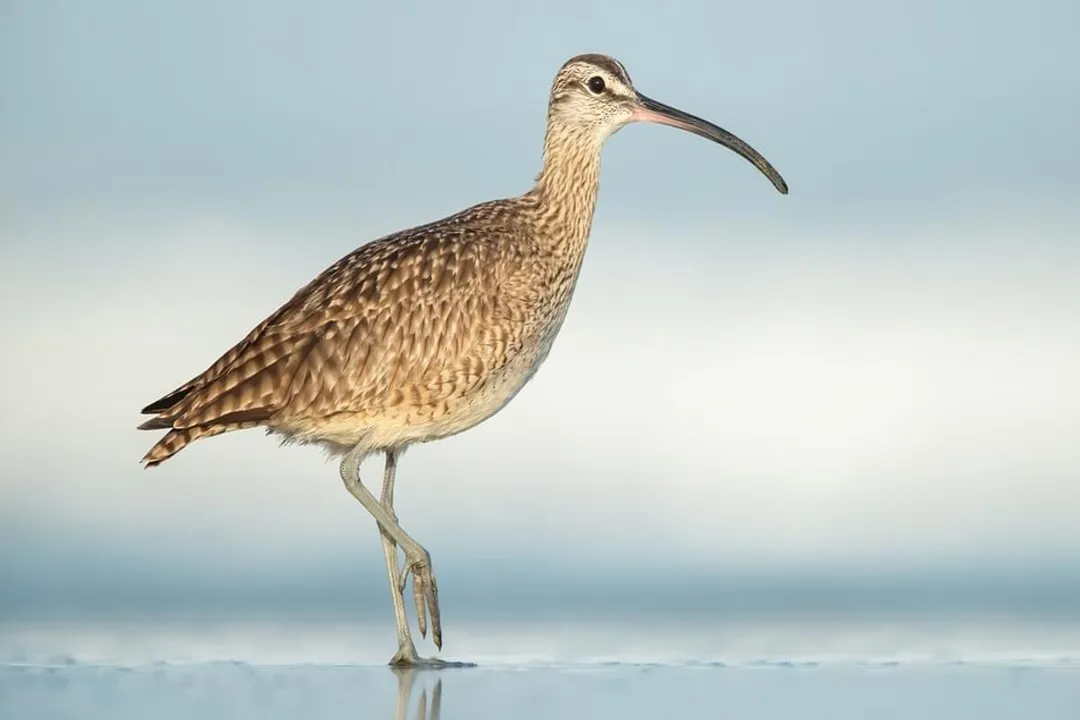
To identify a Whimbrel, one must look closely, especially when encountering them outside the Americas, as their general appearance is quite similar. They are large sandpipers, generally the size of a crow or a Mallard, standing on long, blue-gray legs. Their plumage is largely a mottled, streaked gray-brown above. A crucial field mark, common to both species, is the head pattern: a dark brown crown that is conspicuously split down the center by a distinct, light-colored stripe, often accompanied by strong lines above the eye.
The most defining characteristic, however, is the bill. It is remarkably long and curves sharply downward near the tip. The genus name, Numenius, even references this feature, deriving from the Ancient Greek word for "new moon," referring to the crescent shape.
# Spotting the Difference
While the head stripes are helpful, the key to separating the New World and Old World birds lies on their rear end—specifically, the rump. Eurasian Whimbrels possess a prominent, bright white rump, a feature that becomes very obvious when the bird is in flight. In contrast, the Hudsonian Whimbrel lacks this flashy marker; its rump is drab brown, closely matching the coloration of the rest of its back. When observing coastal migrants in North America, spotting a Whimbrel with a distinctly white rump often signals that you have encountered a vagrant Eurasian bird rather than the locally breeding Hudsonian population.

# Global Commute
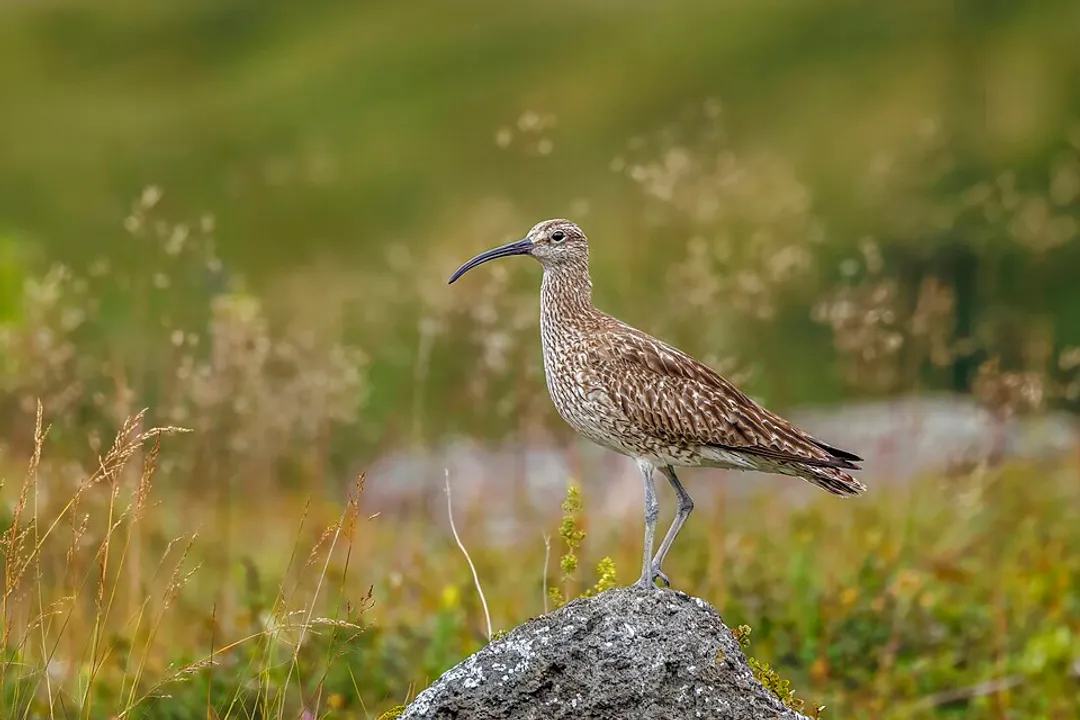
Whimbrels are true long-distance voyagers, earning their reputation as remarkable migrants. The Hudsonian Whimbrel undertakes an incredible trek, moving between its Arctic breeding grounds in North America and wintering areas stretching as far south as Tierra del Fuego. Some individuals migrating along the Atlantic coast are known to undertake nonstop overwater flights spanning as much as 4,000 kilometers (2,500 miles) from departure points in New England or southern Canada directly to South America. One tracked female, named Hope, traveled over 80,000 kilometers (50,000 miles) over three years between her breeding area in western Canada and her wintering site in the Virgin Islands. The Eurasian counterpart follows a similarly expansive route, wintering along the coasts of Africa, South Asia, and Australasia.
During the non-breeding season and migration, these birds congregate in flocks, often moving in small lines or V-formations, favoring habitats like tidal mudflats, sandy beaches, and salt marshes.
# Specialized Diet

The long, curved bill is not merely ornamental; it is a finely tuned instrument perfectly matched to the bird's primary diet. Whimbrels mostly consume marine invertebrates, with a strong preference for small crabs and other crustaceans found in soft substrates. The morphology of the bill is so specifically adapted that in some regions, it perfectly matches the shape of fiddler crab burrows. The bird uses this tool to probe just below the surface, extract the prey, and, if necessary, wash off mud or even break off legs before swallowing the main body of the crab.
When breeding conditions arise or as migration nears, their diet broadens. In their northern homes, insects become a significant food source early in the season, eventually supplemented by available berries, such as crowberries and cranberries, by late summer. This dietary flexibility is vital for building the fat reserves needed for their monumental flights. It is interesting to note that while the bill is long, observation suggests the Whimbrel does not probe deeply into the substrate like some other long-billed waders; rather, it probes shallowly or picks items from the surface. Considering how perfectly this specialized tool fits the intertidal invertebrate niche, it emphasizes that the local availability of these specific burrowing prey items likely dictates the quality of a stopover site for a migrating Whimbrel population.

# Arctic Nesting
When the harsh winter retreats, the Whimbrels travel thousands of miles back to their breeding grounds, which are situated on open tundra in the Arctic regions of North America and the Palearctic. The nest itself is a simple affair: a shallow scrape dug into the ground, usually lined with bits of moss, lichen, or grass, often situated in a drier spot near wet tundra areas. The female typically constructs the nest.
The clutch size is usually three to five eggs. Both parents share the duties of incubation, which lasts around 27 to 28 days. The female exhibits remarkable stillness until a threat approaches the nest too closely. Once disturbed, she moves away on foot, attempting to lure the potential danger away from the site. The chicks are precocial, meaning they are relatively mature and mobile soon after hatching, capable of leaving the nest shortly after their down dries. Although they feed themselves, both parents tend to the young until they are ready to fly, a process that takes about five to six weeks.
# Status and Concern
Globally, the Eurasian Whimbrel is currently listed as Least Concern by the IUCN Red List, suggesting that, overall, the population is not currently facing imminent collapse. Historically, however, the species suffered massive declines due to heavy market hunting along their migration routes during the late nineteenth century, though they have since shown some recovery.
The situation is far more complex at regional levels and for the newly recognized Hudsonian species. In Iceland, which hosts about one-third of the world’s breeding population of the Eurasian subspecies islandicus, populations are reportedly crashing, with development cited as a primary likely cause. Furthermore, for observers on the Atlantic coast of the United States, the bird is treated with greater care. In New Jersey, for example, the species is listed as a Species of Special Concern during the non-breeding and migratory seasons. Habitat loss, particularly the degradation of coastal wetland habitats essential for refuel, remains a critical threat across its range, alongside the pervasive pressures of climate change. If you are observing these birds during migration along coastlines like the U.S. Atlantic, paying attention to the tide is key; they are most active foraging on exposed mudflats at low tide, moving to higher ground roosts as the water rises, and a spotting scope will prove invaluable for assessing flocks from a distance.
Related Questions
#Citations
Whimbrel (Numenius phaeopus) | U.S. Fish & Wildlife Service
Eurasian whimbrel
Whimbrel | Audubon Field Guide
Whimbrel Bird Facts | Numenius Phaeopus
Whimbrel | Bird Gallery
Hudsonian Whimbrel
Whimbrel - Numenius phaeopus - NatureWorks
Whimbrel - Conserve Wildlife Foundation of NJ