What are the character traits of the tortoise?
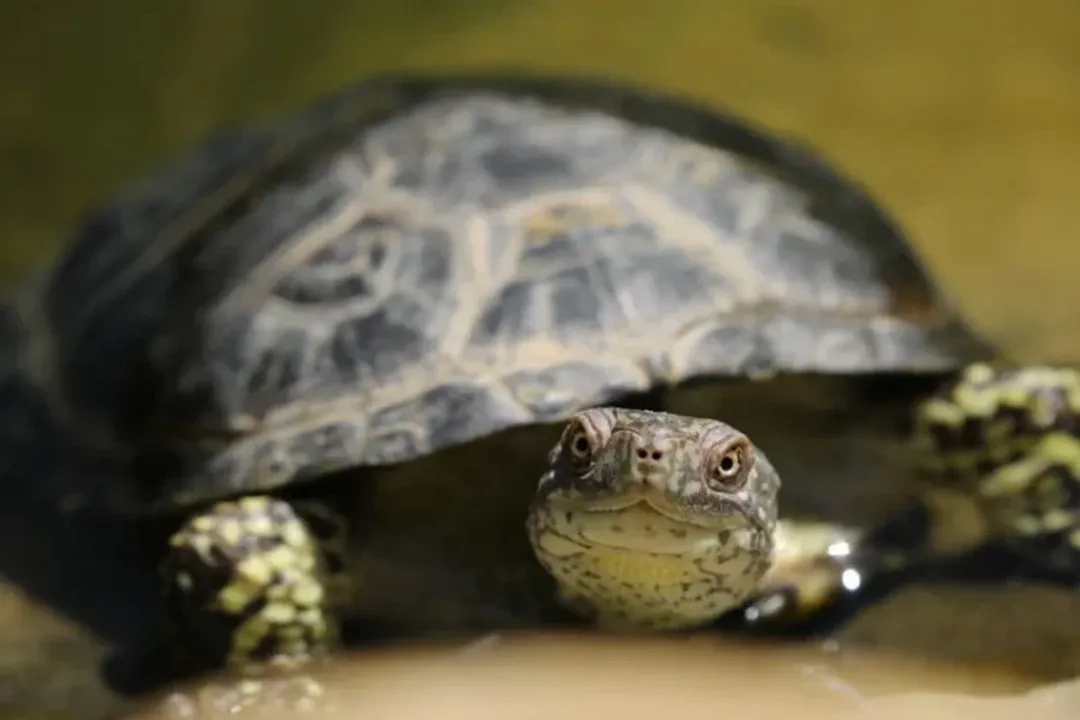
The tortoise, often perceived merely as a slow-moving reptile, carries a rich tapestry of character traits deeply embedded in its biology and cultural symbolism. From the moment one observes this ancient creature, certain qualities immediately stand out, most notably an almost unbelievable sense of patience and an unwavering commitment to its own pace. [1] This is not just a matter of slow locomotion; it speaks to a disposition that seems utterly unhurried by the external world. They are frequently depicted as symbols of wisdom and longevity, qualities often attributed to creatures that have witnessed generations of change while remaining steadfast. [1][2]
# Longevity Character
Perhaps the most defining characteristic associated with tortoises is their extraordinary lifespan. Some species can live for a century or more, positioning them among the longest-living terrestrial vertebrates. [9] This incredible longevity isn't just a biological statistic; it inherently shapes their character. A creature designed to live for decades must possess traits favoring long-term survival, namely conservatism in action and energy use. [1] They are not built for rapid, high-risk endeavors. This extended existence allows them to develop routines and potentially exhibit a form of ancient, placid wisdom simply through accumulated time and experience. [1][2] In stark contrast to many short-lived animals whose character is defined by immediate reaction, the tortoise's personality is written over the span of decades.
# Temperament Observation
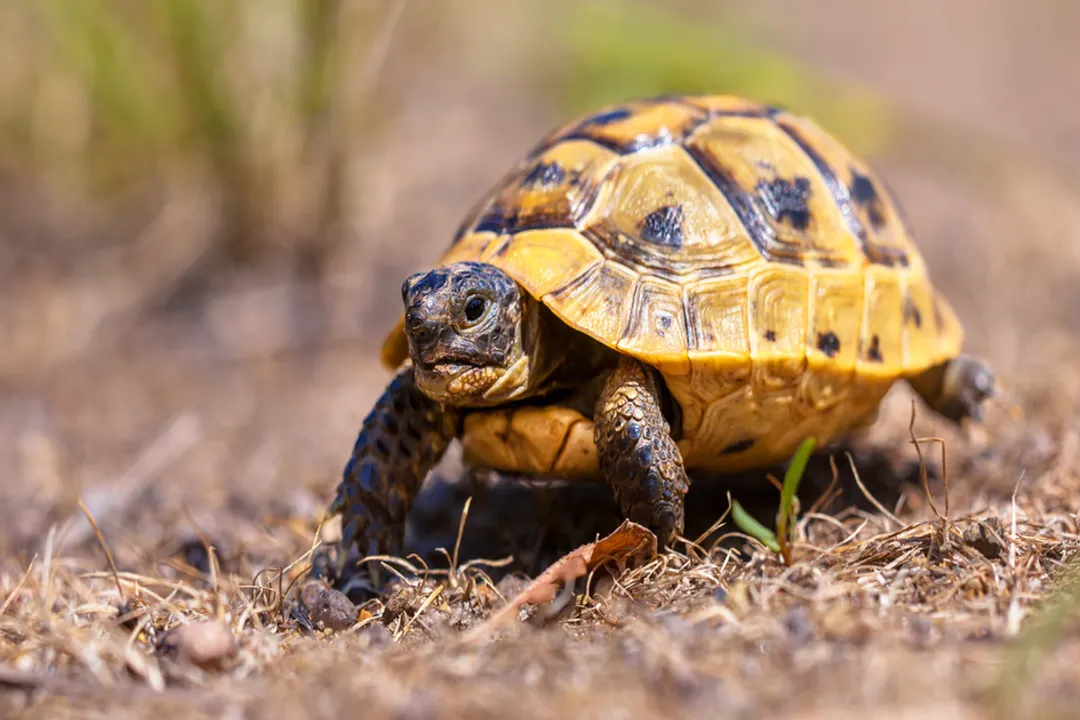
When owners and keepers describe their tortoises, a set of consistent behavioral traits emerges. They are generally regarded as gentle creatures. [1] However, that gentleness is often coupled with a surprising degree of stubbornness or tenacity when they set a course. [4] If a tortoise decides to move toward a particular patch of sun or a certain hiding spot, shifting its direction requires considerable effort, often described by keepers as being immovable. [4] They are generally solitary animals, which informs their interaction style—they tend to keep to themselves unless motivated by food or mating urges. [9]
One fascinating observation shared by keepers is their level of recognition and potential curiosity. While often seen as simple, some owners note that their tortoises learn routines, recognize familiar faces, and can even display cautious inquisitiveness about new objects placed in their environment. [4] This suggests an awareness that belies their slow exterior. They aren't entirely passive observers; they are deliberate participants in their contained worlds.
# Survival Traits
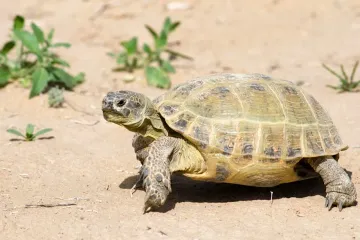
The tortoise’s fundamental character is intrinsically tied to its defense mechanisms and environmental needs. The most visible manifestation of their character is their protective shell, a bony structure fused to the spine and ribs that offers supreme defense. [2][9] When alarmed or stressed, their immediate character response is retraction—tucking the head and limbs tightly inside the shell for security. [2][3] This ingrained defensive posture highlights a primary driver: self-preservation through invisibility and immobility when danger is perceived.
Adaptation to harsh environments further defines their behavioral traits. For instance, desert tortoises, like the species found in the Mojave and Sonoran deserts, display remarkable resilience through behavioral thermoregulation. [3] They characteristically dig burrows to escape extreme temperatures, both hot and cold. [3] This points to an inherent characteristic of foresight—preparing shelter for conditions they know are coming, rather than reacting solely to the immediate moment. They exhibit slow activity patterns, often becoming active early in the morning or late in the afternoon to avoid the harshest midday heat. [3]
The inherent metabolic style of tortoises also dictates much of their disposition. Being reptiles, their energy expenditure is low compared to mammals, leading to that signature slowness. [9] This isn't a character flaw; it is an energy-saving trait that directly enables their impressive lifespan and allows them to subsist on relatively sparse vegetation. [3]
# Pace and Persistence
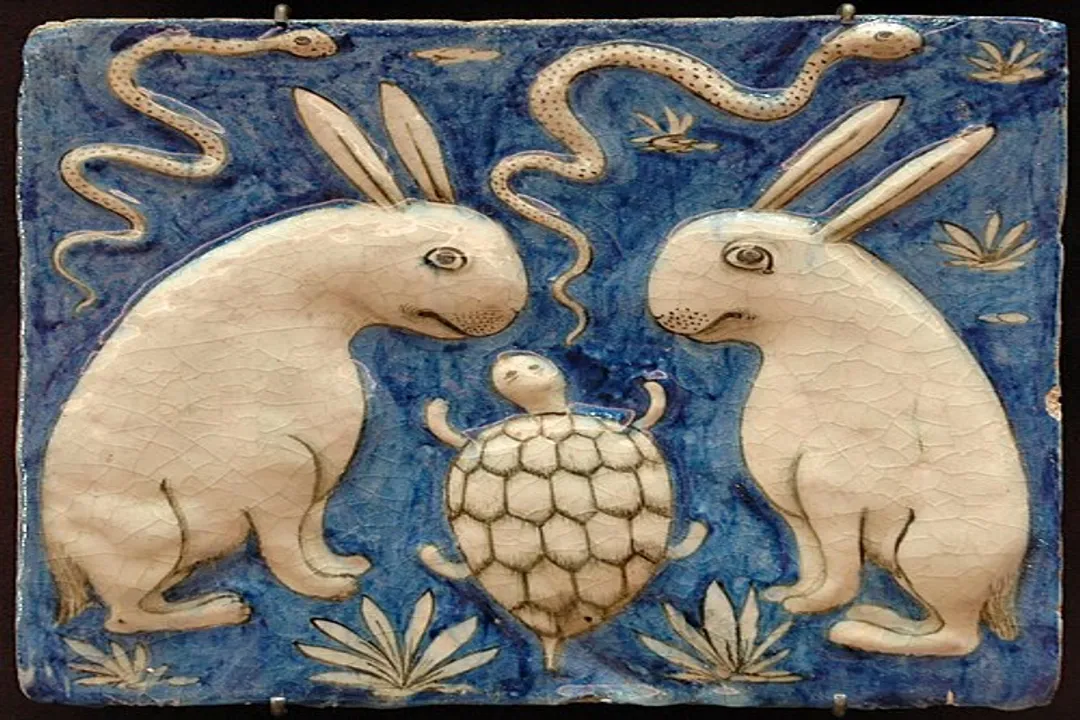
The classic fable of the tortoise and the hare perfectly encapsulates one of their most celebrated characteristics: persistence. [1] While the hare represents speed and erratic energy, the tortoise represents consistency and unwavering focus. This is a case where the biological reality supports the metaphor: once committed to a goal, the tortoise moves forward, however slowly, until the goal is reached. [1] They simply do not seem to possess the trait of giving up mid-task when the path is clear.
If we consider the energy required to move their heavy shell, every step is a conscious investment. This suggests an economy of movement that translates into a character trait of efficiency combined with determination. Compare this to a pet rabbit, which might dart about randomly, expending bursts of energy without clear long-term direction; the tortoise’s movement is almost always directional and purposeful, even if the purpose is simply reaching a patch of clover a few feet away. [6]
A deeper look at tortoise character reveals how deeply their needs shape their observable traits. Their herbivorous diet, consuming grasses, weeds, flowers, and cacti, requires a significant amount of foraging time relative to their slow speed. [3][8] This means that much of their waking character is spent in the methodical search for sustenance. A well-fed tortoise is a content, placid tortoise; an underfed one may exhibit increased restlessness, though still slow by human standards, as the survival instinct to find food overrides simple resting. [6]
What is often overlooked when discussing tortoise character traits is the emotional neutrality they seem to project, which can be misinterpreted as indifference. While they learn to recognize caretakers, their primary social interactions are functional rather than affectionate in the mammalian sense. A tortoise may exhibit excitement by stretching its neck out when food is presented, but this is less a demonstration of joy and more an adaptive behavior to maximize feeding posture. [4] This lack of overt emotional display forces observers to ascribe personality based on consistency and routine—the trait we value is reliability. [1] They are predictable partners in an ecosystem or a carefully managed habitat.
Considering the difference between species also informs character. While the general principles of longevity and protection hold, a Galapagos tortoise possesses different environmental demands and thus slightly different behavioral expressions than a smaller Hermann's tortoise kept as a pet. [9] For instance, the need for specific hydration and temperature gradients in desert versus temperate species means their daily 'mood' or activity level is highly dependent on matching their environment to their inherited disposition. [3][7] A tortoise removed from its preferred thermal range will exhibit lethargy or frantic, poorly coordinated attempts to escape the unsuitable conditions—behaviors driven by deep physiological character traits related to thermoregulation.
Here is an important analytical consideration for anyone interacting with these reptiles: The Tortoise's Perception of Time is Vastly Different from Ours. When a keeper expects a tortoise to move across a yard in five minutes, they are imposing a mammalian, predator-prey time scale onto an animal whose entire evolutionary history is based on surviving for centuries. [9] The tortoise’s characteristic slowness is, therefore, not a lack of will, but the correct, energy-optimized will for its biological reality. When a tortoise pauses for ten minutes in the sun after eating, it is not being lazy; it is efficiently processing a meal with minimal energy output, a highly evolved trait that enables its incredible lifespan. [1] This mismatch in temporal perception is the source of most keeper frustration, but understanding it reframes the tortoise’s trait from 'stubborn' to 'perfectly adapted'.
Another element that shapes the tortoise’s perceived character is its relationship with its shell. The shell dictates its posture, its walking gait, and its defensive reaction. It is an externalized personality component. Because it must carry this massive, permanent structure, the tortoise cannot afford sudden, quick movements that could lead to tipping over—a potentially fatal scenario for many species. [2] This physical constraint reinforces the behavioral trait of deliberation. Every shift in weight, every slow turn, is calculated not just for safety from predators, but for structural stability. If you observe a young tortoise learning to navigate uneven terrain, you notice the trial-and-error is incredibly slow, a natural physics lesson being taught through physical consequence, building a deep-seated physical conservatism that lasts a lifetime.
# Social Structure and Independence
Tortoises are not herd animals like many mammals. Their independence is a key character feature. While groups can be housed together, their interactions are typically non-hierarchical, revolving around resources like basking spots or food rather than social dominance. [4] This self-reliance means they do not typically seek out company for emotional support; their well-being is intrinsically linked to their environment and physical health. [7] For a creature whose primary defense is hiding, social interdependence would be a liability. Their character is built around solipsism—a self-contained existence where the immediate surroundings provide all necessary context for survival. This makes them exceptionally low-maintenance from a purely social standpoint, unlike many other popular pets. [6]
# Adaptability Versus Rigidity
The tortoise presents an interesting dichotomy: it is highly adaptable in terms of habitat range across the globe, surviving in deserts, forests, and scrublands. [9] Yet, within its specific environment, its behavior can appear rigidly defined by routine. This suggests a character trait that favors extreme environmental specialization over behavioral flexibility. They thrive when their chosen, often narrow, set of environmental parameters (temperature, humidity, substrate, diet) are met consistently. [3][6] When these parameters shift suddenly—say, an unseasonal cold snap—their slow physiology means they cannot quickly adapt their internal state, leading to brumation or potential illness. [7] Their strength lies in choosing or creating a stable niche, not in rapid adjustment to chaos.
In summary, the character of the tortoise is a deep combination of visible traits like patience and slowness, interwoven with vital survival mechanics such as energy conservation and profound self-protection. [1][2] They embody persistence, quiet resilience, and a measured approach to existence that has allowed them to survive epochs. [9] Observing a tortoise is to witness a life lived intentionally, one slow, steady step after another.
#Videos
Understanding TORTOISE Behavior! - YouTube
Related Questions
#Citations
Character traits of a tortoise - angle and views - WordPress.com
The remarkable features and symbolism of the tortoise
Desert Tortoises (Gopherus spp.) Fact Sheet: Physical Characteristics
Hermann's keepers! tell me about your tortoise's personality? - Reddit
Understanding TORTOISE Behavior! - YouTube
Managing The Tortoises, Horses, and Rabbits In Your Team
Tortoises: Facts, Habitat, Diet, and Conservation Efforts | IFAW
[PDF] Tortoise | Tohono Chul
Tortoise - Wikipedia