How much should a Borador weigh?

Determining the ideal weight for a Borador isn't as straightforward as looking up a purebred standard, largely because this energetic mix of Labrador Retriever and Border Collie comes with a healthy dose of genetic variation. [6] These dogs are designer breeds, often created as a first cross (F1), meaning the resulting size can lean toward either parent or perfectly balance them out. [2][5] Generally speaking, owners can expect their Borador to fall into the medium to large size category. [2][5][7] Most reliable sources place the adult weight range between about 39 pounds and 65 pounds. [2][5][6][7] Some resources list a slightly narrower band, suggesting weights of 40 to 60 pounds is common, [1] while others cite an upper limit closer to 70 pounds. [4]
# Size Range
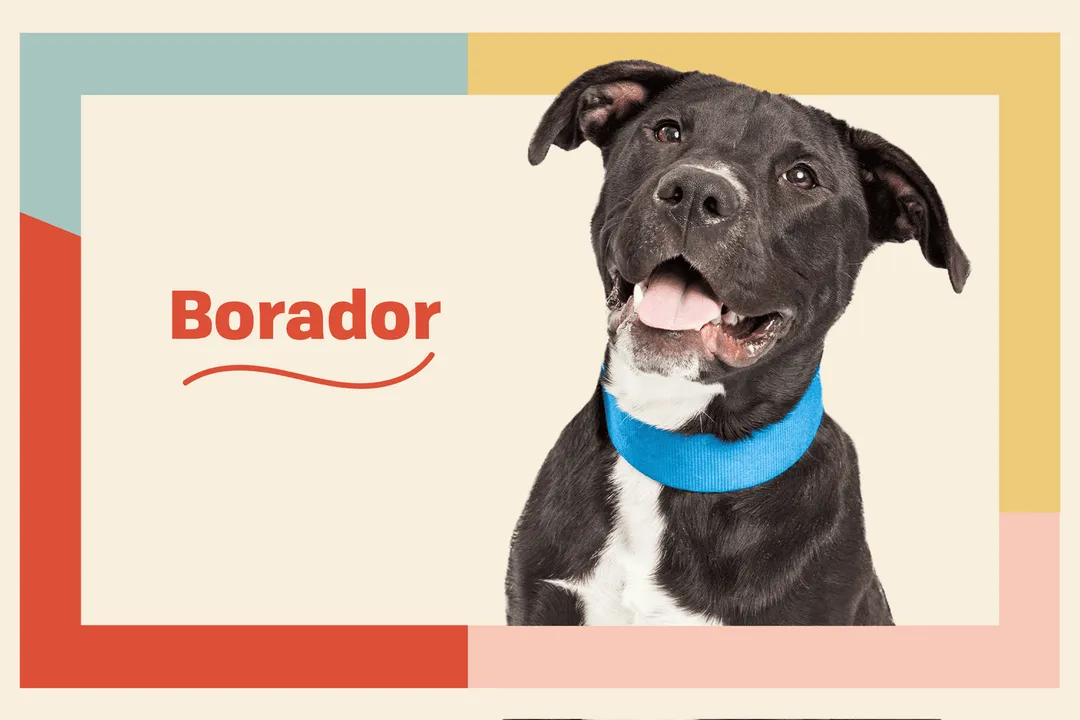
The official recorded weight for an adult Borador typically sits in the range of 39 lbs up to 65 lbs, although anecdotal reports certainly show variety. [3][6] When considering height, these athletic dogs usually measure between 18 and 25 inches tall at the shoulder. [6][8] Given that the Labrador Retriever parent usually weighs between 55 and 80 pounds and the Border Collie parent ranges from 30 to 55 pounds, the resulting Borador weight is inherently variable. [1] If you have two Boradors from the same litter, it is entirely possible for one to weigh 60 pounds and the other to weigh 85 pounds, depending on which ancestral traits predominate in their physical structure. [3]
# Gender Factors

Like many canine breeds, a slight size difference often exists between the sexes, with males typically tipping the scales a bit heavier than females. [1] For males, the expected adult weight range is often cited as 45 to 65 pounds. [1][9] Females tend to be slightly lighter, generally falling between 40 and 60 pounds. [1][9] While these are excellent benchmarks, they are merely guides, and an athletic female might easily outweigh a less muscular or smaller-framed male. [3]

# Parental Blueprint
The primary factor dictating where your individual Borador will land within the broader weight spectrum is the genetic contribution from the Border Collie versus the Labrador Retriever. [3] If your dog strongly favors the Labrador side, you might see a slightly taller dog with a more robust, muscular frame, especially through the chest, reflecting the Lab's history as a water-retrieving dog. [3][4] These dogs might approach the higher end of the documented weight scale, perhaps settling around 65 pounds or slightly more if they have the sturdier build. [3] Conversely, a dog leaning toward the Border Collie heritage might exhibit a leaner physique, reflecting the herding dog’s build, potentially placing them toward the lower end of the weight chart, perhaps around 40 pounds. [3] Furthermore, the specific lineage of the Labrador parent matters; a mix with an English Labrador (known for being shorter and stockier) might result in a smaller dog than one mixed with the taller, more athletic American Labrador. [4] Understanding this genetic contribution helps frame expectations; a 55-pound dog that looks like a sturdy Lab is healthy, but a 55-pound dog built like a very compact Collie might be carrying excess weight. [3]
# Puppy Maturation
It’s important to remember that a puppy’s weight is not a predictor of their final adult size, especially with a hybrid breed. [3] Boradors, like their parents, take time to fill out their muscle mass. A puppy might weigh around 35 pounds at eight months and be perfectly on track to top out near 40 pounds if they favor the Collie structure. [3] However, another puppy that size might only have finished developing their powerful chest musculature later on, eventually settling at 60 or 65 pounds. [3] Since both parent breeds are active and built for work, they are muscular dogs, meaning that true adult weight and shape are often only finalized well after their first birthday. [1][3] You may see steady growth until they are about a year old, followed by continued filling out, especially in the chest, for several months after that. [3]

# Assessing Body Score
Instead of focusing solely on hitting a specific number on the scale, the more meaningful measure for any Borador owner is body condition. [9] Since this breed has a healthy appetite inherited from both working parents, they can become obese if their energy needs are not met, which can exacerbate joint issues like hip or elbow dysplasia. [9][8] A dog that is too heavy will have its health compromised, regardless of whether it's 55 or 65 pounds. [9] A simple, actionable assessment you can perform at home involves checking their ribs. If you can easily feel the ribs without pressing hard, and they possess a noticeable tuck in their underline when viewed from the side, they are likely at a healthy weight, even if the scale reads higher than a vet suggested years ago. [3] If you have to press firmly to feel the ribs, or if the ribs are hard to find under a layer of fat, the dog needs adjustment in diet or exercise, regardless of their parentage comparison. [9] This tactile assessment is always superior to chasing a specific target weight dictated by a general chart. [8]
# Weight Variability Examples
The experiences of Borador owners offer clear evidence of this size spectrum. For instance, while some owners report their adult dogs stabilizing around 55 pounds, [3] others share accounts of dogs weighing 70 pounds or even 81 pounds. [3] One owner noted their male Borador reached 45 pounds and remained steady. [3] The variance suggests that the genetic mix plays a far larger role than any breed expectation. It is not uncommon to see one Borador resembling a shaggy Labrador, carrying the associated weight, while another in the same litter looks much more like a Collie, resulting in a significant weight gap between siblings. [3] For example, two dogs from the same litter were seen ranging from 60 lbs to 85 lbs, with the lighter one built like a Collie and the heavier one built like a Lab. [3] This clearly illustrates that while the typical weight centers around the 40 to 65-pound mark, significant variation is normal and healthy, provided the dog maintains good physical condition and meets its high energy requirements. [2][4]

# Nutrition and Weight Control
Because both parent breeds, the Labrador and the Border Collie, are high-energy working dogs, Boradors inherit a substantial appetite. [9] This combination of high caloric intake potential and high exercise needs means that diet must be managed carefully to prevent obesity. [9] If your dog is on the leaner, Collie-influenced end of the scale, they might still need the same daily vigorous exercise as a more robust Lab-influenced counterpart to prevent destructive behavior stemming from boredom, not just excess weight. [4][7] Conversely, if your dog is built like a larger Lab, they may require closer to the higher end of the recommended food intake, provided they are burning that fuel through rigorous activity. [9] To help manage weight and also to mitigate the risk of bloat, which can affect larger breeds, owners should feed their adult Boradors at least twice daily in smaller, more frequent meals rather than one large serving. [2][5] Monitoring their intake against their activity level—which should ideally exceed two hours of vigorous activity daily—is the best way to ensure they remain in that ideal body condition. [4][6]
Related Questions
#Citations
How much does your borador weigh? - Reddit
Borador Dog Breed Information & Characteristics - Daily Paws
Borador Dog Breed Information | Purina UK
Borador | Dog Breed Facts and Information - Wag! Dog Walking
Borador Dog Breed Information - Purina Arabia
Borador Dog Breed & Adoption Information | Petfinder
Dog Breeds Guide - Borador Characteristics & Care Tips - 3poo1
Borador Dog Breed Complete Guide - A-Z Animals
Borador Dog Breed Health, Grooming, Feeding ... - PetGuide