How intelligent are opossums?
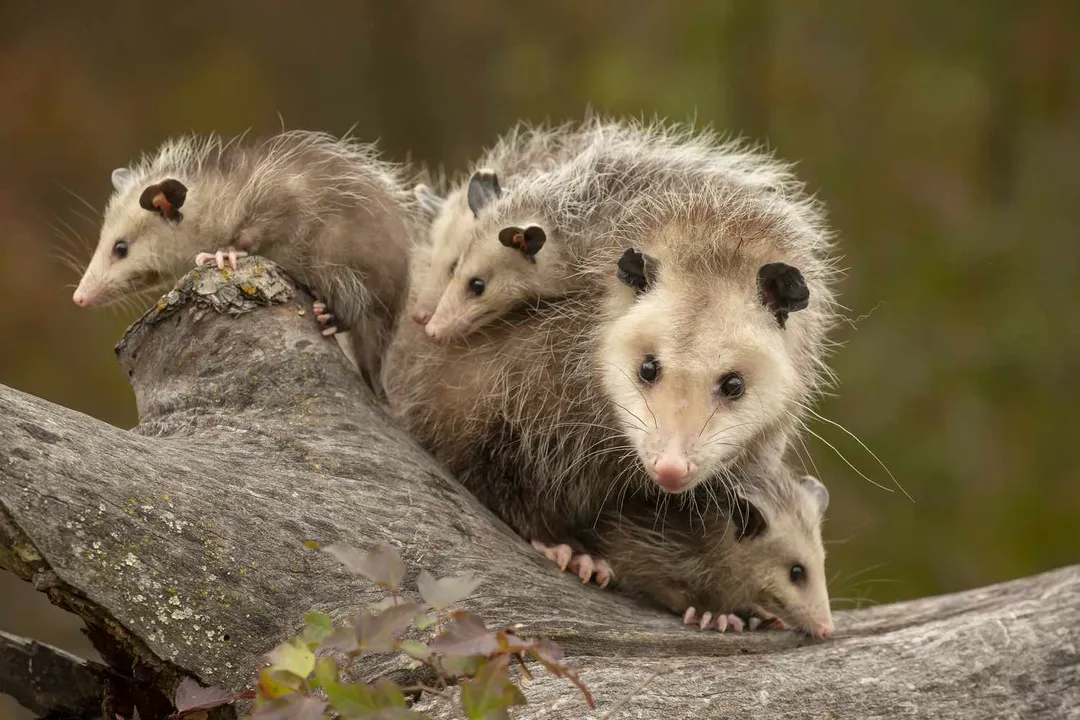
The perception of the Virginia Opossum as an unintelligent creature often stems from a superficial look at its survival strategy rather than a deep dive into its cognitive abilities. Many casual observers label them as simple or dim-witted, perhaps influenced by their famous, seemingly automatic, defense mechanism of "playing possum". However, modern observations and studies suggest that this generalization misses a significant part of the picture for North America's sole native marsupial.
# Brain Size
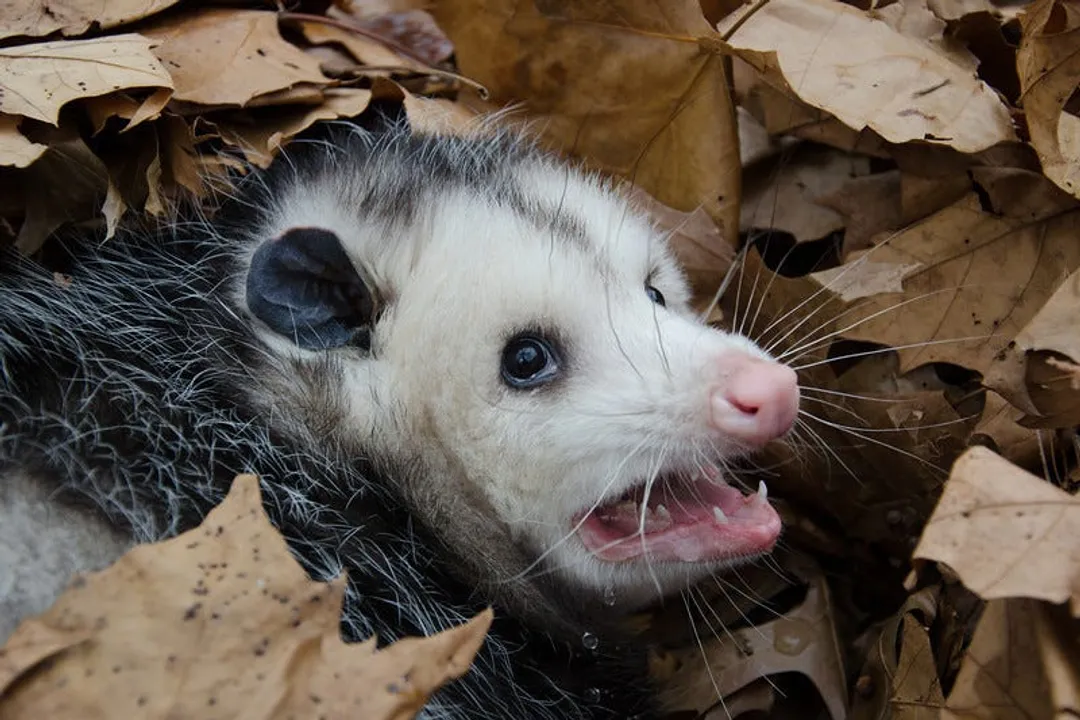
One of the primary reasons for the "dumb" label relates directly to their anatomy. Opossums possess relatively small brains when measured against their overall body size. In the animal kingdom, brain-to-body mass ratios are often used as a crude, though frequently flawed, benchmark for cognitive power. If one relies solely on this metric, the opossum might seem outmatched when compared to highly encephalized mammals like canids or procyonids. This physical limitation, however, does not entirely dictate behavioral flexibility or learning capacity in the wild.
# Learning Capacity
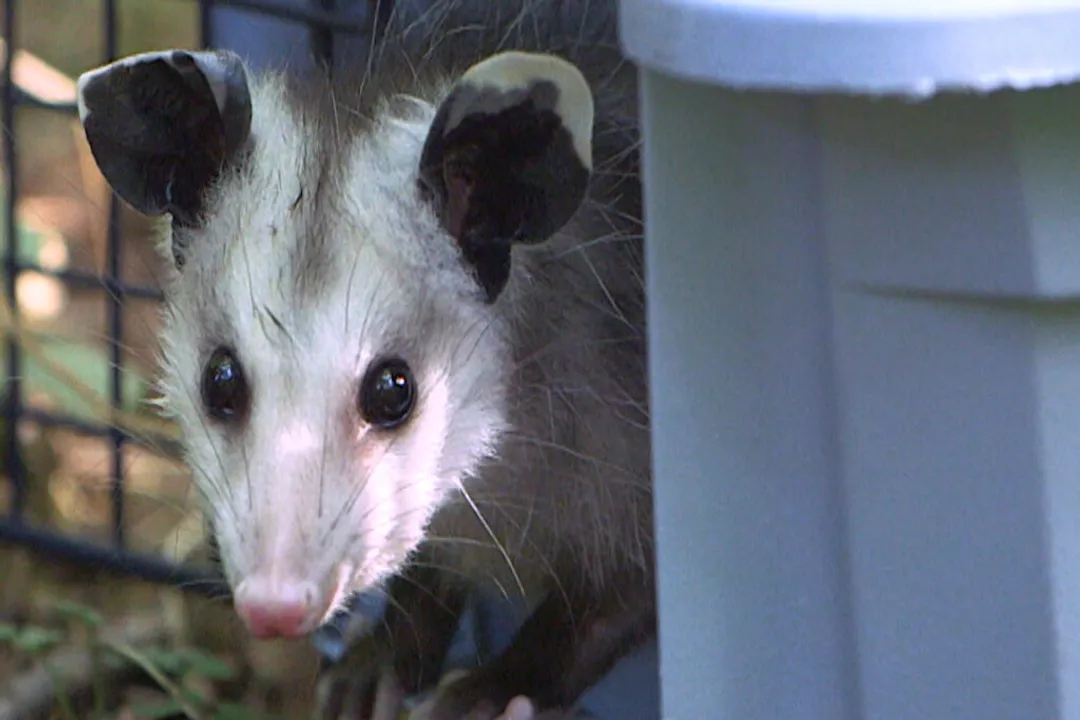
Despite a smaller cerebral cortex compared to many placental mammals, opossums demonstrate impressive learning and adaptation skills that contradict the "dumb" stereotype. Research indicates they can learn tasks quite effectively, sometimes even when compared to animals generally considered quite smart, like raccoons, depending on the specific task studied. For instance, studies involving puzzle boxes and mazes have shown that opossums can learn routes and solve problems.
They are quite capable of observational learning—watching another animal solve a problem and then replicating the solution themselves, a skill that requires memory, attention, and association. This ability to learn from the experience of others suggests a higher level of social cognition or information processing than often credited. Furthermore, their success in colonizing diverse, often harsh, urban and suburban environments across North America speaks volumes about their adaptability and ability to recognize new food sources and safe refuges.
# Memory Retention
A key component of intelligence is memory, and here, opossums show surprising proficiency in the short term. They seem to possess a decent spatial memory, allowing them to recall the locations of specific food caches or safe resting spots within their established territories for a noticeable duration. While their long-term memory might not rival that of elephants or primates, their ability to recall recent dangers—such as avoiding a specific type of trap or a road section where they previously had a close call—is evident in their survival rates.
If you have an opossum regularly visiting a backyard feeding station, their consistent return demonstrates a form of associative memory: the location equals reliable calories. A fascinating, if anecdotal, data point comes from wildlife rehabilitation circles: many seasoned rehabilitators note that opossums are quite adept at remembering which human hands offer care and which might pose a threat, sometimes showing distinct preferences or avoidance based on prior handling.
# Defensive Behavior vs. Intellect
The most iconic opossum behavior, thanatosis, or "playing possum," is routinely cited as evidence of dimness because it appears so unthinking. This response, where the animal collapses, drools, and emits a foul odor while appearing dead, is actually an involuntary, specialized reaction to extreme, inescapable stress or fear. It is an ancient survival mechanism deeply embedded in their biology, rather than a conscious, poorly executed attempt at deception.
This involuntary collapse is distinct from active, cognitive deception. While a raccoon might actively hide its food or fake a distraction, the opossum's response is a hard-wired, last-ditch biological circuit breaker. Thinking of this as a measure of intelligence is like judging a tortoise's smarts solely on its speed; it misses the function entirely. The fact that this defense is so reliably triggered indicates a highly specialized, if simple, sensory and neurological pathway dedicated purely to survival when escape is impossible.
# Comparing Adaptability
When comparing the opossum to its frequent urban neighbor, the raccoon, it is easy to see why the raccoon often gets the cognitive edge. Raccoons are renowned for their manual dexterity—their ability to manipulate objects, undo latches, and solve complex mechanical puzzles is well-documented. Their paws are almost hand-like, giving them a massive advantage in novel problem-solving scenarios requiring manipulation.
However, the opossum succeeds in a different way: sheer environmental tolerance and dietary flexibility. While a raccoon might figure out how to open the fancy new critter-proof garbage can, the opossum is often content living safely under a deck or in a drainage pipe, eating fallen fruit, insects, or whatever scraps are available without needing to master complex engineering feats. This success in "making do" with minimal complex manipulation skills can be viewed as a form of intelligence focused on persistence and generalism rather than specialized innovation.
| Feature | Opossum Trait | Raccoon Trait (for comparison) | Cognitive Measure |
|---|---|---|---|
| Problem Solving | Observational learning, simple spatial memory | High manual dexterity, complex latch manipulation | Innovation vs. Adaptation |
| Diet | Extreme omnivore, opportunistic feeder | Intelligent food acquisition, often focused on specific targets | Resourcefulness |
| Defense | Involuntary thanatosis (playing dead) | Active hiding, vocalization, or fighting | Reaction Strategy |
| Disease | Highly resistant to many toxins and rabies virus | Susceptible to various diseases | Biological Resilience |
A practical takeaway for anyone sharing space with these animals is recognizing their differing needs. If you are trying to keep them out of a garden, understanding that an opossum is more likely to be deterred by a simple physical barrier (like a low, electric fence) than a raccoon—who might just figure out the gate latch—is key. The opossum is generally less persistent in forcing entry where simple physical obstacles exist.

# Specialized Survival Traits
Beyond learning and memory, the opossum possesses biological features that aid its survival, which some might indirectly mistake for intelligence because they make the animal "hard to catch" or "hard to kill." For example, they have an unusually high tolerance for certain toxins and are famously resistant to the rabies virus. This biological advantage means they can safely consume carrion or items that would incapacitate other mammals, opening up vast, low-competition food resources.
Furthermore, their reproduction strategy, being marsupials, is inherently different. They have short gestation periods and give birth to altricial young that complete development in a pouch. While not directly related to conscious intelligence, this rapid reproductive cycle allows populations to bounce back quickly, aiding their overall persistence as a species, which is a form of ecological success.
It is worth noting that while they are often depicted as slow and clumsy, their natural movements when not playing dead are surprisingly quick, especially when fleeing perceived threats. The sluggishness observed is almost exclusively linked to the stress-induced shutdown.
The true intelligence of the opossum might best be defined by its ability to navigate the modern human-dominated landscape with relatively few sophisticated tools. They thrive by being generalized survivors rather than specialized geniuses. They are adept generalists, not narrow specialists, and in the unpredictable environment of a suburban backyard, being a generalist often wins the long game over specialized brilliance.
# Final Thoughts on Cognition
Ultimately, assessing animal intelligence requires setting aside anthropocentric expectations. If intelligence is defined by the ability to learn, adapt behavior based on experience, and successfully propagate the species across varied habitats, then the opossum ranks respectably. They may not solve spatial puzzles as quickly as a coyote, nor display the manual dexterity of a monkey, but they possess the exact cognitive and physical toolkit required to persist. Their quiet success in human-modified environments is a testament not to being "dumb," but to being extremely well-suited to a niche that rewards resilience and opportunistic feeding over complex intellectual gymnastics.
Related Questions
#Citations
How smart are possums, what the heck? - Reddit
Opossums: Nature's Savants - For Fox Sake Wildlife Rescue
Are opossums smart or dumb? | by Carlos Albuquerque - Medium
Opossums | Washington Department of Fish & Wildlife
Which animal is smarter: the raccoon or the opossum? - Quora
10 Things You Didn't Know About Opossums - Treehugger
Opossums are very intelligent and affectionate animals - Facebook
Opossums - PAWS
Dumb Possum - How Smart Are Opossums? - AAAnimal Control