How big do Bernese shepherds get?

The presence of a Bernese Mountain Dog, or a mix involving this impressive breed, immediately signals size. These are dogs built for robust work, originally bred in the Swiss Alps, meaning they carry substantial bone and muscle mass. [6] When people inquire about how large a "Bernese Shepherd" gets, they are usually looking for the dimensions of the purebred Bernese Mountain Dog, as this forms the foundation of any mix, or they are interested in the outcome of crossing a BMD with a German Shepherd or Australian Shepherd. [2][9] To understand the final size, we must first look at the breed standard for the purebred foundation stock.
# Official Metrics
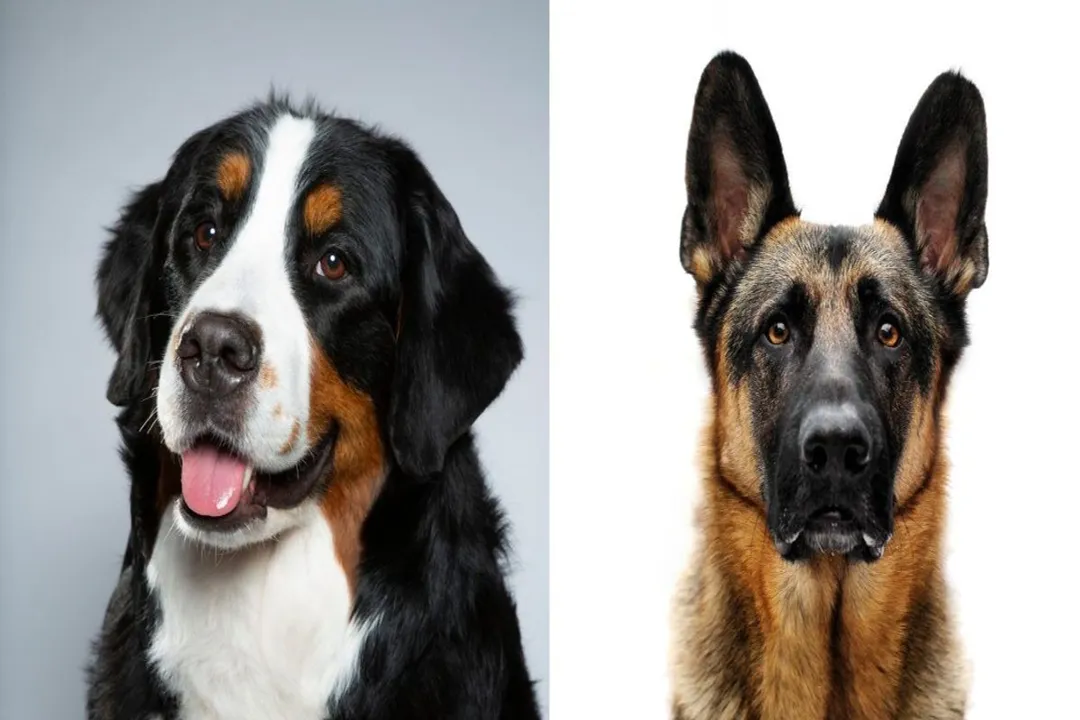
For the purebred Bernese Mountain Dog, the expected size range is quite broad, reflecting the natural variation within the breed. [5] The American Kennel Club (AKC) sets specific targets for height and weight, which breeders aim to meet. [5]
Male Bernese Mountain Dogs typically stand between 25 and 27.5 inches at the shoulder and weigh in the range of 80 to 115 pounds. [5] Females, while generally slightly smaller and lighter, still qualify as a very large breed, generally measuring 23 to 26 inches in height and weighing between 70 and 95 pounds. [5] In comparison, the breed is often cited simply as a giant breed, with some larger examples exceeding the 115-pound mark mentioned in the standard. [1]
When considering a Bernese Shepherd mix, the resulting size depends heavily on the other parent breed. A cross with a German Shepherd might result in a dog slightly taller and leaner than a purebred BMD, while a cross with an Australian Shepherd might produce a dog that is shorter and slightly lighter, though still firmly in the large dog category. [2][9] For instance, the Aussie mix might result in weights ranging from 50 to 90 pounds, blending the BMD's bulk with the Aussie's medium build. [9]
# Growth Timeline
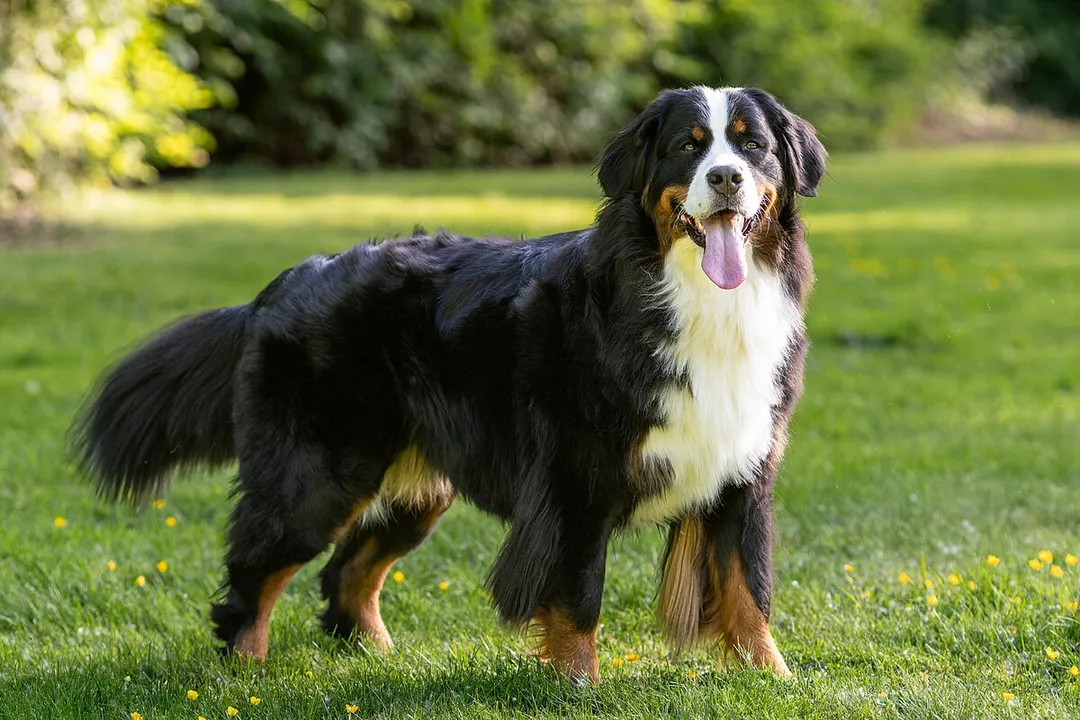
Knowing the final dimensions is one thing; understanding the speed at which a puppy arrives there is another, especially for a breed predisposed to certain orthopedic conditions. Bernese Mountain Dogs grow rapidly during their first year. [1]
Most BMDs will achieve the majority of their height by about 10 to 12 months of age. [8] However, filling out—adding the chest depth and muscle mass that defines their powerful build—takes significantly longer. [8] It is common for these gentle giants to continue gaining weight and maturing physically until they are two to three years old. [4][8] Anecdotal reports from owners often note that while their puppy looked massive at one year, they only truly felt "finished" around the two-year mark. [3] This delayed maturity is a key difference between them and faster-growing breeds.

# Natural Variation

Even within the established breed standard, there is considerable variance, which is frequently discussed among owners and breeders. While the AKC gives a range, individual dogs can easily land outside those brackets based on their specific lineage. [5]
Some owners share experiences of their purebred Berners ending up significantly larger than expected. One owner might report their male BMD reached only 90 pounds, while another reports their female nudged the 110-pound mark. [3][4] This variability means that relying solely on general breed statistics might not perfectly predict the size of your specific puppy. When acquiring a puppy, understanding the size of the parents is often the best clue to future size, as genetic predisposition plays a significant role in determining where an individual dog will land within that broad spectrum. [4] If both parents are on the larger end of the standard (say, a 110-pound father and a 90-pound mother), expecting the offspring to weigh near the 100-pound mark, perhaps even exceeding the lower bound for males, is a reasonable estimation. [8]
When assessing a potential mixed-breed dog marketed as a "Bernese Shepherd," it is important to remember that size prediction in cross-breeds is less precise than in purebreds. Unlike a purebred where you have two generations of predictable genetics, a mix introduces variables from two distinct lines. If the non-Bernese parent is significantly smaller, the resulting dog will likely be smaller than a purebred BMD, potentially falling into the 75 to 95-pound range if the other breed is of medium-large stature. [2][9]
# Managing Weight Gain
For any large or giant breed, including purebred Bernese Mountain Dogs and their crosses, the rate of growth is arguably more critical than the final weight itself when considering long-term joint health. [1] Large breeds are notoriously susceptible to developmental orthopedic diseases, such as hip and elbow dysplasia. [5]
Rapid, excessive weight gain during puppyhood places enormous stress on those developing joints, potentially exacerbating or triggering underlying conditions. Because of this, many experienced handlers and veterinarians advise against overfeeding, even if the puppy seems hungry or is still below the ideal weight for its age bracket. A common best practice involves feeding a large-breed puppy formula, which is designed to control the intake of calories and calcium to moderate growth speed. [1]
One helpful way to look at this is not just focusing on how much the dog should weigh when mature, but how consistently it is gaining weight between vet visits. A steady, predictable incline on the weight chart, rather than sudden, sharp spikes, is usually indicative of healthy development. If a four-month-old puppy gains five pounds one month and ten the next, it warrants a conversation with your veterinarian about adjusting the feeding schedule or the specific food being offered. [1] This slow and steady approach helps their skeletal structure catch up to their increasing bulk.

# Lifespan Considerations
While not strictly about height, the overall dimensions of the Bernese Mountain Dog lineage are inextricably linked to their lifespan, which is an important consideration for prospective owners of these large animals. Generally, the larger the dog, the shorter the expected lifespan, and Bernese Mountain Dogs fall into this category. [6]
The typical lifespan for a purebred Bernese Mountain Dog is relatively short compared to smaller companions, often averaging between 7 to 10 years. [6] When mixed with other breeds like the German Shepherd, the resulting "Bernese Shepherd" might potentially see a slight extension in this range, as German Shepherds often have a slightly longer average lifespan, though this is highly dependent on which parent's genes dominate the resulting dog’s health profile. [2] Recognizing the massive size means accepting the commitment to a shorter time together, making the early years of controlled, healthy growth even more vital for maximizing quality of life.
#Videos
How Big Are Bernese Mountain Dogs? - YouTube
Related Questions
#Citations
Bernese Shepherd Breed Information & Characteristics - DogTime
Bernese Mountain Dog German Shepherd Mix Facts - Alpha Paw
How big are your Berners? : r/bernesemountaindogs - Reddit
How tall are Bernese Mountain Dogs at 6 months vs adulthood?
Bernese Mountain Dog - American Kennel Club
Bernese Mountain Dog - Wikipedia
How Big Are Bernese Mountain Dogs? - YouTube
Australian Shepherd Bernese Mountain Dog Mix Breed Information