When testing footing on uneven ground, how does the Lundehund's movement differ from a typical dog's approach?
Answer
It seems to hook its foot into the texture of the surface using the additional digits
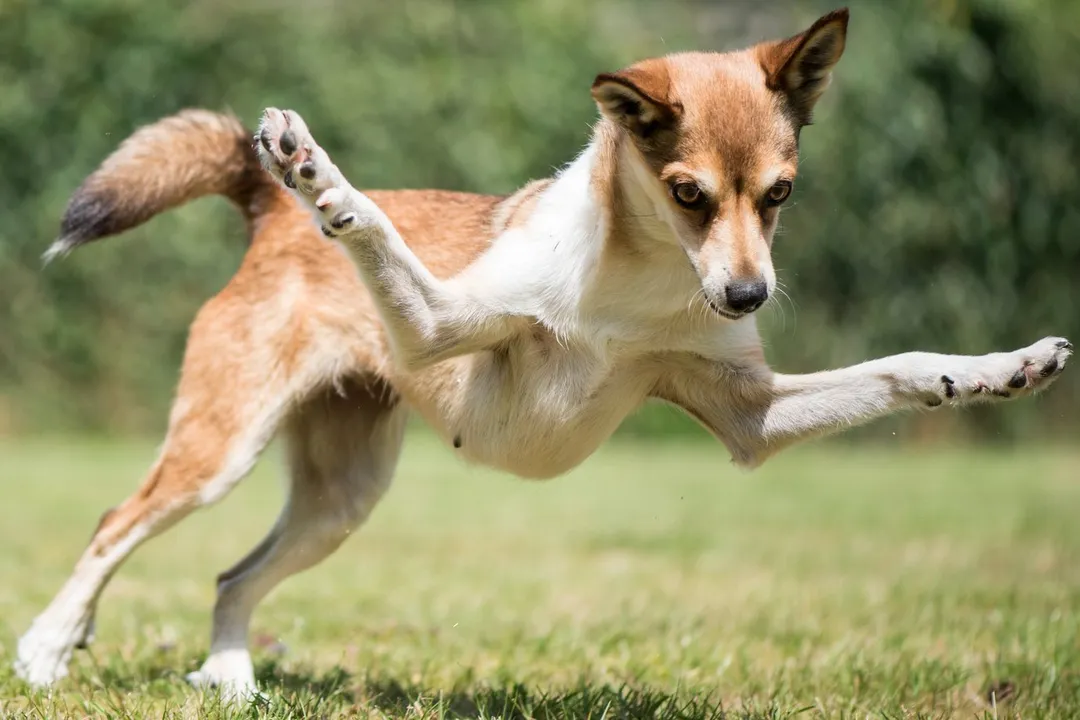
Observing a Lundehund move across varied, challenging ground reveals a specialized testing methodology for footing that differs from other canines. Where a typical dog might simply push down onto a surface to test its stability, the Lundehund utilizes its extra digits to actively secure itself by seeming to 'hook' its foot into the inherent texture of the surface before fully committing its body weight onto that limb. This hardwired physical structure provides superior stability before weight transfer occurs.
#Videos
The incredible (and flexible) Norwegian Lundehund | NBC Sports
Related Questions
What specific number of fully developed, functional toes characterizes the paws of the Norwegian Lundehund?What is the scientific term used to describe the consistent presence of extra toes on the Lundehund?What specific task led to the Norwegian Lundehund developing its specialized six-toed structure on treacherous coastal cliffs?The name 'Lundehund' is roughly translated to mean what about its original hunting role?How did the extra toes specifically aid the Lundehund in maneuvering across slippery coastal cliffs?The extreme flexibility of the Lundehund's paws is sometimes compared to the lateral movement pattern of what creature?When testing footing on uneven ground, how does the Lundehund's movement differ from a typical dog's approach?What is stated regarding the Lundehund's sixth toe compared to the extra dewclaws occasionally seen in other breeds?What trait related to specialization highlights a vulnerability for the Lundehund breed today?What specific care requirement regarding the extra digits is emphasized for the modern Lundehund owner?