What specific task led to the Norwegian Lundehund developing its specialized six-toed structure on treacherous coastal cliffs?
Answer
Retrieving seabirds, primarily puffins, from tiny, deep crevices
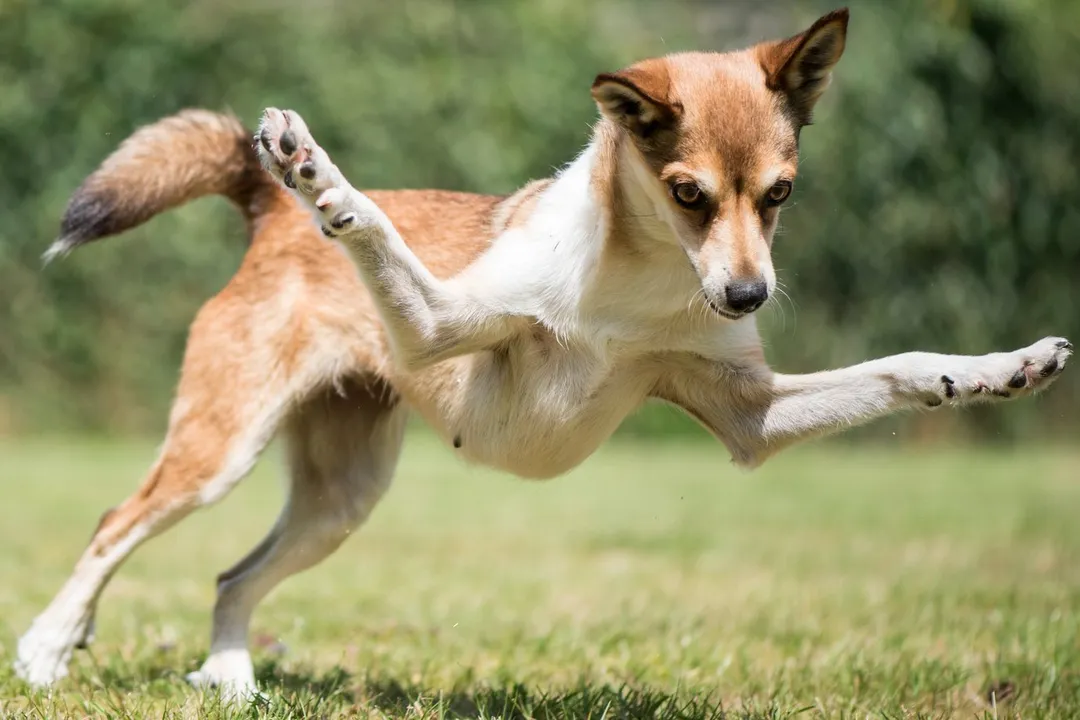
The functional reason for the Lundehund's unique paw structure is directly tied to its original purpose, which involved retrieving seabirds, predominantly puffins. These birds nested in small, deep crevices located among slippery, treacherous coastal cliffs and ice formations along the Norwegian coast. The dog needed extreme dexterity, grip, and stability to scramble vertically and horizontally across wet, sharp granite surfaces where a single misstep could result in a fatal fall into icy water, necessitating specialized anatomy to accomplish this difficult task.
#Videos
The incredible (and flexible) Norwegian Lundehund | NBC Sports
Related Questions
What specific number of fully developed, functional toes characterizes the paws of the Norwegian Lundehund?What is the scientific term used to describe the consistent presence of extra toes on the Lundehund?What specific task led to the Norwegian Lundehund developing its specialized six-toed structure on treacherous coastal cliffs?The name 'Lundehund' is roughly translated to mean what about its original hunting role?How did the extra toes specifically aid the Lundehund in maneuvering across slippery coastal cliffs?The extreme flexibility of the Lundehund's paws is sometimes compared to the lateral movement pattern of what creature?When testing footing on uneven ground, how does the Lundehund's movement differ from a typical dog's approach?What is stated regarding the Lundehund's sixth toe compared to the extra dewclaws occasionally seen in other breeds?What trait related to specialization highlights a vulnerability for the Lundehund breed today?What specific care requirement regarding the extra digits is emphasized for the modern Lundehund owner?