Are quokkas rodents or marsupials?
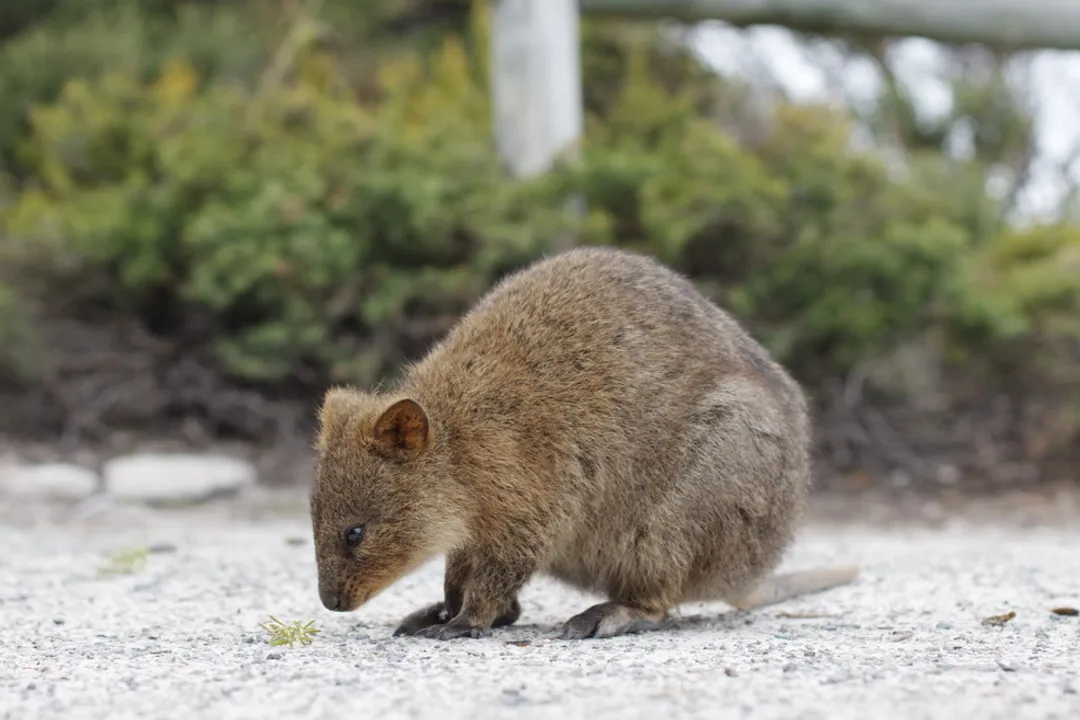
The little creature known for its perpetually cheerful appearance, the quokka, often sparks curiosity regarding its place in the animal kingdom. Despite its small stature, sometimes leading casual observers to mistake it for a large rat or a similar burrowing animal, the quokka belongs firmly within the lineage of the marsupials. [1][2] This classification places it firmly alongside kangaroos and wallabies, setting it apart entirely from rodents, which belong to a completely different mammalian order. [2] Understanding this distinction requires looking beyond mere size and examining the fundamental reproductive and anatomical differences that define these groups of mammals. [2]
# Marsupial Identity
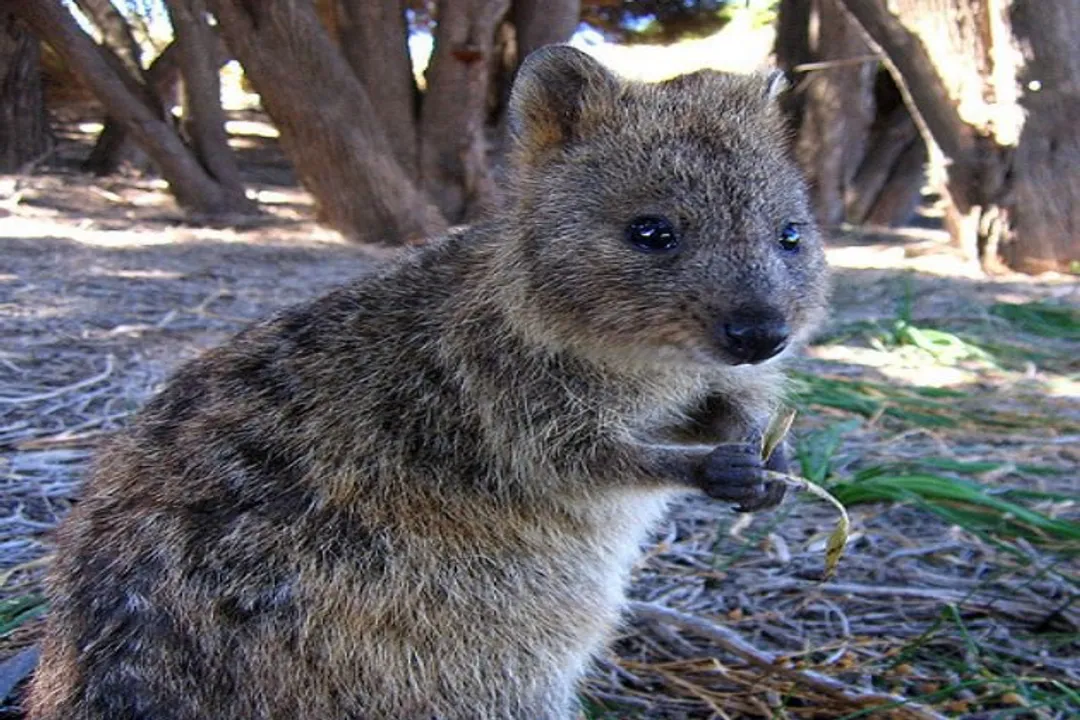
The quokka, scientifically named Setonix brachyurus, is classified as a macropod. [5][7] The term macropod literally means "big foot," a feature shared with its much larger relatives, kangaroos. [1] Marsupials are defined by their reproductive strategy, the most significant characteristic being that they give birth to relatively undeveloped young, which then complete their development outside the womb, typically inside a pouch. [3] This reproductive path distinguishes them from placental mammals, such as rodents, where the fetus develops fully inside the mother before birth. [2]
Specifically, the quokka is one of the smallest members of the kangaroo and wallaby family, Macropodidae. [1][5] They are native only to specific parts of Western Australia. [1][5] Their physical appearance is quite distinct: they possess coarse, brownish-grey fur, small, rounded ears, and a short muzzle, contributing to their unique, somewhat stout appearance when sitting. [1] Their relatively short tail gives them a slightly different silhouette compared to many kangaroos. [5]
# Mammal Mix-Up
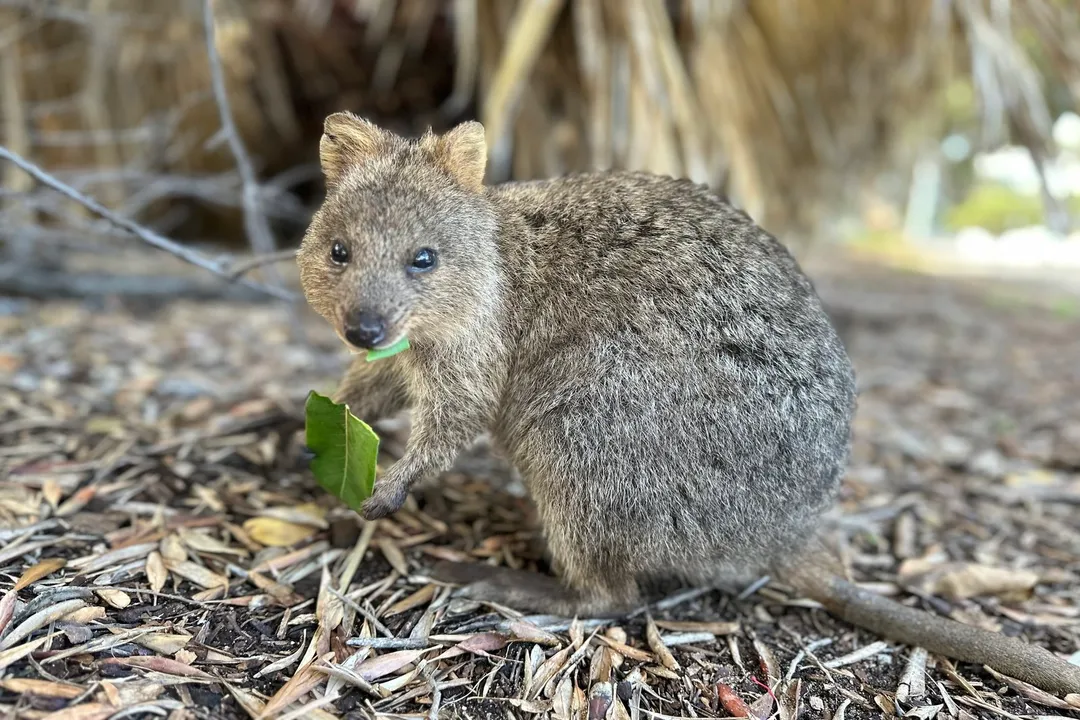
The persistent question of whether quokkas are rodents arises primarily from a superficial resemblance based on general body plan and scale. [2] Rodents, such as rats and mice, are characterized by a single pair of continuously growing incisors in both the upper and lower jaws. [2] Quokkas, however, do not share this dental specialization. [2] They are fundamentally structured as herbivorous marsupials, built on the macropod blueprint, not the rodent one. [1][5]
To put their scale into a familiar context, a quokka is generally only about the size of a domestic cat. [1][6] When considering the evolutionary distance, it is helpful to note that the biological gulf separating a quokka from a rat is massive; one belongs to the infraclass Marsupialia, while the other belongs to the Eutheria (placental mammals). [2] While both groups evolved to fill various ecological niches, their ancestral lines split a very long time ago, meaning any visual similarity is purely coincidental, an example of convergent evolution at a very broad scale, rather than close genetic kinship. [2]

# Pouch Biology
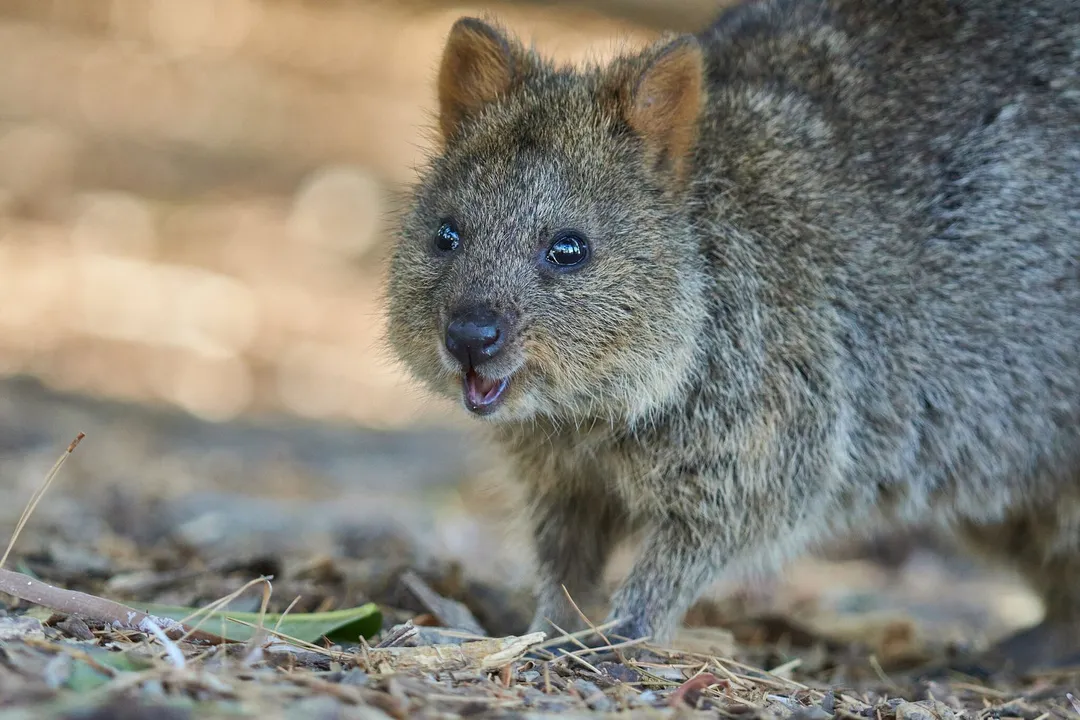
The reproductive cycle of the quokka provides the clearest evidence of its marsupial status. [3] After a brief gestation period, typically lasting around 27 days, the mother gives birth to a single, tiny, underdeveloped joey. [1][3] This newborn immediately crawls into the mother's pouch. [1] Inside the pouch, the joey attaches itself to a teat and remains there, finishing its development for about six months. [1]
A truly fascinating aspect, typical of many macropods, is the ability of the mother to practice embryonic diapause. [3][4] This means that if the first joey is still suckling in the pouch, the development of a subsequent embryo can be suspended, pausing its growth until the older sibling vacates the pouch or, tragically, dies. [3] This mechanism ensures that the mother's energy resources are optimally allocated to nurturing one dependent young at a time, a sophisticated biological strategy unavailable to placental mammals like rodents. [3] A mother quokka's ability to host two young at different developmental stages—one embryonic and one actively suckling—is a definitive testament to her marsupial classification. [3][4]
# Island Home
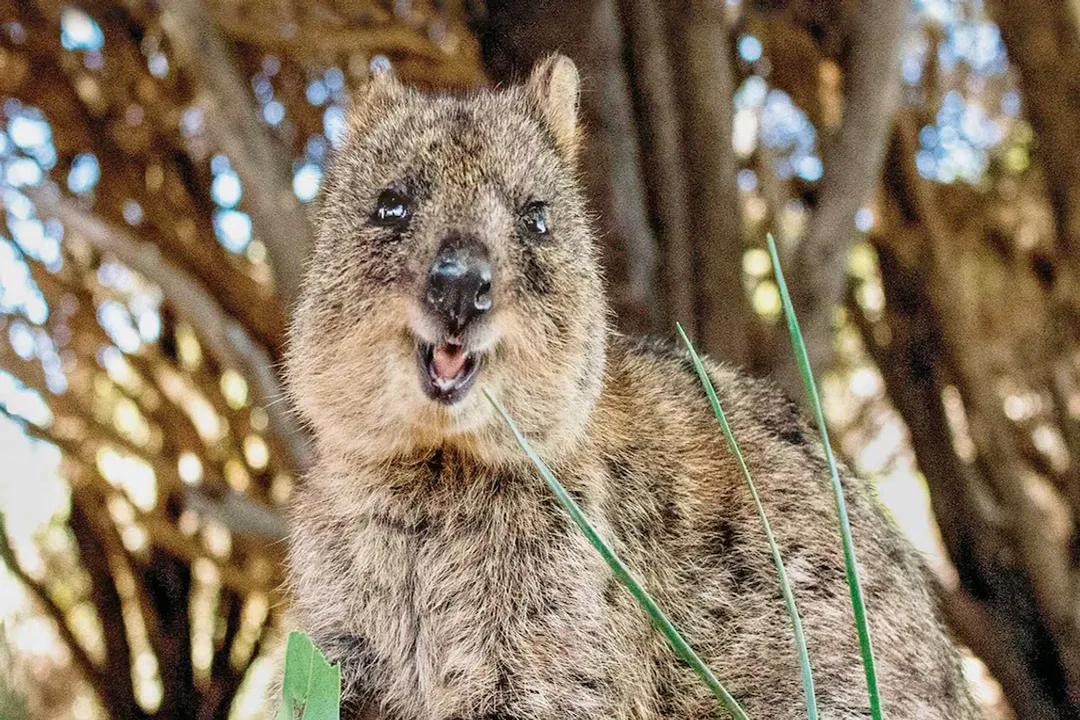
The geographical distribution of the quokka significantly influences its current status and behavior. [1] While they once ranged more widely across the mainland of Western Australia, they are now largely confined to several islands. [1][5] The most famous stronghold is Rottnest Island, located just off the coast near Perth. [1][5] They are also found on Bald Island and in a few isolated, protected pockets of mainland habitat. [1][7]
The difference between the island populations and the mainland populations highlights a crucial ecological factor. On Rottnest Island, quokkas thrive because they are safe from their two main mainland predators: the introduced European red fox and feral cats. [1][5] On the mainland, habitat fragmentation and predation have rendered the species Vulnerable. [1][5] The relative security on Rottnest means that the quokkas there exhibit a degree of boldness and acceptance toward human presence rarely seen in their mainland cousins, who must remain much more cautious to survive. [5] For instance, while the island population is thriving enough to feel almost tame, the mainland population requires intensive management to ensure survival against introduced threats. [5]
# Small Wallaby Facts
Quokkas are generally active at night, making them primarily nocturnal foragers. [7] As herbivores, their diet consists mainly of grasses, leaves, succulents, and bark. [1][5] Their physiology, like other macropods, is adapted to process this fibrous vegetation efficiently. [1]
They are quite social animals, usually living together in small family groups. [1] While they forage during the darkness, during the heat of the day, they often seek refuge in dense vegetation to stay cool and avoid detection. [7] An interesting observation for anyone studying their social dynamics is that while they are generally quite gentle, their social structure often involves maintaining distinct feeding territories, which can occasionally lead to minor skirmishes, though serious fighting is rare. [1] Understanding this quiet territoriality helps explain why, despite their small size, they maintain established social hierarchies within their preferred patches of scrubland. [1]
In summary, the quokka's classification is clear: it is a small, charismatic marsupial belonging to the macropod family. [1][5] Any confusion with rodents stems only from a quick glance at its size, not from its biology, ancestry, or unique method of raising its young within a pouch. [2][3] They remain a cherished example of Australia's unique mammalian fauna, particularly those populations safeguarded on their island sanctuaries. [5]
#Videos
Quokka Facts: NOT a RAT Animal Fact Files - YouTube
Related Questions
#Citations
Quokka - Wikipedia
Are quokkas more closely related to rats than other marsupials?
Quokka | National Geographic Kids
The quokka is an Australian marsupial (raise their young in pouches ...
Quokka - The Australian Museum
Meet the quokka The quokka (Setonix brachyurus), the only
Quokka Facts: NOT a RAT Animal Fact Files - YouTube