What did Beagles evolve from?
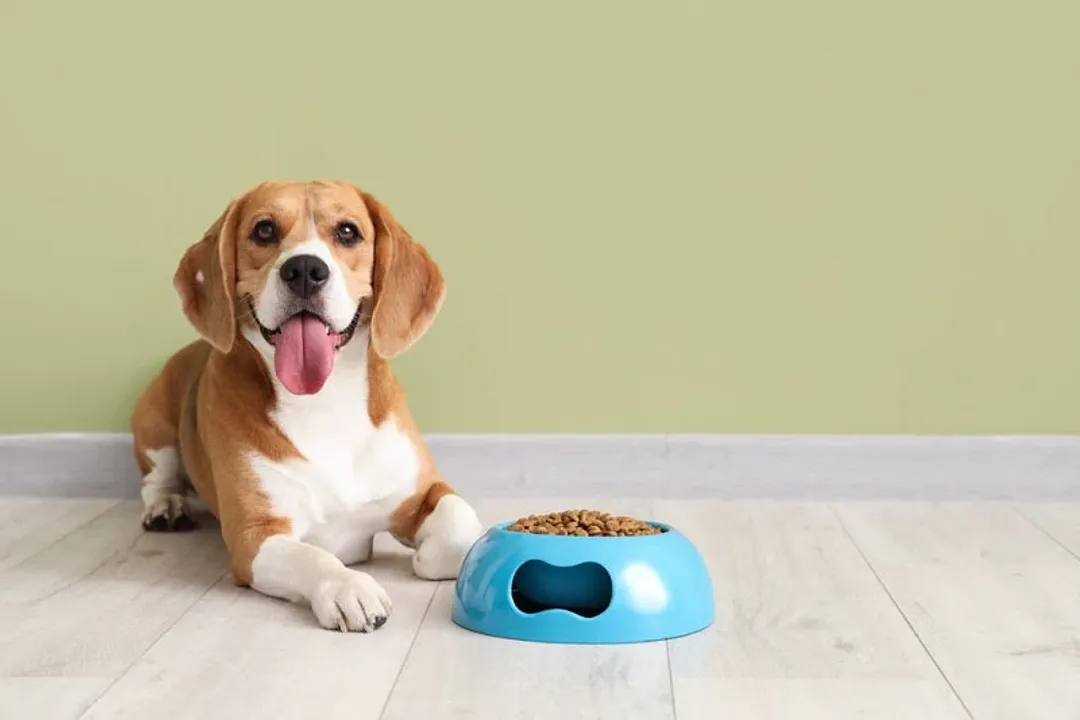
The Beagle, with its pleading eyes and perpetual readiness to follow a scent, is one of the world’s most recognizable hounds, but tracing its exact lineage involves looking back through centuries of hunting practices rather than pinpointing a single ancestral dog. [6] What we know for certain is that the Beagle belongs to the scenthound family, dogs specifically bred to track prey using their noses rather than sight. [2][4] The foundation of the Beagle as we recognize it today was laid in England, where smaller hounds had been utilized for generations. [1][3]
# Early Scent Hounds
The history of the Beagle is intertwined with the history of scent hunting across Europe. Many modern hound breeds, including Beagles, can trace their ancestry back to the St. Hubert Hounds, an ancient breed known for its incredible tracking ability. [2][6] These early, large hounds were primarily followed by hunters on horseback. [7] However, as hunting preferences shifted toward game accessible to those on foot, a distinct need arose for smaller, sturdier dogs whose pace matched that of a walking person. [1][3]
It is within this context—the evolution of hunting style—that the direct ancestors of the Beagle began to take shape in Britain. [7] These were not yet the fixed, standardized Beagles of the modern era, but rather a collection of small, enthusiastic scenting dogs used primarily for hunting rabbits and hares. [2][4] The name "Beagle" itself might stem from the old French word begle, meaning "to open the mouth," perhaps referencing the dog's characteristic baying while tracking, or perhaps from the Gaelic word beag, meaning small. [2]
# English Breeding
England became the crucible where these small scent hounds were deliberately developed and refined. [1][7] Hunters preferred dogs that were low to the ground to easily navigate dense cover and thickets, and whose size allowed the entire hunting party, even those without horses, to keep up. [1][3] By the time of King Richard the Lionheart in the late 12th century, records suggest hounds recognizable as Beagles were already in use. [2] The key evolutionary step here was the selective breeding for endurance, a keen nose, and a manageable size suitable for following on foot. [6]
A fascinating aspect of their early history is the significant size fluctuation they experienced. Historically, the term "Beagle" sometimes referred to a type of hound rather than a specific, rigid size. [1] This meant that the small hounds used in the field could vary considerably, leading to different subsets being developed for specific purposes. [3] The refinement process involved ensuring that the scenting ability remained paramount, even as the physical stature changed across different locales or hunting requirements. [7]
# Size Matters
The most famous variation in the Beagle's evolution is the development of the Pocket Beagle. [1] These were exceptionally small hounds, famously kept by Queen Elizabeth I. Historical accounts suggest these tiny companions were small enough to be carried in a lady’s saddlebag during hunts. [2][3][6] This miniaturization was a stark contrast to the slightly larger, more practical Beagles used by the general population for the actual tracking work. [1]
If we look closely at the early descriptions versus the modern standard, we see a deliberate step toward consistency. While the ancestor was likely a general small scent hound, the Beagle breed as we know it today was formalized by standardizing the size range to what we see now—robust, sturdy dogs built for work, but still small enough to remain accessible. [7] This process of standardization is common in breed development, moving from a functional category of dog to a fixed breed defined by published characteristics. [1]
# Tracking Methods
The Beagle's ancestry profoundly dictated its working style, which remains central to the breed today. They were bred to hunt in packs and follow a scent trail methodically, nose to the ground, announcing their progress with a distinctive bay. [2][4] Their relatively short legs and low profile were adaptations specifically for trailing ground scent, such as rabbits or hare, which often move quickly but stay close to the earth. [6] This method contrasts sharply with sight hounds, like Greyhounds, which rely on speed and vision to run down their quarry.
This evolutionary path as a scent-driven, pack-oriented hound has lasting implications for modern owners. Because their entire being is wired to follow a promising smell, it is important to recognize that the Beagle's instinct to chase a scent is a direct inheritance from its earliest working ancestors; this drive is not a behavioral flaw but a deeply ingrained trait selected over centuries of selective breeding for fieldwork. [2][4] Therefore, when bringing a Beagle into a home environment, owners must understand that a stimulating environment focused on nose work, or rigorous scent games, can often satisfy the dog more effectively than simple physical exercise alone. [6]
# Formal Recognition
While the type existed for hundreds of years in Britain, the formal establishment and recognition of the modern Beagle occurred later, particularly with influence from the United States. [1][3] In the late 19th century, efforts were made on both sides of the Atlantic to codify the breed standards and establish kennel clubs dedicated to its preservation and purity. [1]
The National Beagle Club was established in the US in 1885. [3] That same year, the American Kennel Club officially recognized the Beagle breed. [1] This marked the transition from a loose collection of related scenting dogs to a formalized breed with specific parameters for appearance and temperament, drawing primarily from the English working strains. [7] Though the original Beagles may have looked slightly different depending on the local English pack they came from, the official recognition cemented a singular standard that breeders have worked to maintain ever since. [3]
Considering the dual historical paths—the older, varied English strains and the formalized American standard—one might observe that while the original evolution was slow and organic in England, the refinement into a fixed breed was a more concentrated effort in the late 1800s. [1][3] This means that if you examine older paintings of "Beagles," you might see dogs that look either significantly smaller (Pocket Beagle type) or slightly heavier than today’s standard, illustrating the breed's historical plasticity before standardization locked in its current characteristics. [3] Owners today should appreciate this history, as the modern Beagle retains the independent, scent-driven nature of its varied forebears, even within the confines of a defined breed standard. [7]
#Videos
The History of BEAGLES - YouTube
Related Questions
#Citations
Beagle History: From Ancient Small Pack-Hounds to Snoopy
The Beagle: A Beloved Hound with a Storied History
History - The National Beagle Club of America, Inc.
Everything About Beagles: History, Care, and Health
The History of BEAGLES - YouTube
Beagle History & Origin | Interesting Journey of the Breed - BeaglePro
Beagle | VCA Canada Animal Hospitals
Beagles: The Dog Breed Guide – Vetericyn Animal Wellness
The History of Beagles - Dan's Pet Care