How big is the Waimanu manneringi?
The existence of Waimanu manneringi offers a remarkable glimpse into the early diversification of penguins, and its size provides a crucial data point for understanding their evolution shortly after the age of the dinosaurs. Fossils recovered from the Waipara Greensand formation in New Zealand paint a picture of an early seabird that had already achieved substantial proportions, challenging older assumptions about the gradualism of avian gigantism.
# Ancient Measurements
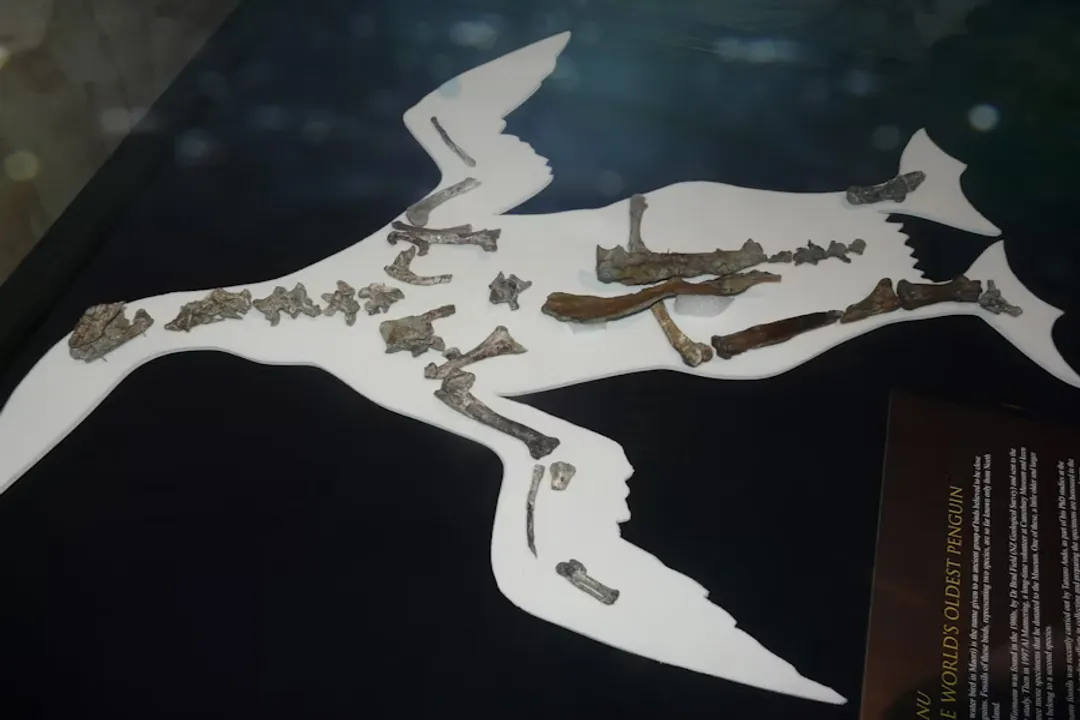
When scientists reconstructed the physique of Waimanu manneringi, they determined it was a significant bird for its time, the Paleocene epoch. Based on the recovered holotype specimen, which includes a partial skeleton, the general dimensions have been established.
Overall height for W. manneringi is estimated to have ranged between 25 and 39 inches, which translates to approximately 65 to 100 centimeters. This places its stature squarely in the realm of a large, contemporary penguin species. Furthermore, its body mass is estimated to have been between 22 and 66 pounds, or 10 to 30 kilograms. The width of the bird's body is recorded as being between 6.3 and 10.2 inches (16 to 26 cm). These measurements, derived from analyzing the bones, suggest a bird built for an aquatic existence, as its limb bones indicated an upright posture and its wing bones were dense and compressed, adapted for underwater swimming rather than aerial flight.
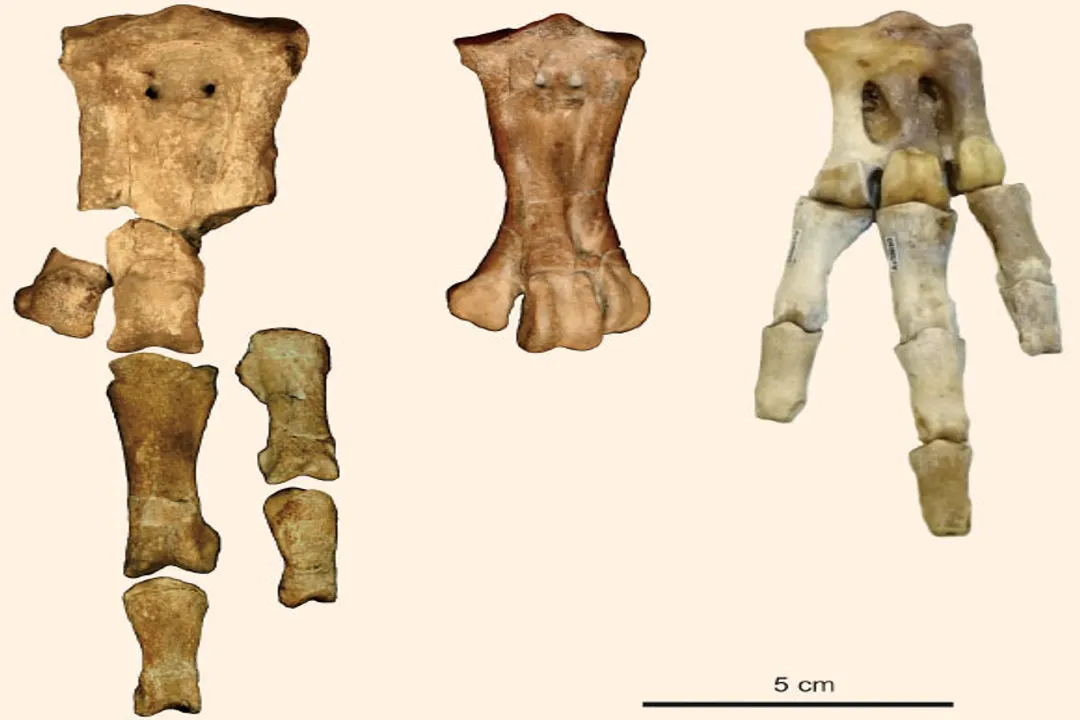
An interesting piece of metric data comes from examining a specific foot bone, the tarsometatarsus. In the holotype specimen of W. manneringi, this bone measured 78 mm in length. This structural element is key for understanding locomotion and size relationships between closely related species, as shown by the direct comparison available in the fossil record.
The fact that the largest known early penguin fossils date back only a few million years after the Cretaceous-Paleogene extinction event indicates that the development of large body sizes in penguins was not a drawn-out process; rather, the evolutionary blueprint for large, flightless seabirds was established quite quickly in the newly available ecological niches.
# Size Comparison
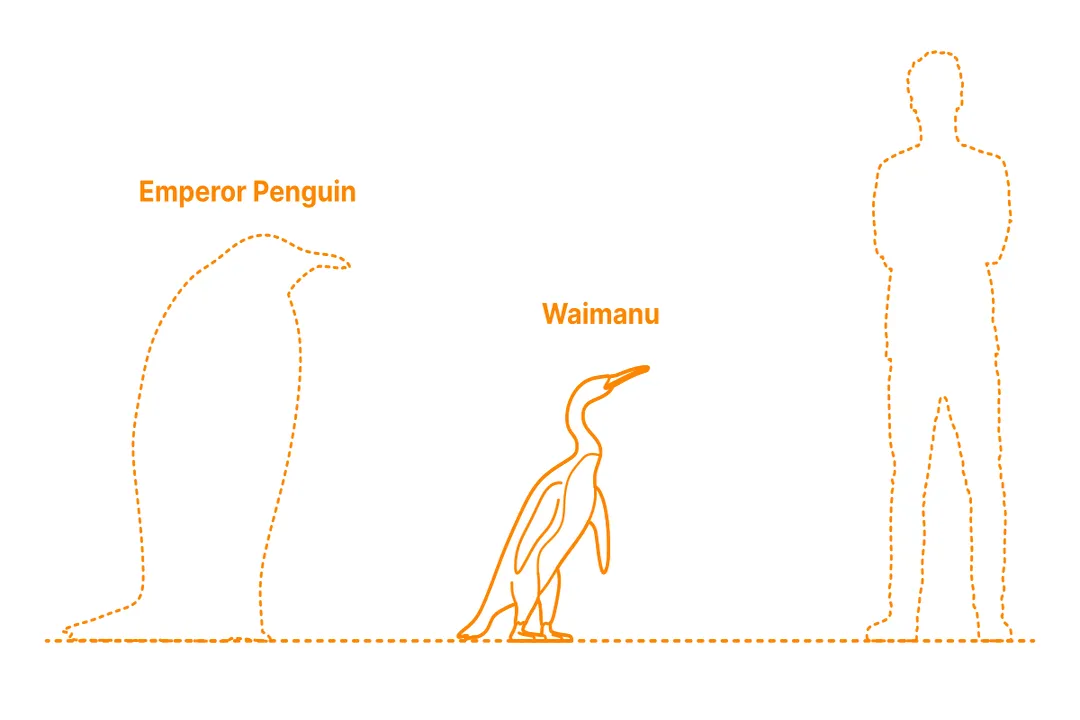
To truly grasp how large Waimanu manneringi was, it helps to contrast its dimensions with those of modern penguins and its close, albeit slightly different, contemporaries.
The most frequently cited modern analogue for W. manneringi is the Emperor Penguin (Aptenodytes forsteri), the largest penguin species alive today. Emperor Penguins typically stand between 3.6 and 4.3 feet tall and weigh around 50 pounds or more. While W. manneringi could reach the upper limit of its estimated range—close to 100 cm—it generally appears to be similar in size, perhaps slightly less massive on average than the very largest modern Emperors. This similarity suggests that the ecological niche for a large, specialized diving bird was already well-defined by 60 million years ago.
Considering the body width data, a width of up to 10.2 inches suggests a fairly stout build for a bird that was, at most, around three feet tall. This indicates a somewhat more barrel-chested or stocky profile compared to the relatively slender build of a modern cormorant, which its head structure somewhat resembled.
If we imagine a modern person standing next to this ancient flyer, a Waimanu manneringi standing at its maximum height of 39 inches would only reach about the mid-thigh of an average adult human, a humbling reminder of the sheer scale achieved by later Antarctic giants like Palaeeudyptes or Kumimanu.

# Related Species
The size spectrum of the early penguin group is further clarified by considering the other species discovered alongside W. manneringi in the same geologic layer, the Waipara Greensand. The genus Waimanu is currently recognized as having two species: the relatively larger W. manneringi and the slightly smaller Waimanu tuatahi.
While W. manneringi was comparable to an Emperor Penguin, Waimanu tuatahi was smaller, estimated to be about 80 cm tall, putting it closer in size to a modern Yellow-Eyed Penguin. Evidence suggests this size difference is reflected in their skeletal structure; the tarsometatarsus of W. tuatahi was shorter at 65 mm, compared to the 78 mm found for W. manneringi. Having two distinct size classes in the same lineage so early in their history—one approaching the size of today's largest extant penguins and another comparable to a mid-sized species—is a striking finding.
It is also important to note that fossils of other large penguins have been found in the same general region and time period, though they represent different taxa. One such newly discovered giant penguin, described from leg bones found near W. manneringi fossils, was estimated to be about 5 feet (1.5 meters) tall. This bird, which was almost as large as the fossil penguin Anthropornis nordenskjoeldi, showed differences in foot bone morphology suggesting it was evolutionarily more "crownward"—meaning more modern in its characteristics, such as having the waddling gait associated with today's penguins—than the more primitive Waimanu. Thus, the largest known fossil penguins were found in New Zealand, showing that the trend toward massive size began very early, but W. manneringi itself occupied the upper-middle range of that Paleocene size diversity.
When looking at these figures, it becomes evident that size was not a monolithic trait for the earliest penguins; rather, the lineage split into distinct size groups remarkably fast after the mass extinction event. The 10-30 kg weight range for W. manneringi suggests an animal with substantial muscle mass devoted to powerful underwater propulsion, a necessity for catching fish in the Paleocene seas, even if its flippers were not as fully specialized for efficient gliding as those of its modern descendants. It presents a fascinating intermediate step: too large for an entirely coastal, terrestrial existence, but perhaps not yet the specialized marine pursuit predator that the Emperor Penguin has become in the Antarctic environment.
# Evolutionary Scale
The sheer antiquity of Waimanu manneringi adds weight to its size metrics. Living 60 to 62 million years ago, these birds predate many other avian lineages whose origins are only inferred from genetics. The dating of Waimanu fossils allows paleontologists to calibrate molecular phylogenies, effectively placing a known chronological marker onto the bird family tree.
This calibration suggests that many modern bird groups, including those more distantly related to penguins like albatrosses, had already established their lineages back in the Cretaceous period, while the dinosaurs were still present. The initial success of Waimanu in achieving an Emperor-Penguin-sized body mass so soon after the K-Pg boundary indicates that the ecological opportunities—the absence of large marine reptiles—were immediately seized upon by this evolving avian group.
If we apply a modern context to weight, a 66-pound bird requires a significant amount of energy and food intake. In the relatively unpopulated oceans of the early Paleocene, this implied that food sources, likely fish, were abundant enough near the New Zealand coast to support such large, wing-powered divers. The size of W. manneringi is therefore not just a measurement of height and weight, but a proxy for the productivity of the ancient near-shore environment it inhabited. The existence of this large species, alongside the slightly smaller W. tuatahi, suggests the niche was successfully partitioned early on, perhaps by slightly different foraging depths or prey preferences, allowing two distinct sizes of "proto-penguin" to thrive simultaneously near the Paleocene coast.
Related Questions
#Citations
Waimanu (Waimanu manneringi) Dimensions & Drawings
Waimanu manneringi - A-Z Animals
Waimanu - Dinosaur Park - Primeval Zoo Wiki - Fandom
Ancient Giant Penguin Unearthed in New Zealand | Sci.News
Mannering's penguin | New Zealand Birds Online
Waimanu - 60-million year old penguins from New Zealand
Waimanu