How big do Patagonian cavy get?
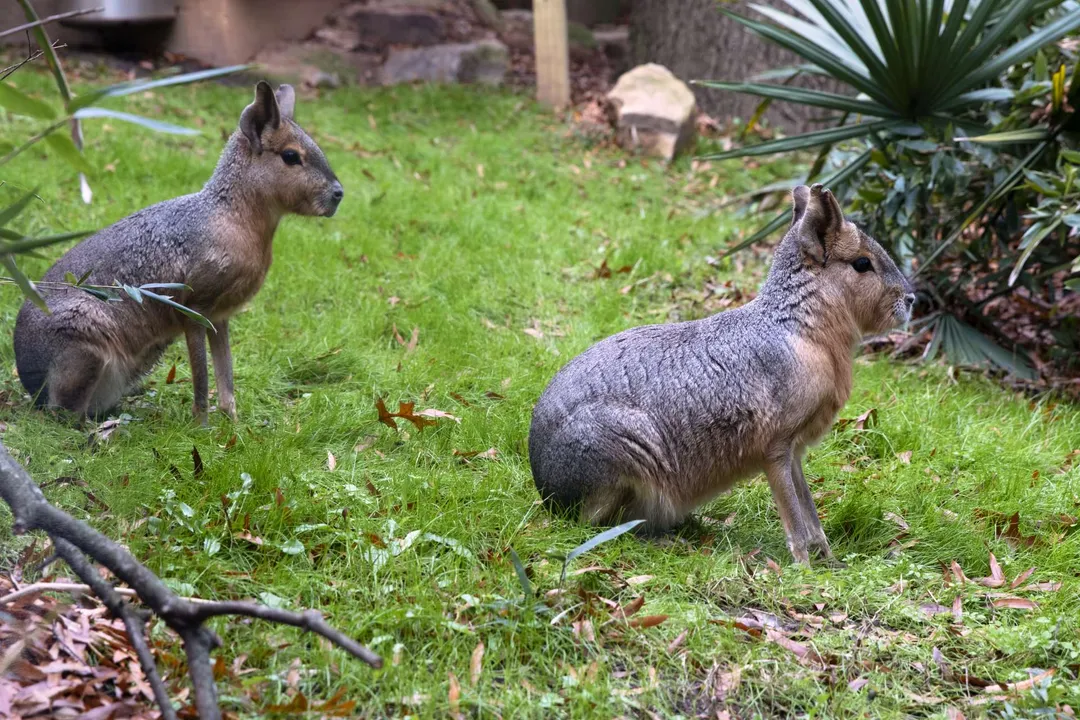
The Patagonian cavy, often interchangeably called the Patagonian mara, cuts a striking figure among South America’s fauna. While they are frequently noted for their remarkable speed and their curious, somewhat hare-like appearance, their sheer size is a defining feature, especially when considering their place in the mammalian order Rodentia. These large rodents are native to the arid grasslands and shrublands of Argentina, and their dimensions place them well outside the common image of a small, scurrying rodent. [1][3][4] They are truly substantial animals built for the open plains they inhabit. [3]
# Body Length
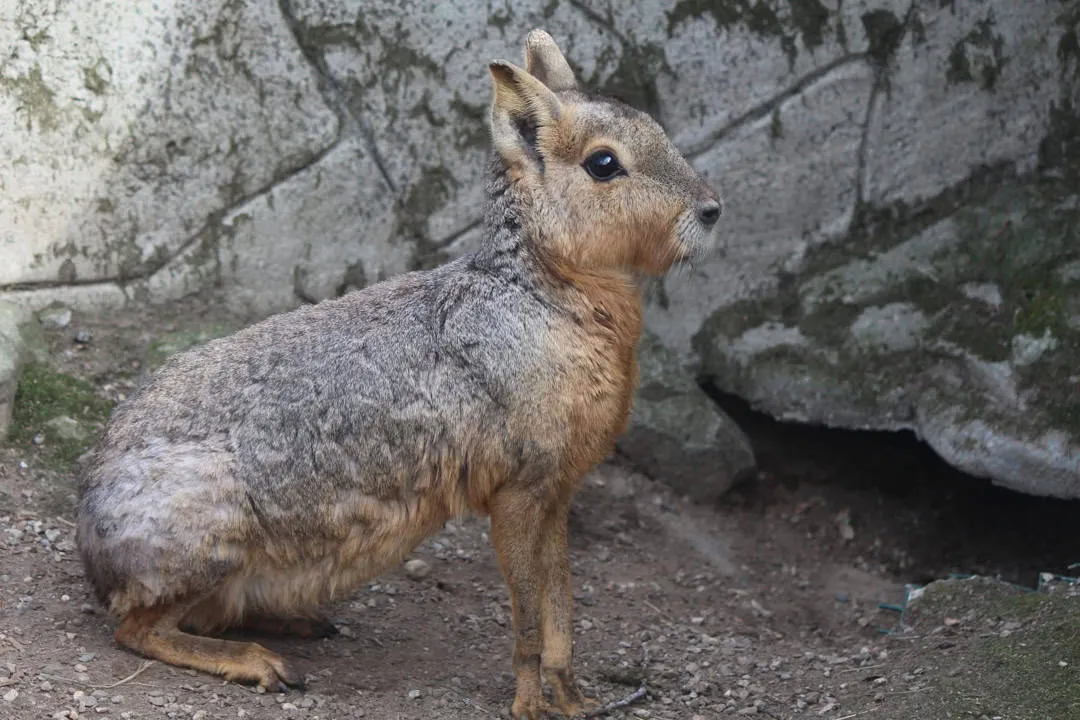
When measuring the overall length of an adult Patagonian cavy, figures consistently place them among the larger members of the rodent group. Several sources indicate their body length falls near the two-and-a-half-foot mark. For instance, one zoo reports lengths ranging from 27 to 30 inches, [2] while another provides a more specific average of 27.5 inches (or 70 centimeters). [3] Others describe them as measuring between 2.3 to 2.5 feet long. [4] This measurement generally encompasses the head and body, not including the tail, which is notably short, measuring only about 1.5 to 2 inches (4 to 5 centimeters). [3] It is important to keep in mind that these are generally mature measurements, reflecting an animal whose growth is complete but whose teeth continue to wear down from constant grazing. [1][4]
# Vertical Stature
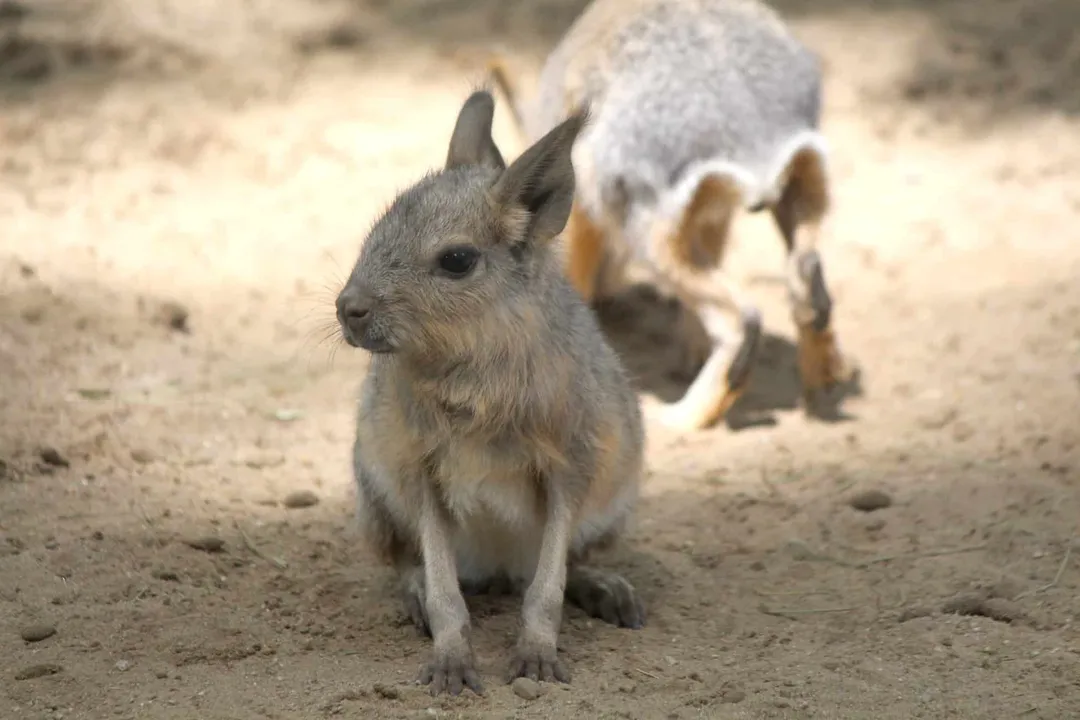
In terms of height, the cavy’s long legs give it an impressive vertical profile for a rodent. Captive facility data suggests that a Patagonian cavy can stand between 2 to 2.5 feet tall. [4] This elevation, combined with their long ears, contributes to their often-mistaken identity as a hare or a small deer. [4][6] Their upright posture, necessary for spotting predators across open terrain, makes them appear considerably larger than their weight might suggest at first glance. [3][5]
# Mass Metrics
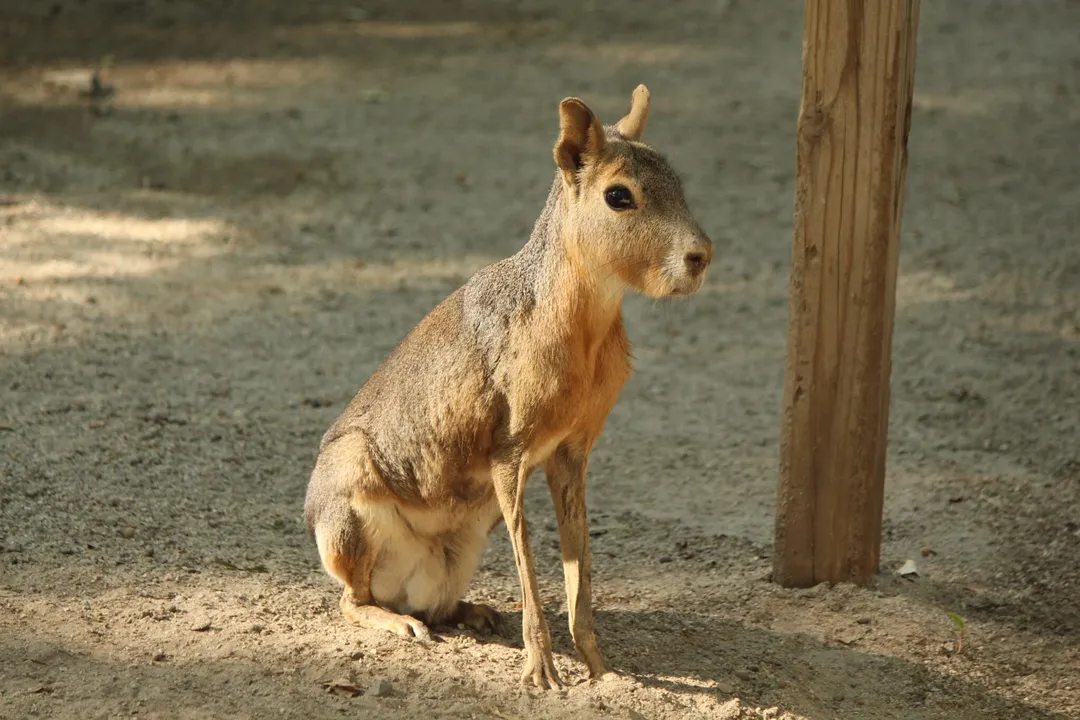
The weight of the Patagonian mara reflects its robust, almost hoofed-animal-like build. [1][3] The reported weight ranges show some variation across different facilities and individual animals, which is common in wildlife reporting, particularly when dealing with wild populations versus managed zoo groups.
A general consensus puts the adult weight in the mid-teens to mid-thirties range in pounds:
- One source cites a range of 16 to 20 pounds. [1]
- Another provides a broader spectrum of 18 to 35 pounds. [2]
- Smithsonian data specifies a range between 17.6 and 35.3 pounds, which translates to about 8 to 16 kilograms. [3]
- Potter Park Zoo reports an average adult size of 17–35 lbs. [4]
However, one measurement range reported by the Utica Zoo starts significantly lower, at 6 to 30 pounds. [4] This lower minimum of 6 pounds might account for very young adults or smaller females, especially since males are noted to be slightly larger than females overall. [1] The Quasarex data notes a maximum weight of 16 kg (about 21 lb.) with an average closer to 8 kg (10 lb.). [1] When consolidating the maximums, 35.3 pounds stands out as the upper limit documented by these sources, clearly establishing them as significantly larger than their closest relatives like the guinea pig. [3]
Here is a summary of the key size parameters gathered from the various sources:
| Measurement | Range Reported | Equivalent | Notes |
|---|---|---|---|
| Length | 27 to 30 inches | Up to 2.5 feet | Average around 27.5 inches. [3][2] |
| Height | 2 to 2.5 feet | 24 to 30 inches | Impressive vertical stance for a rodent. [4] |
| Weight (Pounds) | 6 to 35.3 lbs | Varies | Includes lower weights possibly for juveniles/smaller females. [1][4] |
| Weight (Kilograms) | 8 to 16 kg | Approx 17.6 to 35.3 lbs | Solid, dense animals. [3] |
# Rodent Ranking
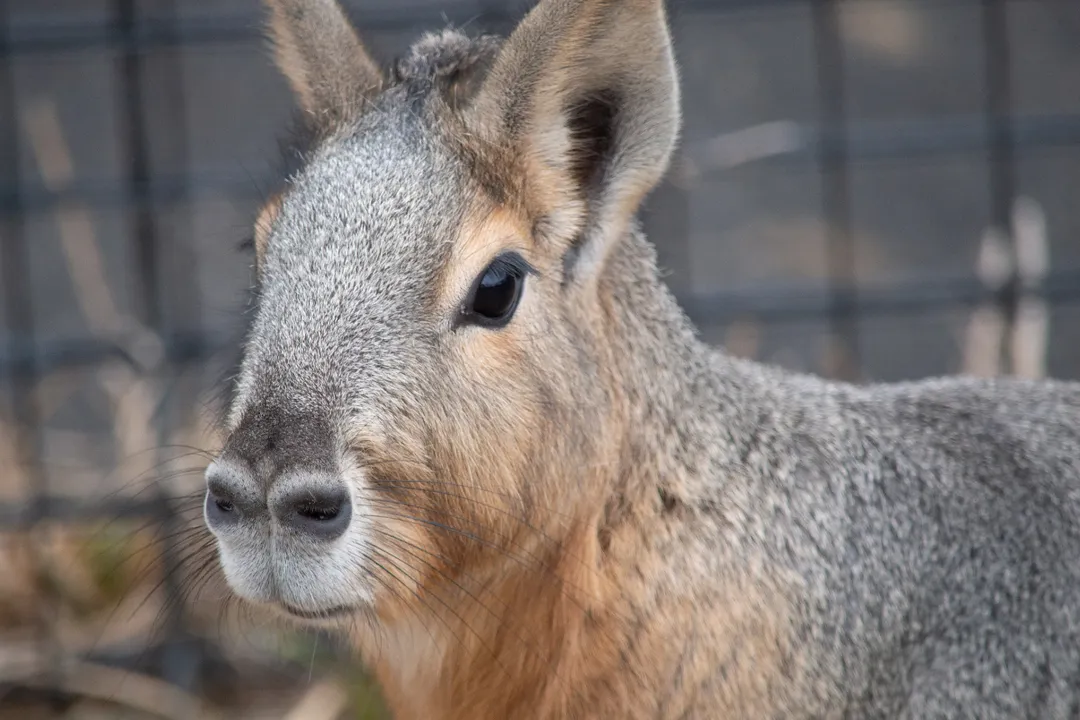
One of the most compelling facts that contextualizes the Patagonian cavy’s size is its standing among its own kind. The mara is widely cited as the world’s third-largest rodent. [6] This places it right behind the massive capybara, which holds the top spot. [3][6] Knowing that the capybara can weigh over 150 pounds, the cavy’s maximum size of around 35 pounds is clearly substantial enough to earn it the bronze medal in the rodent weight class. [3] This relative ranking helps explain why their physical characteristics—long limbs, continuous tooth growth, and a somewhat ungulate-like gait—depart so significantly from smaller caviids like the common guinea pig. [1][4]

# Analysis of Size Discrepancies
When reviewing the data, it is apparent that the lower bounds for weight (e.g., 6 lbs [4]) contrast sharply with the higher reported minimums (e.g., 17.6 lbs [3]). While the species is sexually dimorphic with males being slightly heavier, [1] such a wide spread of 29 pounds in a "typical" adult range suggests that the collection methodology or population sampled heavily influences the numbers reported. Zoo data often reflects a healthy, well-fed captive population, which might lean toward the higher end of the spectrum, whereas studies encompassing a broad range of wild Argentinian habitats might capture leaner individuals or a higher proportion of sub-adults, thus pulling the minimum weight down. [3] A good rule of thumb for an established adult, based on multiple zoo records, is to expect an animal in the 20 to 30-pound window. [2][3]
# Size and Agility Interplay
The Patagonian cavy’s size, particularly its long legs, is not just for show; it is intrinsically linked to its survival mechanism. Being a large rodent means it is a viable target for predators like felids and foxes. [1] To counteract this, the animal has evolved a body plan that maximizes speed and evasive maneuvers, allowing it to reach speeds up to 35 miles per hour. [1] The combination of being large and fast is unusual. For comparison, many large terrestrial mammals rely on sheer mass for defense, while many small rodents rely on camouflage or burrowing. The cavy uses its substantial frame to be athletic, utilizing unique movements like "stotting"—a bounding jump on all fours, typically seen in ungulates. [1][3][7] This agility is a direct, evolutionary adaptation to its large size in an open habitat where cover is scarce. A smaller animal might simply run, but a larger one needs that extra lift and propulsion to clear rough terrain and confuse a pursuing predator, making its physical dimensions a functional necessity for its lifestyle. [7]
Ultimately, the Patagonian cavy is a standout species, defined in part by its impressive physical presence. It is no small rodent; it is a heavy, long-bodied creature, often nearing three feet in length and weighing up to 35 pounds. This mass secures its place as the world's third-largest rodent, a testament to its adaptation to the vast, arid landscapes of Patagonia. [3][6]
Related Questions
#Citations
Patagonian mara | Smithsonian's National Zoo and Conservation ...
Patagonian Cavy - Utica Zoo
Patagonian Cavy | Southwick's Zoo
Patagonian Mara - Zoo Atlanta
This is a Patagonian Cavy, the world's 3rd-largest rodent. They look ...
Patagonian Cavy - Animals & Wildlife - Oglebay Zoo, WV
Patagonian Cavy | Potter Park Zoo
The Patagonian Mara - Patagonia Hare, Cavy or Dillaby