What threat do modern invasive mammalian predators like stoats exploit in the kiwi population?
Answer
Their ground-dwelling, nocturnal habits and slow reproductive rate
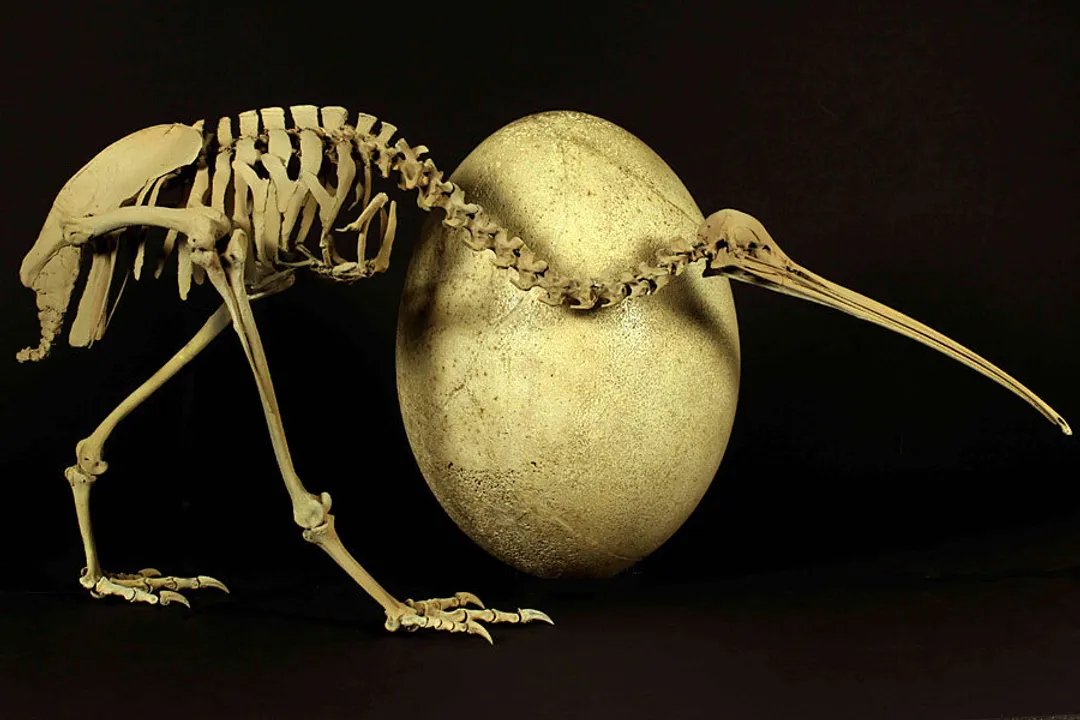
The very adaptations that ensured the kiwi’s phenomenal success and survival for nearly one hundred million years in predator-free New Zealand—being ground-dwelling, nocturnal, and having a slow reproductive cycle—are precisely what make them critically vulnerable today. Invasive mammalian predators, such as introduced stoats and dogs, operate effectively in the kiwi’s terrestrial environment, especially at night. These introduced species ruthlessly exploit the kiwi's lack of defense mechanisms against ground hunters, leading to steep population declines, making the conservation of these birds an urgent matter to protect living relics of a vastly different epoch.
Related Questions
Which extinct Madagascan bird is the kiwi's nearest living kin based on genetic mapping?What characteristic defines the group of flightless birds known as ratites, which includes the kiwi?What primary evidence led older studies to suggest the kiwi was a close cousin of the extinct Moa?Where are the external nares, which enhance the kiwi's sense of smell, uniquely situated on its bill?What does the divergence timeline suggest about the kiwi ancestors before they lost flight?The current evolutionary narrative suggests the kiwi lineage diverged from other ratites very early on. Approximately how long ago might this separation have occurred?What specific physical characteristics define the kiwi's terrestrial adaptation in New Zealand?Why has the kiwi's morphology, such as flightlessness, proven scientifically misleading about its deep ancestry?What threat do modern invasive mammalian predators like stoats exploit in the kiwi population?What hypothesis regarding kiwi ancestors was briefly supported by a fossil discovery concerning geography?