What are kiwis descended from?
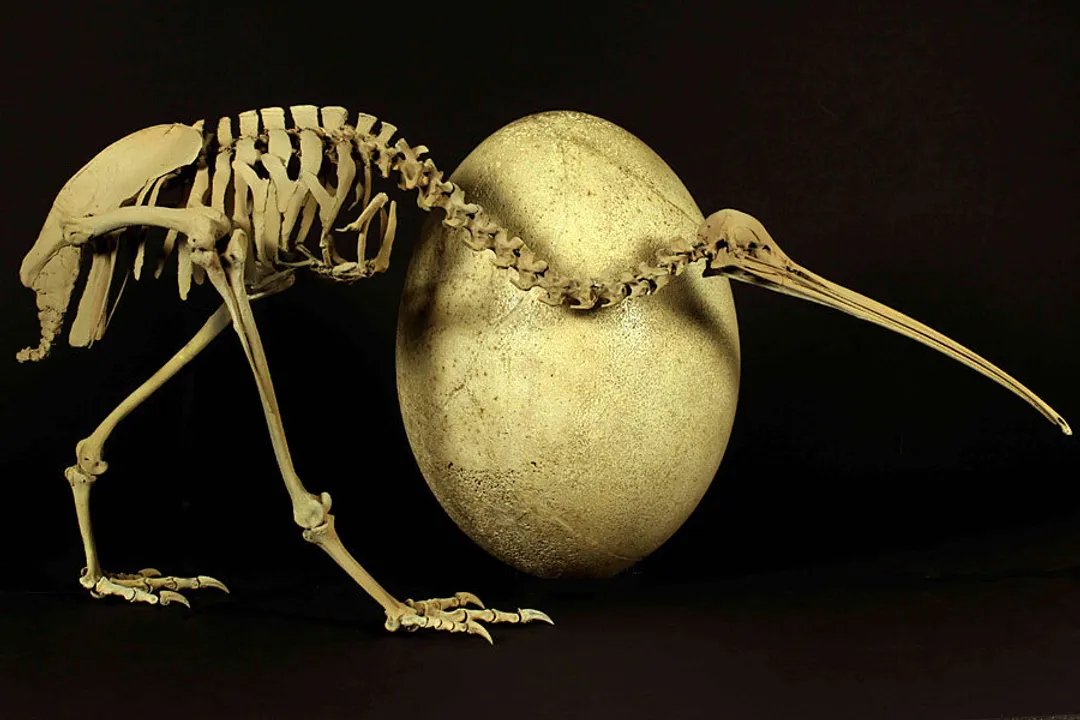
The kiwi, that charming, perpetually surprised-looking native of Aotearoa New Zealand, represents one of the most peculiar evolutionary stories in the avian world. To ask what the kiwi is descended from is to invite a scientific debate that has seen dramatic revisions over the last few decades, moving from seemingly logical connections to startling, geographically distant relatives revealed by genetic mapping. [1][8] These unique birds, known globally for their fuzzy brown plumage, nocturnal habits, and prominent bills housing their nostrils at the tip, are flightless ratites, sharing that characteristic with giants like the ostrich and the emu. [1][6] Yet, their evolutionary placement among this group has long remained a puzzle, one that modern molecular biology is only now starting to solve definitively. [8]
# Flightless Enigma

The defining characteristic of the kiwi is, of course, its inability to fly, a trait shared with the extinct Moa of New Zealand, which once dominated the landscape. [1][4] For a long time, based on geographical proximity and shared flightlessness on the same island group, the scientific assumption leaned heavily toward the kiwi being a close cousin of the massive Moa. [4][5] Both birds evolved in isolation on islands that were once part of the supercontinent Gondwana, making a shared ancestry seem intuitive—a classic example of island gigantism and subsequent loss of flight in the absence of ground predators. [1][6]
However, evolution is rarely as simple as proximity suggests. The kiwi belongs to the group known as ratites, which are characterized by a flat sternum lacking the keel necessary to anchor large flight muscles. [1] This group includes ostriches, rheas, emus, cassowaries, and the extinct Moa and elephant birds. [1][2] When scientists began applying deeper genetic sequencing to determine the evolutionary tree, the expected branches—those connecting the kiwi closely to the Moa—began to look increasingly tenuous. [9] The findings indicated that the kiwi’s lineage had separated from the main ratite family much earlier than previously thought, suggesting a deep, ancient divergence rather than a recent common ancestor with its larger, flightless neighbors. [2][8]
# Shifting Beliefs
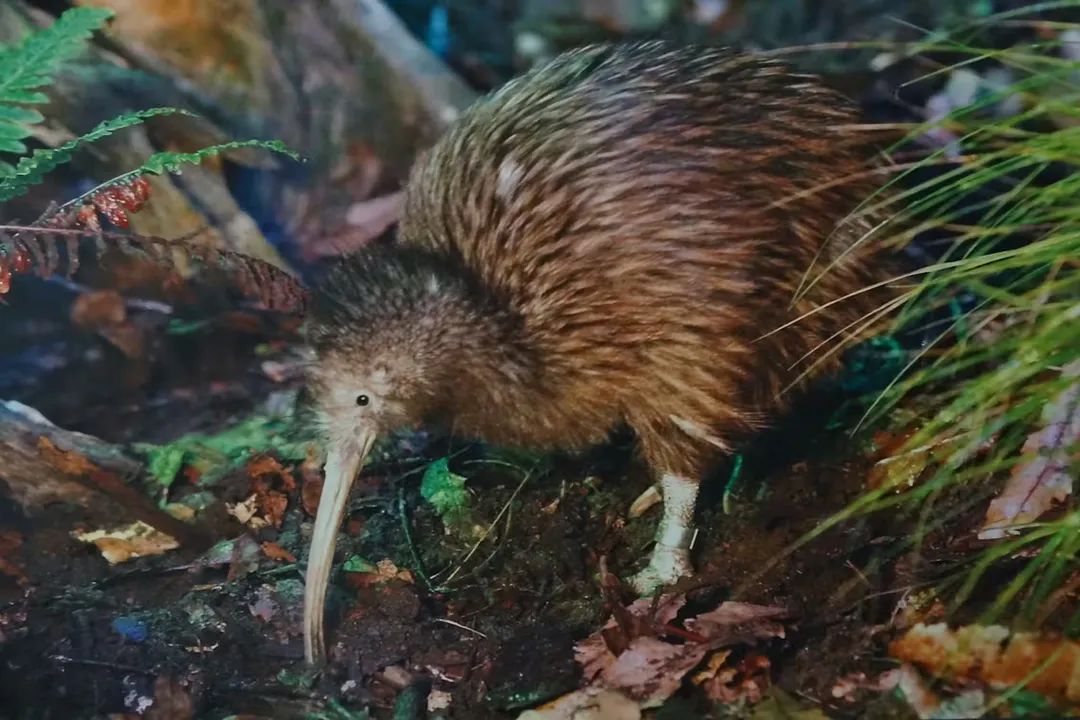
The transition in understanding the kiwi’s ancestry highlights a common theme in biology: morphology (what an animal looks like) can be misleading, while DNA tells a different story. [8][9] Older studies, relying primarily on skeletal structure and shared characteristics like flightlessness, suggested a clear affinity between kiwi and Moa. [4] This older model positioned the kiwi as a descendant that arrived in New Zealand, perhaps alongside or shortly after the Moa, and adapted to the forest floor. [5]
But more recent, comprehensive molecular studies have thoroughly rewritten this narrative. [9] These studies revealed that the kiwi’s genetic separation from other ratites predates the diversification of many groups we now recognize as distinct. [2] While the Moa remains endemic to New Zealand, the kiwi’s closest living relatives are geographically separated by vast oceans, leading researchers down a very different evolutionary path. [7][8]
A specific challenge to the established view even surfaced with a fossil discovery, which briefly suggested that perhaps the kiwi ancestors might have had Australian roots, potentially arriving via that continent rather than solely through the ancient Gondwanan breakup pattern most assumed for the Moa. [3] This finding underscored how much was still unknown and the need for concrete genetic evidence to anchor the theories.
# Madagascar Kinship
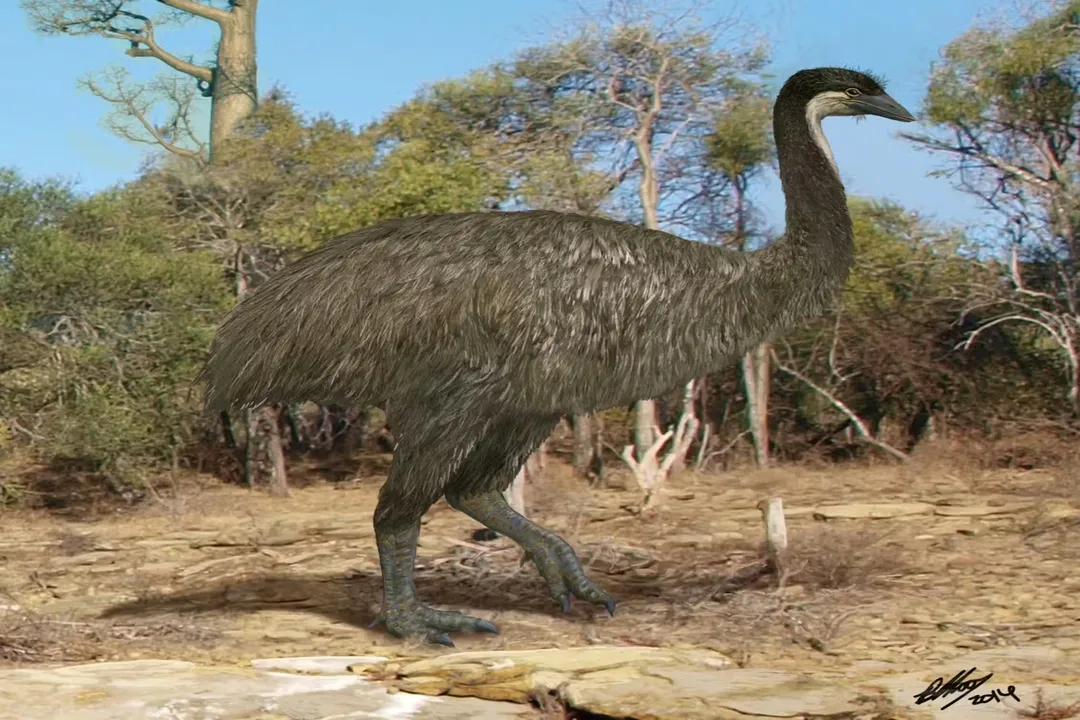
The breakthrough evidence overwhelmingly points toward the extinct elephant birds (Aepyornithiformes) of Madagascar as the kiwi's nearest living kin. [2][7][8] This relationship is striking because Madagascar and New Zealand have been separate landmasses for immense stretches of geological time, meaning the ancestors of these two birds shared a common ancestor before the island chains separated significantly or before their ancestors made their final, decisive journeys. [2]
Specifically, genetic analysis has identified the giant elephant birds, such as Aepyornis maximus, as the closest living relatives to the kiwi. [2][7] This means that while the kiwi evolved in isolation in New Zealand, its evolutionary twin spent millions of years evolving on Madagascar—a relationship far more distant than any connection to the Moa. [9]
When we examine the evolutionary timeline, we can see this split was profound. While the Moa were likely established in New Zealand much later, the kiwi lineage diverged from the common ancestor shared with other ratites—like ostriches and emus—very early on. [2] If we consider that the separation of New Zealand from the larger Gondwana landmass began roughly 85 million years ago, the kiwi’s ancestors must have either been established on the island by that time or arrived via a highly successful, ancient long-distance dispersal event before the landmasses drifted too far apart. [1][2] The fact that the kiwi retained a relationship with the elephant bird, despite the former ending up on one remote island remnant and the latter on another, suggests that whatever ancestor they shared was already well-established before the major continents settled into their current configuration. [2] This places the kiwi's deep ancestry much further back in time than one might expect for an island endemic bird.
# Ancient Separation
The implied timeline means the ancestors of the kiwi were flying birds that found themselves on the landmass that would become New Zealand long before dinosaurs vanished. [6][8] They were likely part of a dispersal event that landed them safely on their future island home, after which they completely relinquished the ability to fly. [2][8]
It is fascinating to consider that for an average reader, the time span involved in this divergence is almost unimaginable. If we use the estimate of arrival or separation around 85 million years ago, [1] this places the kiwi's initial divergence alongside the late Cretaceous period. To put that into context, the lineage that resulted in modern humans only began diversifying significantly millions of years after the dinosaurs went extinct. The sheer temporal depth of the kiwi’s isolation means its evolutionary adaptations—such as its powerful legs for running, its hair-like feathers, and its unique sense of smell aided by nostrils at the tip of its beak—are products of uninterrupted, unique environmental pressures spanning nearly one hundred million years. [6] This extended isolation is what makes the current genetic link to the Madagascan elephant bird so scientifically significant; it ties these two remote bird groups together across vast geographic voids, suggesting an initial dispersal event that occurred when the Earth’s geography was radically different. [2]
# Adaptation in Isolation
Once established in New Zealand, a land devoid of terrestrial mammalian predators for millennia, the evolutionary pressures shifted entirely away from aerial evasion. [6] The kiwi evolved into a ground-dwelling niche, relying on its excellent sense of smell to probe the soil for invertebrates, which form the staple of its diet. [6]
This environmental pressure is what led to the physical hallmarks we associate with the kiwi today:
- Feathers: They are often described as hair-like, lacking the interlocking barbules that create a smooth surface for flight. [6]
- Legs: Disproportionately large and muscular compared to their body size, built for powerful terrestrial movement. [1]
- Nose: The external nares (nostrils) are located at the very end of the bill, giving them the best sense of smell among birds, an adaptation for finding food beneath the leaf litter. [6]
The fact that the kiwi is related to flying birds, even if that common ancestor was distant, confirms the evolutionary path: they did not spontaneously generate flightlessness, but rather lost the capacity to fly over deep time as the advantages of flight diminished to zero in their predator-free, dense forest environment. [6][8] Their survival today, however, is precarious, as the introduction of invasive mammalian predators like stoats and dogs has brutally exploited the very adaptations—being ground-dwelling, nocturnal, and slow to reproduce—that made them so successful for the last 85 million years. [1] Understanding their deep ancestry reminds us that these birds are relics of a very different world, making their conservation efforts an exercise in protecting living paleontological treasures. [9]
Related Questions
#Citations
Kiwi (bird) - Wikipedia
How kiwi evolved - Save the Kiwi
Kiwi bird could have Australian roots, says expert after fossil discovery
Independent origins of New Zealand moas and kiwis - PubMed
What is the origin of Kiwi Bird? - Quora
The Story of the Kiwi Bird and Behind Our Kiwi Container Design
A recent study shows that the Kiwi is the closest living relative to the ...
How did flightless birds evolve? Kiwi DNA offers clues.
Rewriting the origin of New Zealand's kiwi bird ancestors