What specific physical characteristics define the kiwi's terrestrial adaptation in New Zealand?
Answer
Disproportionately large, muscular legs and hair-like feathers
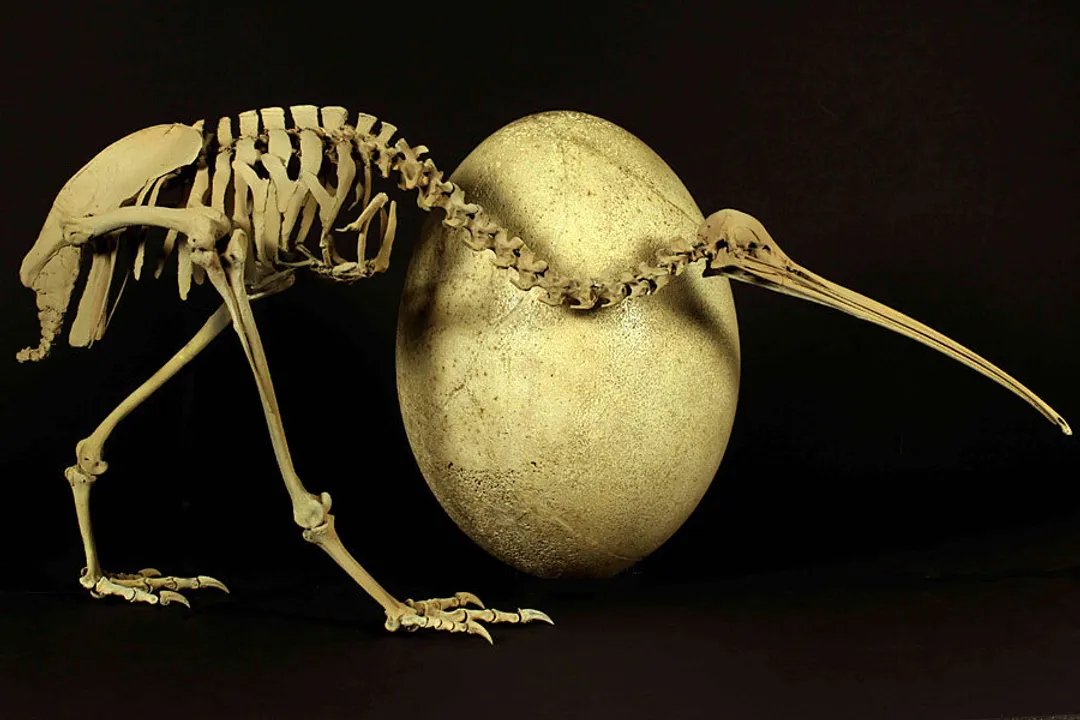
The physical hallmarks of the kiwi are direct results of millions of years evolving without the need for aerial evasion. Their legs are disproportionately large and muscular, built for powerful terrestrial movement across the forest floor. Furthermore, their feathers have evolved to be more hair-like, lacking the interlocking barbules necessary to create the smooth surface required for flight. These adaptations supported their nocturnal, ground-dwelling lifestyle centered around probing the soil for food, rather than evasion via flight.
Related Questions
Which extinct Madagascan bird is the kiwi's nearest living kin based on genetic mapping?What characteristic defines the group of flightless birds known as ratites, which includes the kiwi?What primary evidence led older studies to suggest the kiwi was a close cousin of the extinct Moa?Where are the external nares, which enhance the kiwi's sense of smell, uniquely situated on its bill?What does the divergence timeline suggest about the kiwi ancestors before they lost flight?The current evolutionary narrative suggests the kiwi lineage diverged from other ratites very early on. Approximately how long ago might this separation have occurred?What specific physical characteristics define the kiwi's terrestrial adaptation in New Zealand?Why has the kiwi's morphology, such as flightlessness, proven scientifically misleading about its deep ancestry?What threat do modern invasive mammalian predators like stoats exploit in the kiwi population?What hypothesis regarding kiwi ancestors was briefly supported by a fossil discovery concerning geography?