What ancient trait, retained by caecilians but lost by modern frogs and salamanders, suggests the common ancestor of Lissamphibia had dermal armor?
Answer
Minute, bony scales embedded within their skin
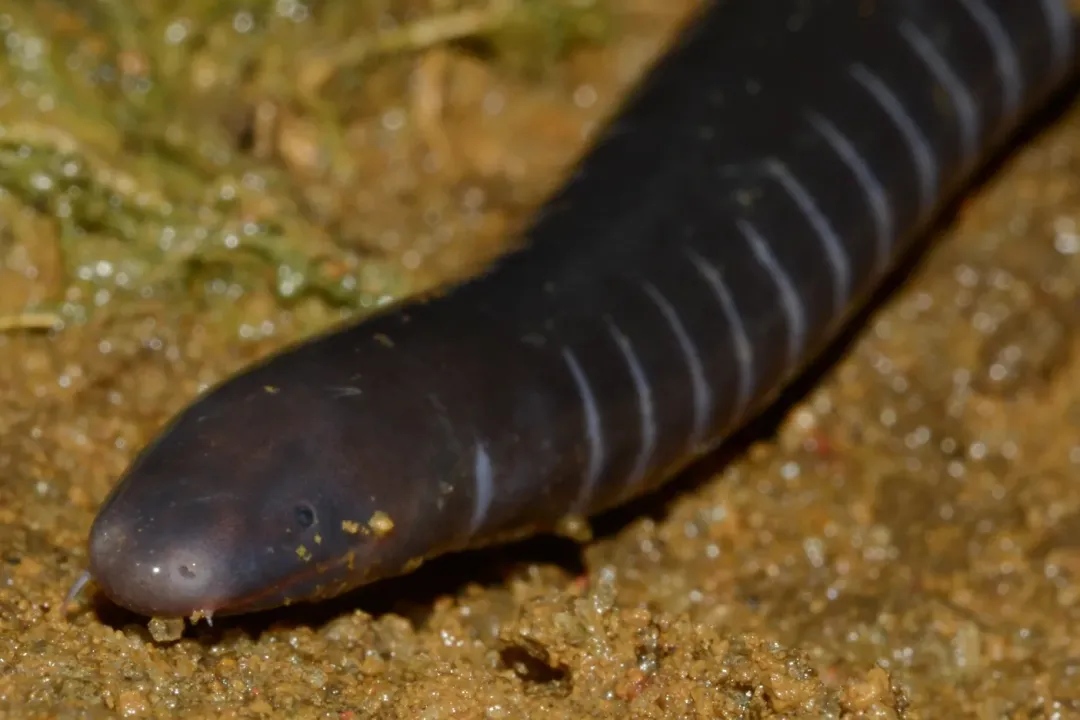
Caecilians possess minute, bony scales within their skin, which suggests their common Lissamphibia ancestor had some form of dermal component that was subsequently lost by frogs and salamanders.
Related Questions
To which order of amphibians do caecilians belong?According to modern molecular phylogenetics, which two groups are considered sister groups relative to caecilians?Approximately when is the initial divergence of the caecilian lineage from the ancestor of modern frogs and salamanders estimated to have occurred?What major factor significantly limits the paleontological understanding of caecilian ancestry?What ancient trait, retained by caecilians but lost by modern frogs and salamanders, suggests the common ancestor of Lissamphibia had dermal armor?Which ancient fossil, dating to the Early Jurassic, helps bridge the morphological gap between extinct early tetrapods and modern Gymnophiona?What unique sensory organ helps caecilians detect vibrations and chemicals in the soil?Why does the caecilian branch appear relatively longer than the frog or salamander branches on a simplified phylogenetic tree based on genetic distance from humans?What reproductive strategy, often seen in caecilians, contrasts with the generally ancestral amphibian mode tied to aquatic larvae?Due to the scarcity of fossils, what methodical approach is heavily relied upon to construct a robust evolutionary hypothesis for caecilians?