What is the ancestry of the caecilian?
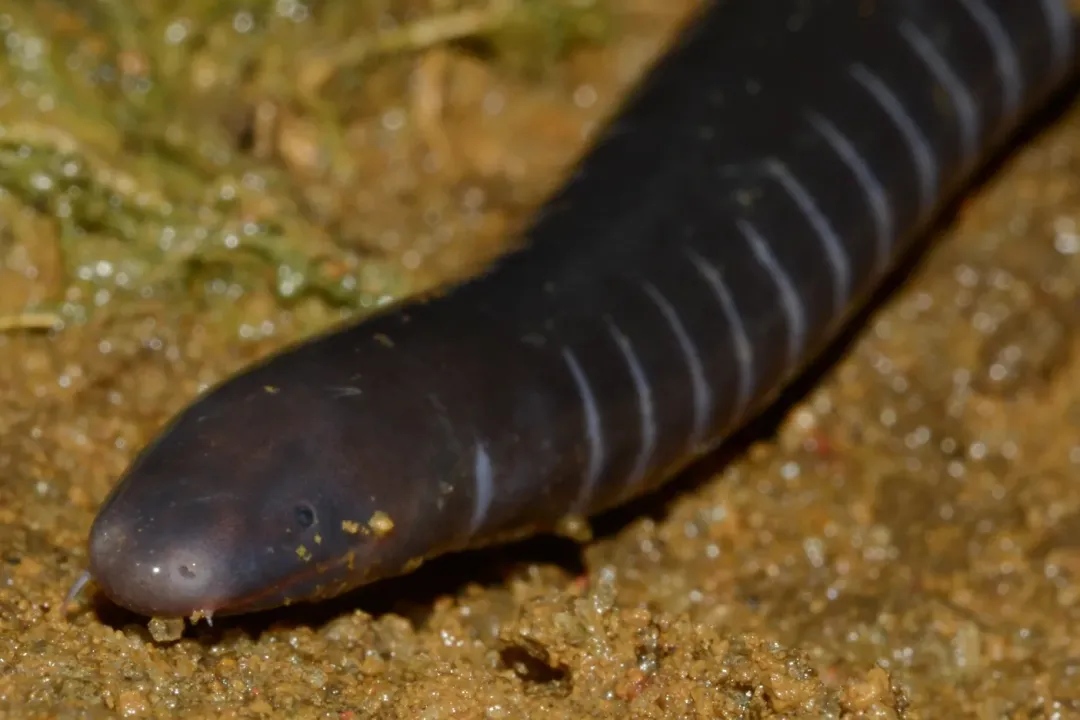
Caecilians represent one of the most enigmatic groups of living vertebrates, often appearing worm-like or snake-like, which obscures their true biological heritage from casual observation. [2] These amphibians, belonging to the order Gymnophiona, share the planet with their more familiar relatives, frogs and salamanders, but their distinct morphology—the absence of limbs, presence of specialized skin, and unique sensory organs—often causes confusion regarding their placement in the grand scheme of life. [5][6] Tracing their ancestry requires looking deep into the fossil record, where evidence is sparse, and relying heavily on modern genetic analyses that map out millions of years of divergence from common ancestors. [1][3] They are an ancient lineage, a testament to the evolutionary success of amphibians following the move onto land.
# Amphibian Kinship
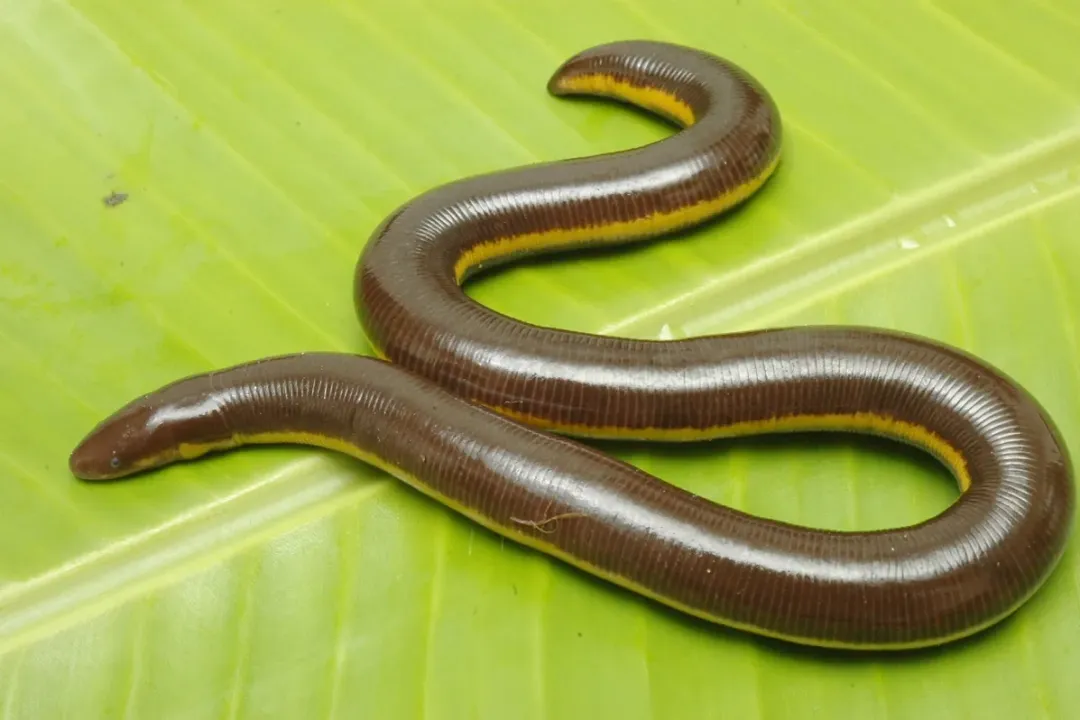
All modern amphibians belong to Lissamphibia, a group that encompasses three distinct orders: Anura (frogs and toads), Caudata (salamanders and newts), and Gymnophiona (caecilians). [5][8] The essential question about caecilian ancestry revolves around their relationship within this group. Are they the sister group to the other two, or do they sit on a separate branch? Early hypotheses often placed caecilians as the most basal group, diverging earliest from the common amphibian ancestor. [3]
However, modern molecular data has complicated this view. Genetic studies comparing DNA sequences across these three groups suggest a different pattern of evolutionary relationships. [1] The consensus emerging from molecular phylogenetics often places frogs and salamanders as sister groups, forming a clade (a group sharing a common ancestor) that then diverged from the caecilian lineage. [3][7] This means that the common ancestor of frogs and salamanders lived more recently than the point where caecilians split off from the main amphibian stem. [1]
This relationship structure suggests that the divergence of caecilians is exceptionally deep within the tetrapod tree. An analysis of evolutionary rates across different amphibian lines has supported the idea that the basal split that led to Gymnophiona occurred very early in amphibian history. [6] It is estimated that the caecilian lineage separated from the ancestor of modern frogs and salamanders roughly 250 million years ago (Mya). [1] This timing places their initial divergence near the Permian-Triassic boundary, a time associated with major extinction events, which might have shaped the subsequent evolutionary path of these unique creatures. [1][7]
If we were to visualize the amphibian family tree, we would see the caecilian branch extending off first, followed by the split between the salamander branch and the frog branch. [3]
# Fossil Evidence
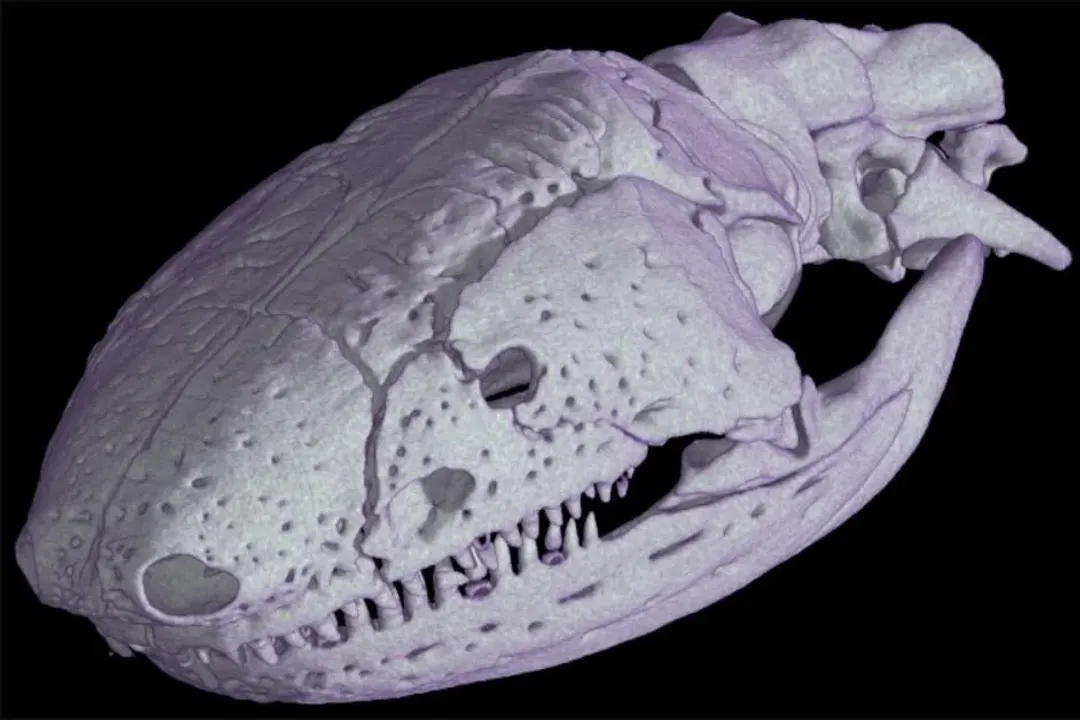
Tracing ancestry purely through fossils—a paleontological approach—is challenging for caecilians due to their largely subterranean, soil-dwelling existence, which is not conducive to fossilization. [2][8] Unlike many terrestrial reptiles or aquatic fish, burrowing animals rarely leave behind well-preserved remains. [9] Consequently, the fossil record for early caecilians is remarkably sparse. [1][3]
The few fossils known are critical for understanding morphology, but they offer limited scope for mapping out the entire group's history. [3] One of the oldest and most significant fossils sometimes discussed in this context is Eocaecilia. [1] This ancient form, dating back to the Early Jurassic, already possessed many features recognizable in modern caecilians, such as dermal scales and evidence of a specialized skull structure, yet it also retained some characteristics that look more generalized, bridging the gap between extinct early tetrapods and modern Gymnophiona. [1][6] The discovery of such forms indicates that the basic caecilian body plan was established quite early in their evolutionary history. [3]
Because the fossil record is so incomplete, scientists must rely on cladistics, the method of classifying organisms based on shared derived characteristics, and increasingly, on molecular sequencing, to build a robust evolutionary hypothesis. [6] The limited bone structure information we do have suggests that early caecilians were not entirely subterranean, possibly possessing larger eyes and different jaw structures than their modern, often blind, burrowing descendants. [9]
# Molecular Markers
The most compelling evidence regarding caecilian ancestry comes from comparing their genetic material with that of other amphibians and tetrapods. [1][7] DNA sequencing provides a high-resolution map of evolutionary relationships based on accumulated mutations over time. [7] When researchers sequence genomes or specific marker genes from diverse species across the amphibian orders, consistent patterns emerge supporting the deep split of Gymnophiona. [1]
For instance, studies analyzing mitochondrial DNA and nuclear genes consistently recover the topology where caecilians branch off before the Anura-Caudata split. [3] This genetic signature is interpreted as the result of their common ancestor existing far back in time, meaning the ancestors of caecilians were already distinct while their frog and salamander cousins were still relatively closely linked. [7]
One fascinating area of molecular investigation concerns the presence and loss of specific genes. Caecilians, like frogs and salamanders, lost the ability to produce certain molecules that their reptilian and avian cousins maintain, reinforcing their shared amphibian heritage. [8] Yet, the specific timing and nature of gene losses or gains unique to the Gymnophiona lineage help pinpoint their separation date on the molecular clock. [1] The consistent recovery of this branching pattern across multiple studies using different genetic markers lends considerable authority to the current model of caecilian ancestry. [3]
If one were to construct a simplified phylogenetic tree based purely on genetic distance from humans, the caecilian branch would appear significantly longer relative to the common tetrapod ancestor compared to the branches leading to frogs and salamanders, indicating a greater accumulated time since divergence. [9]
# Scale Ancestry
A defining, yet often overlooked, feature in caecilian anatomy is the presence of minute, bony scales embedded within their skin. [2][5] These are absent in modern frogs and salamanders, making them a crucial morphological marker for understanding their ancestry. These scales are not homologous to the scales found on reptiles or fish; rather, they represent a unique adaptation within Amphibia. [1][6]
The presence of these dermal ossifications strongly suggests that the common ancestor of Lissamphibia possessed some form of dermal armor or structural component in its skin, a feature that was subsequently lost by the ancestors of modern frogs and salamanders. [3] The caecilians, therefore, appear to have retained this ancient trait through modification, while their sister groups evolved away from it, possibly as an adaptation to a fully aquatic or a very specific terrestrial existence. [9] Understanding the precise structure and development of these caecilian scales provides a window into the skin biology of the earliest amphibians leaving the water. [1]
Interestingly, while caecilians possess these scales, their skull structure shows a reduction in bone number compared to other tetrapods, which is often associated with fossorial (burrowing) life. [9] The interplay between retaining the ancient dermal scales and evolving a highly derived, reduced skull structure highlights a dual evolutionary trajectory: retaining deep ancestral features while specializing dramatically for a modern niche. [6]
# Divergence Timing Insights
Pinpointing the exact divergence time between caecilians and the frog/salamander clade is a complex process reliant on calibrating molecular clocks using fossil data—a process where gaps in the fossil record create uncertainty. [7] However, the consensus remains that this split occurred deep in time, likely before the Cretaceous period in its entirety, stretching back potentially into the late Paleozoic. [1]
When comparing the diversification rates, it appears the caecilian line diversified more slowly or within more constrained ecological niches than the Anura/Caudata groups following the initial split. [7] While frogs have exploded into thousands of species occupying nearly every terrestrial niche, caecilians remain a relatively small order (over 200 species) that largely occupies the tropical leaf litter and subterranean environments. [5][2] This lower species richness, coupled with a very early divergence time, suggests that the ancestral caecilian niche may have been restrictive, allowing for high evolutionary expertise in a specialized habitat, rather than broad ecological exploration. [9]
If we consider the approximate 250 million year divergence estimate, [1] this places the common amphibian ancestor relatively close in time to the diversification of the earliest reptiles. This forces us to rethink the evolutionary pressures on early tetrapods; the traits that define modern amphibians—moist skin, reliance on water for reproduction (though many caecilians have dispensed with this)—may have been established in a world where the reptiles were just beginning to master terrestrial life. [8] The caecilian lineage represents a successful, yet fundamentally conservative, path taken by an amphibian ancestor that never fully committed to the reptile-like evolutionary innovations of tough, dry skin or amniotic eggs. [4]
# Reproductive Ecology Reflection
The ancestry of caecilians is also subtly reflected in their reproductive strategies, which are far more varied and complex than those found in most frogs or salamanders. [4] While many caecilians exhibit direct development—meaning eggs hatch directly into miniature versions of the adults, bypassing an aquatic larval stage—some species are viviparous, giving live birth to fully formed young. [4]
This diversity in reproduction hints at a lineage that has experimented with terrestrial adaptations for a very long time, likely corresponding to their deep separation from the frog line. [6] Frogs, by contrast, are overwhelmingly tied to an aquatic larval stage, which is often considered the ancestral amphibian mode of reproduction. [4] The fact that caecilians, so early in their split, developed specialized terrestrial strategies, including maternal nourishment of the embryo via an oviduct lining (a unique form of embryotrophy), suggests a long evolutionary history where subterranean or damp terrestrial life drove reproductive innovation. [4] It implies that the ancestral caecilian environment, perhaps damp leaf litter or soil, imposed strong selection pressures favoring independence from open water long before other amphibians began making similar moves. [9]
# Comparative Morphology and Ancestral Traits
To understand caecilian ancestry, comparing structures lost in frogs and salamanders offers additional context. The modern caecilian skull is highly modified, often featuring fused bones, which provides strength for burrowing. [9] However, examining the few fossil caecilians and the general structure of the amphibian skeleton suggests that the early caecilian ancestor possessed a more generalized tetrapod skull structure. [1]
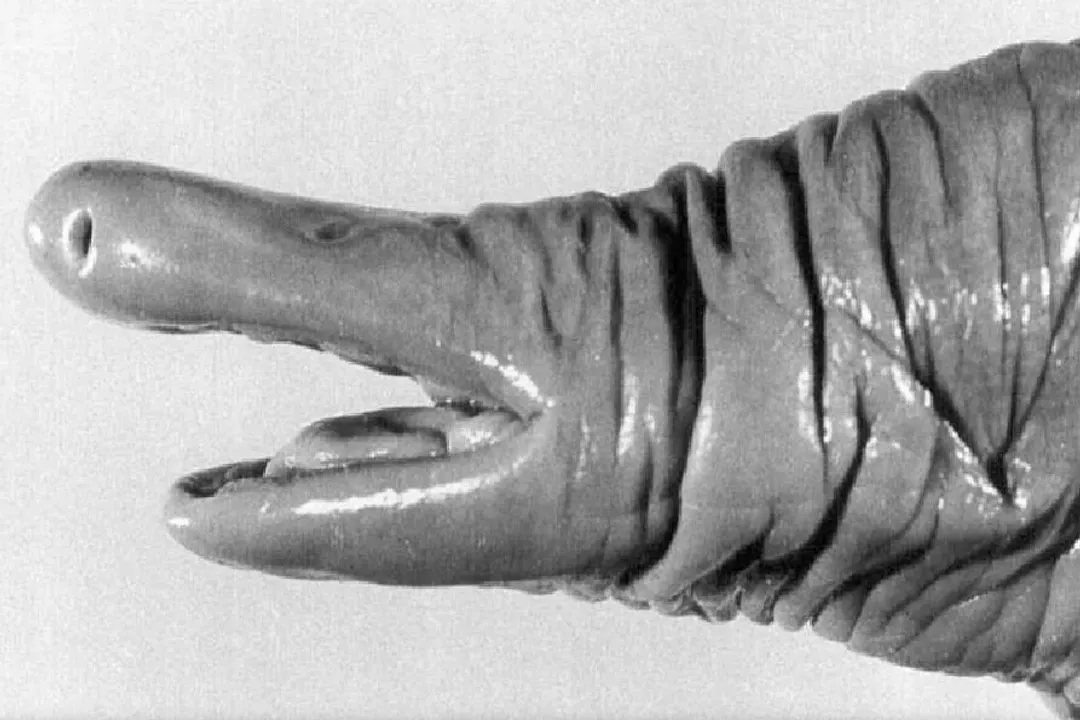
A key structure linked to their ancestry is the presence of a unique sensory organ called the tentacle, located between the eye and the nostril. [2][5] This organ is thought to be involved in chemoreception and detecting vibrations in the soil, essential for a largely subterranean lifestyle. [2] While its precise homology to other tetrapod structures is debated, it is a defining characteristic of Gymnophiona, suggesting that the need for acute sensory perception in a dark environment was a factor shaping the lineage shortly after its initial divergence. [6]
If we map the evolutionary changes onto the timeline, we can theorize that the ancestral caecilian was likely semi-aquatic or semi-fossorial, possessing a less specialized snout, more defined eyes, and perhaps more prominent vestiges of limbs (though limbs were likely lost very early on or never fully developed to the extent seen in salamanders). [1][9] The current snake-like form is an extreme example of convergent evolution toward fossorial life, but their internal anatomy remains unequivocally amphibian. [2] The retention of their ancient genetic makeup, despite dramatic external reshaping, provides a deep anchor to the early history of all four-limbed land vertebrates. [7]
The persistence of a bony, movable lower jaw structure, despite the overall simplification of the skull, is another subtle indicator of their deep, independent tenure as a distinct tetrapod group, allowing them to evolve feeding strategies—like using their skulls as a brace while ingesting prey—that are fundamentally different from the suction feeding of frogs or the grasping of salamanders. [9] This specialization in jaw mechanics, developed over hundreds of millions of years in isolation, showcases a successful, long-term evolutionary commitment to their subterranean existence. [6]
Related Questions
#Citations
Caecilians: Current Biology - Cell Press
The Amazing Caecilians - Tetrapod Zoology
The Palaeozoic Ancestry of Salamanders, Frogs and Caecilians
Croaking Science: Caecilians – unusual reproductive ecology
Caecilian - Types, Characteristics, Habitat, Diet, Examples, & Picture
An Evolutionary Study Of Caecilians | Open Access Journals
Stem caecilian from the Triassic of Colorado sheds light on ... - PNAS
Episode 162 – Caecilians - The Common Descent Podcast
CaecilianTraits, an individual level trait database of Caecilians ...