What dinosaurs coexisted with Amargasaurus?
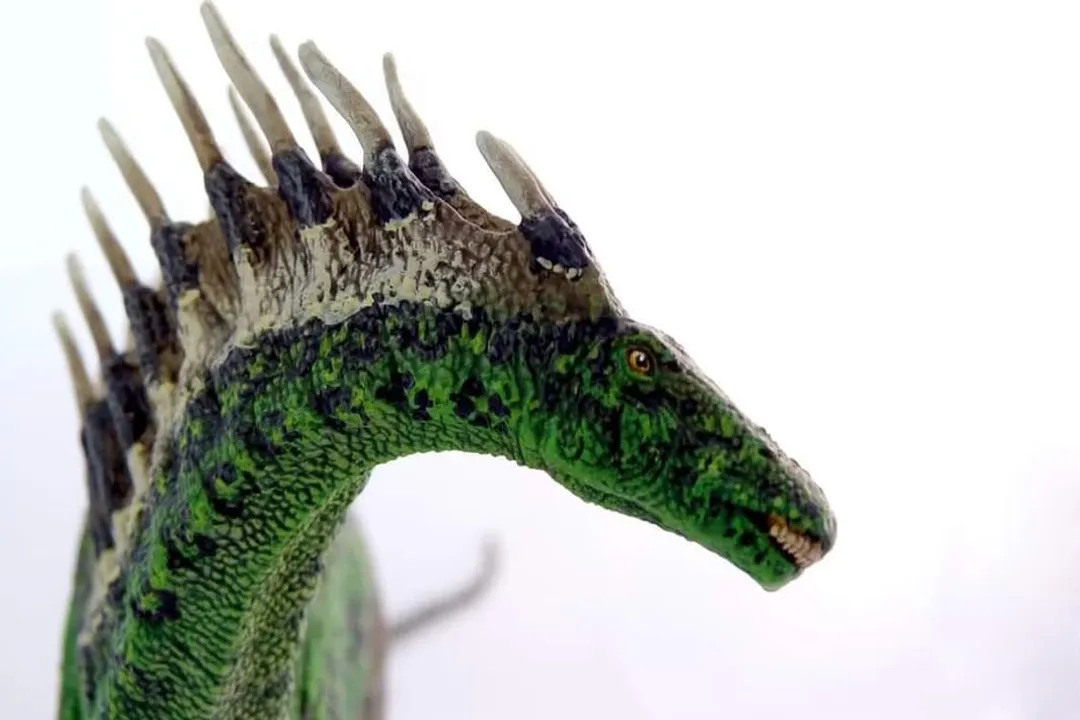
The presence of Amargasaurus cazaui paints a distinct picture of the South American landscape during the Early Cretaceous period. This relatively small sauropod, famous for the tall, slender spines running along its neck and back, lived approximately 129 to 122 million years ago, firmly within the Hauterivian to Barremian stages of the Early Cretaceous. [1] Determining its neighbors means focusing almost entirely on the fauna recovered from the geological deposits in what is now Argentina, specifically the Amarga Group in the Neuquén Basin. [1][8] While popular media often throws together dinosaurs from across the globe and various time periods, the actual community surrounding Amargasaurus was geographically and temporally restricted. [3][5]
# Cretaceous Stage
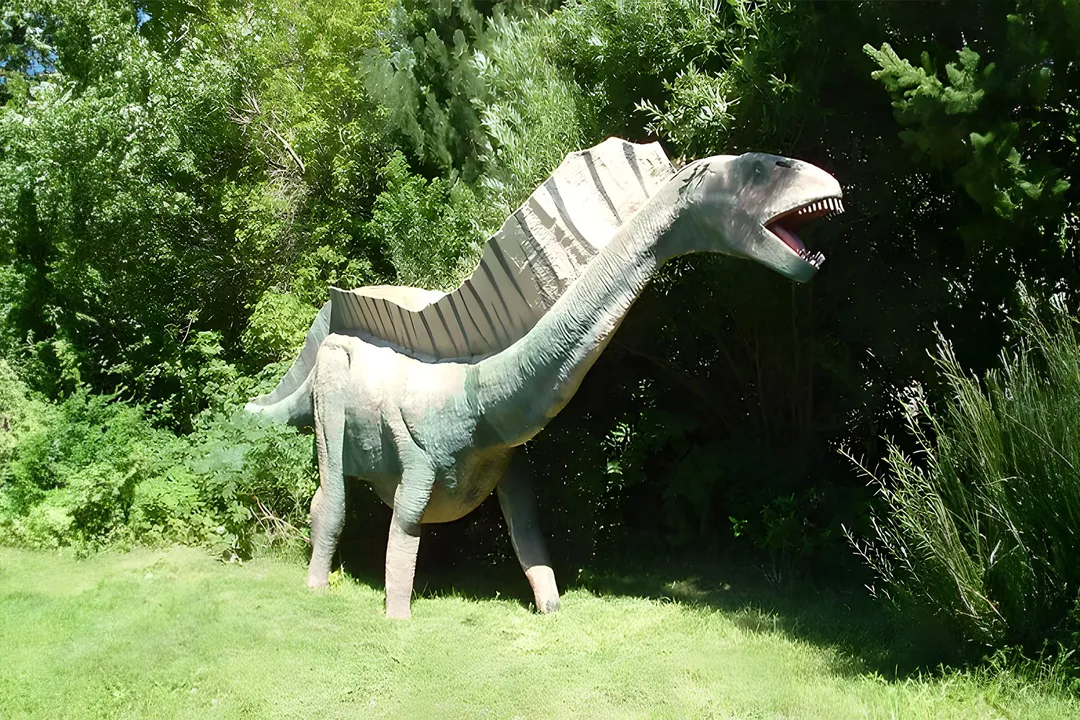
The world Amargasaurus inhabited was vastly different from the Late Cretaceous period that features giants like Tyrannosaurus or Triceratops. The Early Cretaceous saw the fragmentation of the supercontinent Gondwana, creating distinct faunal provinces. [1] Amargasaurus belongs to a specialized South American assemblage. [8] Understanding the specific geological layer it is found in—the Amarga Formation—is key to identifying its direct associates. [1] This environment was characterized by floodplains and river systems, suggesting a habitat rich enough to support large, long-necked herbivores. [4]
# Distinct Features
Before looking at who shared the watering holes, it is important to remember what made Amargasaurus unique among its peers. It was not a titan among sauropods, measuring perhaps 9 to 10 meters in length and weighing around 2 to 3 metric tons. [1] Its most striking feature was the array of tall, closely spaced neural spines projecting over its neck, which could reach nearly a meter in height. [1][6] These spines were likely covered in skin or keratin, perhaps forming a sail or display structure, or potentially supporting a defensive keratinous sheath. [1]
This anatomical specialization hints at ecological differentiation. While many sauropods were generalist high browsers, the structure of Amargasaurus suggests it might have occupied a slightly different niche—perhaps a low to mid-level browser, using its neck for reach across dense underbrush rather than straight up into the high canopy dominated by its larger cousins. [6] Such specialized feeding strategies often mean that different large herbivores can coexist without competing directly for the exact same food resources.
# Giant Herbivores
The primary neighbors of Amargasaurus were, naturally, other large plant-eaters, particularly other sauropods, which dominated the herbivore guild of the Early Cretaceous in this region. [1] The paleontological record from the Amarga Formation provides several other sauropod genera that shared the ecosystem. [1]
One key contemporary was Amargatitan, another sauropod that lived in the same location around the same time. [1] Given that Amargasaurus was comparatively small for a sauropod, Amargatitan likely represented the larger body size class within that group, filling the niche of the truly massive browsers. [1]
Another known contemporary from the same formation is Saltasaurus, although Saltasaurus is often more closely associated with slightly younger rock layers in other formations. [1] However, the general presence of armored sauropods, like the titanosaurs, was a feature of this general time and place. [1] The ecosystem was clearly dominated by these massive long-necked herbivores, creating a high grazing pressure on the local flora. [4]
# Local Predators
A lush environment supporting massive herbivores inevitably attracts substantial predators. The Early Cretaceous of Argentina was home to large carnivorous dinosaurs capable of challenging even large prey, although they would certainly have targeted the smaller Amargasaurus. [1]
The most significant predator known to coexist with Amargasaurus is the theropod Carcharodontosaurid known as Mapusaurus. [1] Mapusaurus, a relative of Giganotosaurus, was a massive predator, potentially reaching lengths of over 10 meters. [1] While direct evidence of a Mapusaurus attack on an Amargasaurus is lacking, their presence in the same region during the same time frame makes overlap certain. [1] These large carnivores represent the apex predator guild of the ecosystem, much like later tyrannosaurs in North America. [4]
Other carnivorous dinosaurs are also recorded from deposits near the Amarga Formation, providing a varied menu for the top predators and potential danger for the sauropods. [1] The overall picture suggests a dynamic predator-prey relationship, where bulk and defense were necessary for survival against large, active hunters. [1]
# Provincial Fauna
When reviewing lists compiled for entertainment or gaming purposes, one often sees dinosaurs from completely different continents mixed in. [3][5] It is vital to remember that the Amargasaurus assemblage is highly provincial—meaning its members were largely confined to the southern landmass of Gondwana. [1] Therefore, while it is easy to find lists of dinosaurs that lived during the Early Cretaceous, very few of them lived with Amargasaurus in Argentina. [1]
For example, North America was home to early ornithopods and different types of theropods during this time. [1] Dinosaurs associated with the famous Yixian Formation in China or the Wealden fauna of England, while contemporaneous, occupied different continents and would never have crossed paths with Amargasaurus. [1] This isolation meant that evolution proceeded independently in these regions, leading to unique groups like the Carcharodontosaurids dominating the Southern Hemisphere carnivore niche. [1]
To put this in perspective, if we consider the Amarga ecosystem as a biological community, its structure was defined by the fragmentation of Gondwana. [1] It was a world where the dominant herbivores were titanosaurs, and the apex predators were early carcharodontosaurs, creating a localized evolutionary experiment far removed from the northern continents. [1]
# Ecosystem Comparison
Considering the known faunal components, we can briefly compare the diversity levels. While the Amarga fauna provides a snapshot, it appears less diverse in terms of large, specialized herbivore groups compared to some later Cretaceous ecosystems. [1] This might reflect the relatively early stage of dinosaur diversification following the Jurassic period, or simply the limitations of the fossil record from that specific South American region. [1]
| Dinosaur Group | Genus Example | Niche | Coexistence with Amargasaurus |
|---|---|---|---|
| Sauropod | Amargasaurus | Mid-level Browser | Primary Subject |
| Sauropod | Amargatitan | High Browser/Bulk Feeder | Yes [1] |
| Theropod | Mapusaurus | Apex Predator | Yes [1] |
| Armored Dinosaur | Saltasaurus (Related Group) | Low Browser/Defensive | Likely Contemporary [1] |
The presence of both a relatively smaller sauropod (Amargasaurus) and a larger one (Amargatitan) in the same formation suggests an efficient partitioning of vegetation resources, allowing two types of large herbivores to thrive simultaneously by feeding at different vertical levels. [4] This ecological overlap, mediated by structural differences, is a common strategy in surviving alongside competitors. [6] The general understanding provided by researchers studying the anatomy and associated fossils strongly indicates a community centered on a few dominant sauropod lineages being pursued by formidable, large-bodied theropods endemic to ancient South America. [1]
Related Questions
#Citations
Amargasaurus - Wikipedia
Hey guys, which dinosaurs were contemporaneous of ... - Facebook
List of dinosaurs that lived together, MKV : r/jurassicworldevo - Reddit
Exhibit Spotlight: Amargasaurus cazaui - Dinosaur Park
Species Field Guide - Amargasaurus - Frontier Forums
Amargasaurus | Research Starters - EBSCO
Amargasaurus | Western Australian Museum