scrotum articles
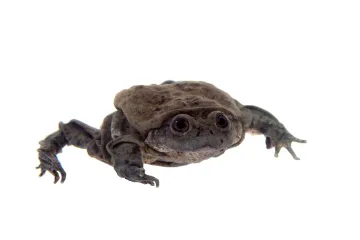
What is the scientific name for the Titicaca water frog?
How does the Titicaca water frog primarily absorb oxygen while fully submerged?
In which geographic area is the Titicaca water frog found exclusively?
What measurement standard do scientists commonly use to determine the length of this frog?
What is the maximum snout-to-vent length (SVL) commonly recorded for the species today?
Which famous explorer reported finding Titicaca water frogs reaching an outstretched length of up to 60 centimeters?
What does the discrepancy between historical maximum size and current typical size suggest about the frog population?
The distinct morphological forms of *T. culeus* are primarily correlated with what environmental factor?
Approximately what elevation is Lake Titicaca located at?
What derived behavior do Titicaca water frogs exhibit when oxygen levels drop acutely?
What is the IUCN classification for the Titicaca water frog?
Which introduced species heavily preys on the frog's tadpoles, limiting recruitment?
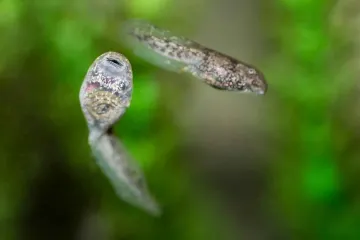
What is the scientific binomial nomenclature for the animal informally known as the scrotum frog?
What is the approximate elevation of Lake Titicaca, the natural habitat of the *T. culeus*?
What is the primary biological function of the scrotum frog's loose, wrinkled skin?
The common name 'scrotum frog' is derived directly from which striking physical attribute?
What physiological process allows the scrotum frog to absorb necessary oxygen directly through its skin?
What characteristic makes the skin structure highly efficient for transferring absorbed oxygen to the bloodstream?
Which environmental factor in Lake Titicaca necessitates the extreme adaptations of the *T. culeus*?
What is one major factor contributing to the critically endangered status of the *Telmatobius culeus*?
How does the life cycle of *T. culeus* compare to many other frogs within the same genus (*Telmatobius*)?
What role do zoos play in the conservation strategy for the scrotum frog?
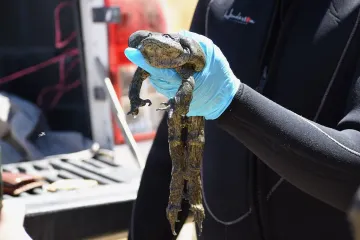
What feature gives the Titicaca Water Frog its common name?
How does the Titicaca Water Frog primarily sustain itself physiologically?
At what approximate elevation above sea level is Lake Titicaca situated?
According to official definitions, what is the IUCN conservation status of *Telmatobius culeus*?
What alarming population decline estimate has been noted over the last decade for this species?
What is the most pervasive threat contributing to the rapid decline of the species?
Why does the frog's reliance on cutaneous respiration make it acutely sensitive to water pollution?
For what purposes is the frog often harvested for local traditional remedies?
What type of conservation strategy involves maintaining colonies outside of Lake Titicaca, such as at Chester Zoo?