frog articles - Page: 2
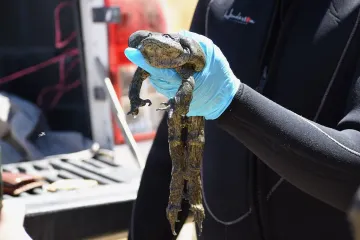
What feature gives the Titicaca Water Frog its common name?
How does the Titicaca Water Frog primarily sustain itself physiologically?
At what approximate elevation above sea level is Lake Titicaca situated?
According to official definitions, what is the IUCN conservation status of *Telmatobius culeus*?
What alarming population decline estimate has been noted over the last decade for this species?
What is the most pervasive threat contributing to the rapid decline of the species?
Why does the frog's reliance on cutaneous respiration make it acutely sensitive to water pollution?
For what purposes is the frog often harvested for local traditional remedies?
What type of conservation strategy involves maintaining colonies outside of Lake Titicaca, such as at Chester Zoo?
What must be aligned with the survival of the frog for long-term in-situ success?
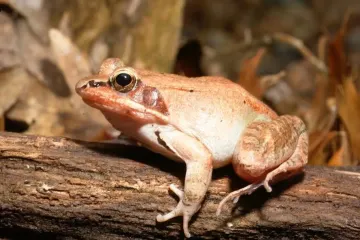
What is the maximum snout-vent length (SVL) recorded for an adult Wood Frog in metric units?
What marking is considered the single most reliable field mark for identifying the Wood Frog?
What is the technical term for the two prominent, raised skin folds running down the Wood Frog's back?
How is the skin texture of the Wood Frog generally described compared to other terrestrial frogs?
What physiological adaptation allows the Wood Frog to survive freezing solid during winter?
What characteristic describes the hind feet webbing of the Wood Frog?
What coloration generally characterizes the ventral side (belly and throat) of the Wood Frog?
Which scientific name is also used to classify the Wood Frog, depending on the classification system?
What distinguishes the juvenile Wood Frog's facial mask from that of a mature adult?
What behavior makes the Wood Frog notable among woodland frogs immediately following the spring thaw?
In addition to the main dark mask, what lighter marking is frequently found immediately above the dark mask on the Wood Frog's head?
PreviousPage 2 of 2