What is the downside to Aussiedoodles?
The appeal of the Aussiedoodle, that charming mix of the intelligent Poodle and the spirited Australian Shepherd, is undeniable. They often boast the teddy-bear look and a seemingly perfect balance of traits, leading many potential owners to dream of a low-maintenance, highly capable companion. However, anyone considering bringing one of these designer dogs home must look past the glossy photos and confront the genuine challenges inherent in their unique genetic makeup. The reality is that these dogs are not an automatic upgrade; they carry specific traits, inherited from their parent breeds, that can present significant hurdles for the unprepared owner. [1][5]
# Stamina Demands

Perhaps the most frequently cited drawback centers on their prodigious energy levels. These are not lap dogs content with a short evening walk. The Aussiedoodle inherits the boundless drive of the Australian Shepherd, a breed developed for long days of intense herding work, combined with the athleticism of the Poodle. [1][5] Owners often find themselves needing to dedicate substantial time—often more than they initially budgeted—to physical activity just to keep the dog content. Failure to meet this need almost guarantees behavioral problems, as that excess energy converts into destructive chewing, excessive barking, or frantic pacing. [1]
If you are looking at an Aussiedoodle, especially one leaning towards the F1 generation (direct cross), understand that you are signing up for something closer to a working dog's exercise requirements than a typical companion breed. A simple romp in the backyard is rarely enough; they often need structured exercise like hiking, serious games of fetch, or dog sports to truly tire them out mentally and physically. [1] For someone working a standard nine-to-five job requiring long hours away from home, this level of commitment can quickly become overwhelming.
# Grooming Burden
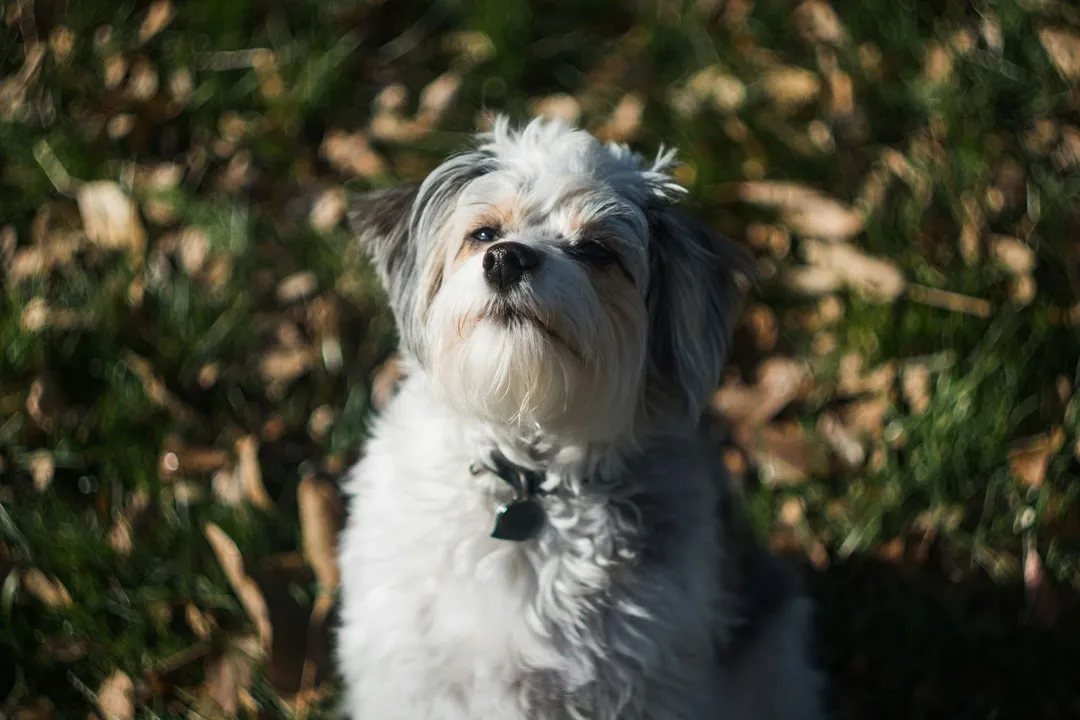
The coat of the Aussiedoodle is often touted as one of its primary selling points—the potential for low-shedding or hypoallergenic qualities inherited from the Poodle. [8] While some dogs do shed minimally, the grooming commitment required to maintain that desirable coat is intensive and expensive. The reality for many owners is a coat that mats quickly, especially if the dog has inherited a thicker, curlier coat type rather than a straight one. [1]
This is not a breed you can simply brush out once a week. Depending on the coat texture, daily or every-other-day thorough brushing right down to the skin is necessary to prevent painful knots from forming. [8] If matting does occur, it often necessitates shaving the dog completely down to the skin, resulting in a very different appearance than the fluffy teddy bear look people usually seek. Professional grooming appointments become a necessity, typically costing significantly more and requiring more frequent visits than breeds with shorter, simpler coats. [8]
When researching breeders, a key point to clarify is the expected coat type and how frequently professional grooming will be needed based on that type. It’s a financial and time cost that catches many new owners off guard; the cost of professional grooming can easily run into hundreds of dollars monthly for a standard-sized dog, presenting a significant recurring expense beyond basic food and vet bills. [1]

# Mental Exercise Needs

Aussiedoodles are famously smart, a trait inherited from both parent lines, but this high intelligence cuts both ways. While it makes them highly trainable, it also means they bore easily. A bored Aussiedoodle will invent its own entertainment, and that entertainment often involves reorganizing your house by chewing baseboards, digging up the lawn, or finding novel ways to open cabinets. [5]
They possess a strong desire to work or perform tasks. If their minds aren't engaged, they can become anxious or neurotic. This often manifests as separation anxiety, as they become overly attached and distressed when left alone for long periods. [1] Training must be consistent and challenging to keep pace with their learning speed. If an owner only focuses on basic obedience, the dog might master those commands quickly and then start testing boundaries in more frustrating ways.
This intelligence means that they often excel at the herding behaviors inherited from the Australian Shepherd side. In a home with small children, runners, or other pets, the Aussiedoodle may exhibit strong, persistent urges to herd them by nipping at heels or constantly trying to keep the family grouped together. [6] Managing this instinct requires dedicated training to redirect the behavior into appropriate outlets, like advanced tricks or agility, rather than simply suppressing it.
# Health Concerns Inherited
As a hybrid breed, the Aussiedoodle is theoretically supposed to benefit from "hybrid vigor," but they are still susceptible to many of the health issues common to their parent breeds. [9] Responsible breeding practices are vital to mitigate these risks, but potential owners must be aware of what those risks are, as they represent significant potential future costs and heartaches.
Key health concerns that frequently appear in Aussiedoodle screenings include:
- Hip and Elbow Dysplasia: A common skeletal issue in many larger breeds, including Australian Shepherds. [9] This can lead to pain, arthritis, and mobility issues later in life.
- Progressive Retinal Atrophy (PRA): An eye condition that can lead to blindness, which can be inherited from both Poodle and Aussie lines. [9]
- Bloat (Gastric Dilatation-Volvulus or GDV): A life-threatening emergency common in deep-chested dogs, which can include the Poodle side of the mix. [8]
- Sebaceous Adenitis (SA): While perhaps more associated with purebred Aussies, skin issues resulting from the mix can be a persistent problem, leading to chronic itching and skin infections. [9]
Prospective owners must insist on seeing health clearances for the parents (OFA for hips/elbows, CERF/OFA Eye exams for eyes) for both the Australian Shepherd and Poodle side of the lineage. If a breeder is vague or unwilling to provide this documentation, the risk of inheriting costly, debilitating health issues skyrockets, essentially negating any benefit of choosing a designer mix. [5][9]
# Predictability Issues
One subtle, yet significant, downside of designer mixes like the Aussiedoodle is the spectrum of outcomes. They do not breed true like many established purebreds, meaning predictability regarding size, coat, and temperament can vary widely, even within the same litter. [5]
While a reputable breeder will strive for consistency, the second generation (F2) or subsequent crosses can exhibit unpredictable traits. You might get a dog that sheds heavily like an Aussie, or one that is highly sensitive and nervous like some Poodles, or perhaps one that has the intense herding drive of the Aussie combined with the high prey drive of a bird dog lineage. This unpredictability is a gamble. [1] When you choose a specific purebred, you are buying into centuries of predictable characteristics; with a hybrid, you are placing a bet on the genetic lottery. For families that require a very specific temperament—perhaps due to very young children or other specific household dynamics—this element of chance can be a serious drawback compared to a breed with a more standardized profile.
If you are budgeting for a dog, remember to factor in the cost of potential behavioral interventions. While one family might find their Aussiedoodle perfectly balanced after basic training, [1] another might spend thousands on professional trainers to address separation anxiety or obsessive herding behaviors that manifested unexpectedly. [6]
# Breeding Selection Original Insight
A key point often missed is the financial implication of selective breeding vs. popular demand. Because Aussiedoodles are highly sought after, many less scrupulous breeders enter the market, focusing only on the appearance of the puppies while neglecting the temperament and health testing of the parents. This leads to a surplus of dogs with the potential for major downsides. A truly ethical breeder focuses on screening for health markers, which is expensive and time-consuming, meaning their puppies will cost significantly more upfront. If you see an Aussiedoodle puppy advertised at a low price point, it’s highly probable that the major downsides—health problems, instability—have not been properly screened for, effectively making the initial "savings" a massive long-term financial liability. The true cost of a well-adjusted, healthy Aussiedoodle often starts significantly higher than the average crossbreed price tag.
# Boredom Management Original Insight
Given their dual heritage of high intelligence and herding drive, a practical strategy to counter potential destructive boredom involves implementing structured, short training bursts multiple times a day, rather than relying on one long training session. Instead of a single 30-minute obedience class, try five two-to-five-minute sessions throughout the day where you work on a novel, mentally taxing trick (like closing a door, fetching specific toys by name, or complex scent work). This mimics the frequent, short bursts of focused activity that herding dogs perform naturally throughout the day, satisfying their need to "work" without leading to over-exertion before a walk. This constant mental stimulation is often more effective at preventing destructive behavior than sheer physical exhaustion alone.
# Energy Moderation
It is essential to find an appropriate generation mix if possible. Some research suggests that F1b (backcross) or later generations might sometimes exhibit slightly more stable temperaments or coat characteristics than the initial F1 cross, though this is not guaranteed. [5] Owners who are active but not extreme athletes might find better compatibility with a dog bred for slightly lower energy, perhaps by crossing with a Miniature or Standard Poodle known for a calmer disposition rather than an extremely high-drive Miniature American Shepherd or Australian Shepherd. However, you must always approach any mixed breed assuming the higher end of the energy spectrum until proven otherwise through early puppy assessment and consistent training. [5][6] The breed is simply too young and too variable to make broad guarantees about moderation in drive or energy.
#Videos
The Downside to Aussiedoodles - YouTube
7 reasons you SHOULD NOT get an Aussiedoodle - YouTube
3 Reasons You Should NOT Get An Aussiedoodle - YouTube
Related Questions
#Citations
Would love to hear the good and bad of Aussie doodle ownership ...
The Downside to Aussiedoodles - YouTube
Any pros and cons of Aussiedoodle behavior and temperament?
Aussiedoodle Breed Guide: What to Know Before You Adopt
Aussiedoodle Temperaments and Behavior
Aussiedoodle Dog Breed Health and Care - Impact Dog Crates
Aussiedoodle - Health, Shedding, Training - Embarkvet