What is a krait?
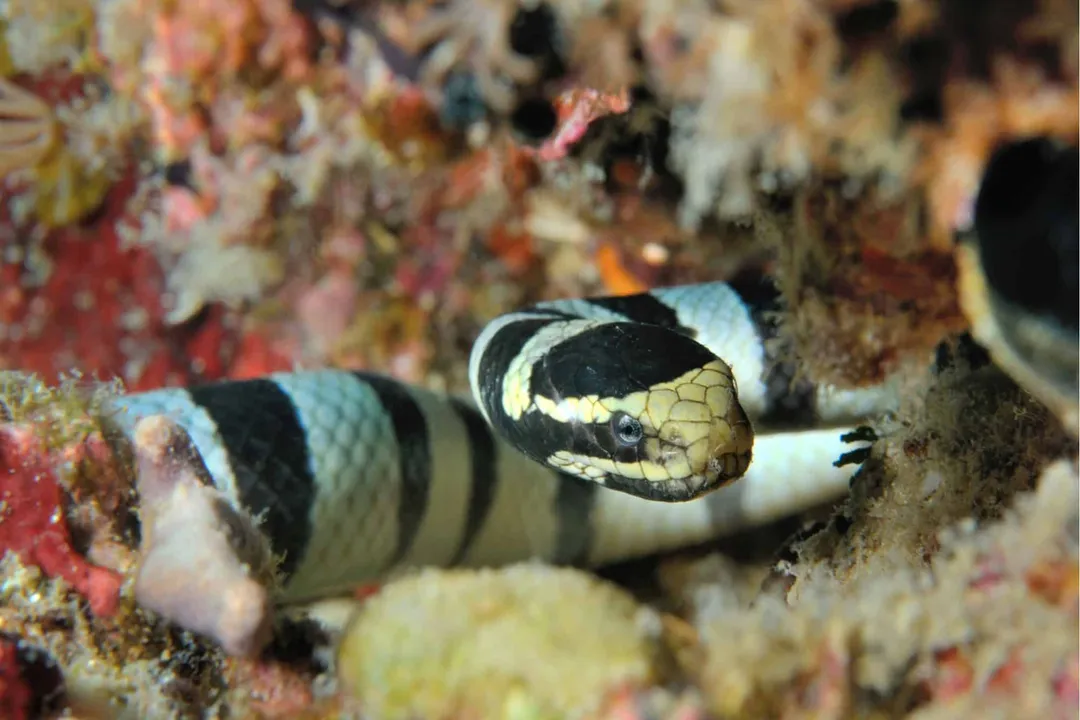
The krait refers to a group of highly venomous snakes belonging to the genus Bungarus, a member of the Elapidae family, which also includes cobras and mambas. [2][4] These snakes are generally slender, possessing relatively small heads that are barely distinct from their necks. [2] Found predominantly across Asia, kraits are renowned for their potent neurotoxic venom, making them medically significant creatures across their native ranges. [5][9] While some species are drab and banded, others exhibit striking coloration, such as the notable red-headed krait. [6] The sheer toxicity of their venom places them among the most dangerous snakes encountered by humans in the regions where they reside. [9]
# Genus Structure
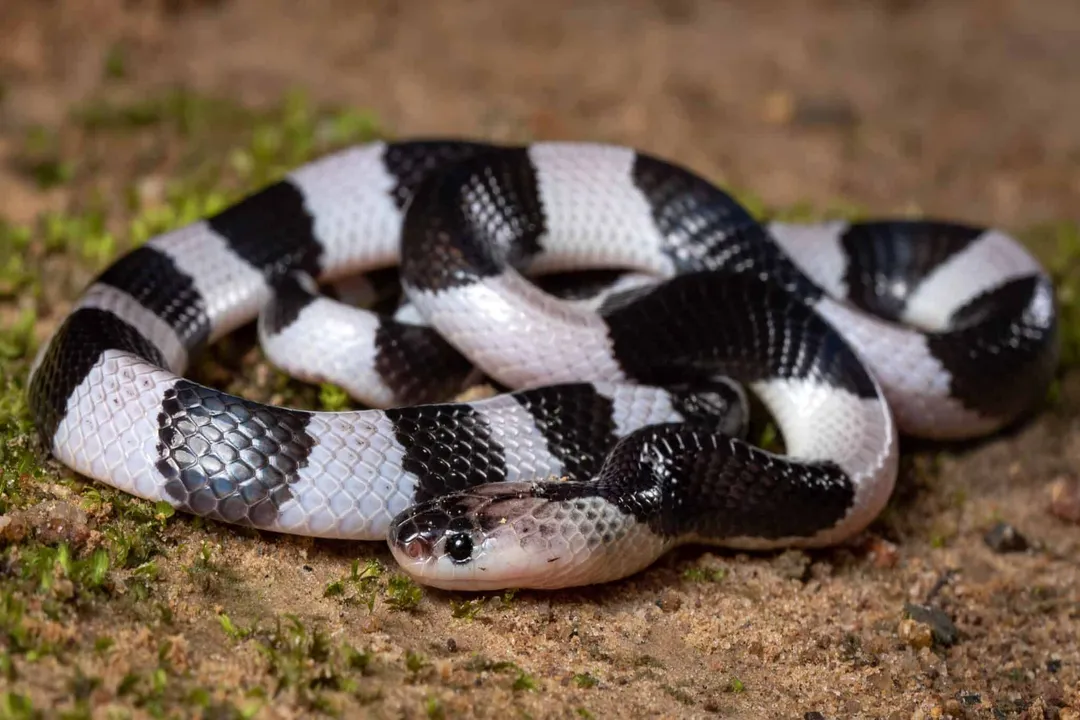
The genus Bungarus encompasses several species, many of which are distinguished by their potent venom. [2] One of the most well-known members is the Common Krait, Bungarus caeruleus. [1][7] This species is frequently encountered across the Indian subcontinent. [1] Another visually distinct species is the Red-headed Krait, Bungarus flaviceps, which is admired for its striking appearance but equally feared for its toxicity. [6] Recently, scientific understanding of the genus has expanded, with reports indicating the discovery or description of new species, such as one detailed in 2024 that was previously unknown to science, highlighting that the full diversity of this group is still being mapped. [5] Generally, these snakes are characterized by having a long, slender body, a somewhat flattened tail, and a comparatively small head. [4]
# Common Krait Details
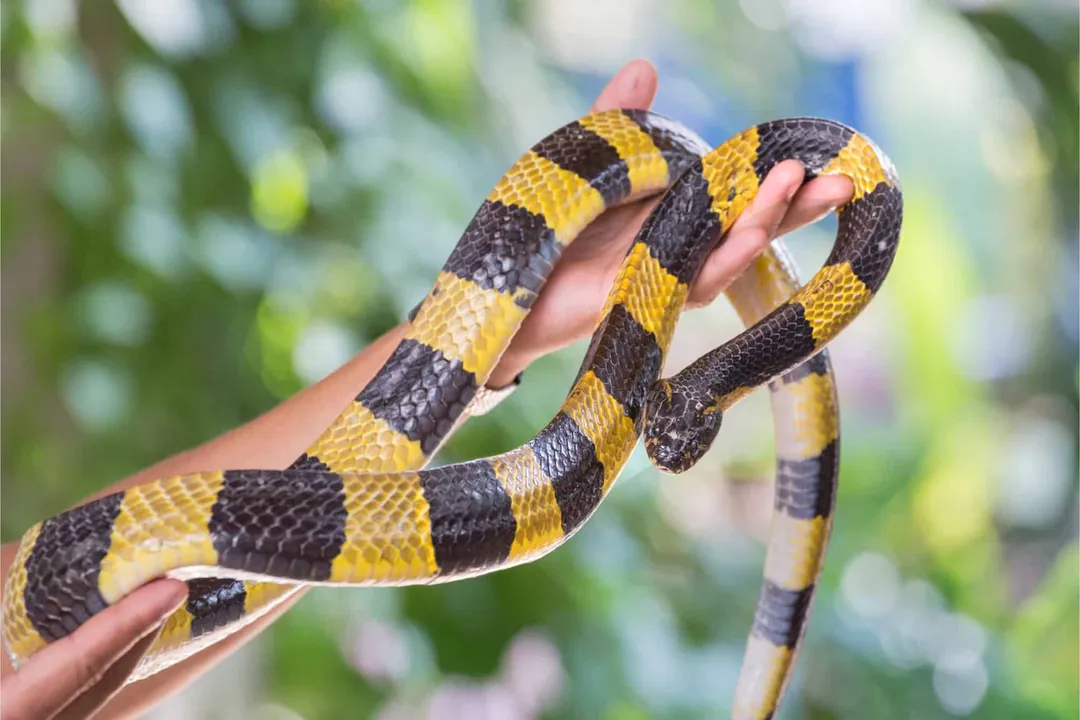
Focusing specifically on the Common Krait (Bungarus caeruleus), it is one of the Big Four snakes in India, referring to the four species responsible for the majority of snakebite fatalities in the region. [1]
# Appearance
The adult Common Krait typically reaches a length of about 1 meter (3.3 feet), though some individuals can grow longer. [1] Their coloration is a key identifier, often featuring a glossy black or bluish-black body, frequently marked with distinct white or yellowish crossbands. [1][7] These bands are usually narrow, and in some cases, they may be absent or faint, particularly in juvenile specimens or certain color phases. [1] The underside of the snake is usually lighter in color. [1] An interesting distinction in appearance relates to the arrangement of their scales; the Common Krait has dorsal scales arranged in a smooth, somewhat hexagonal pattern. [1]
# Habitat and Habits
The habitat preference for Bungarus caeruleus is quite broad, ranging from jungles and scrublands to agricultural fields and human settlements. [1] They are particularly well-adapted to areas near human habitation, often residing under woodpiles, loose bricks, or within drains. [1]
Kraits are overwhelmingly nocturnal creatures. [1][9] This means they are most active after dusk, which heavily influences the circumstances under which human encounters occur. [1] They are known to seek shelter during the day in cool, dark places. [9] Their movement is often described as deliberate and snake-like, rather than rapid. [9] While generally considered shy, they will defend themselves if threatened or accidentally trodden upon in the dark. [1]
Considering their nocturnal nature, it is worth noting that many serious krait bites happen when individuals sleep on the floor or walk barefoot at night in rural areas where these snakes are prevalent. [1] The snake, being active in darkness, often bites feet or ankles when disturbed, and because the bite can be painless initially, victims may not realize they have been envenomated until systemic symptoms appear hours later. [1] This delayed realization compounds the danger.
# Venom Profile
The danger associated with kraits stems almost entirely from the extreme potency of their venom, which is primarily neurotoxic. [2][9] The venom contains powerful toxins that attack the nervous system, leading to a range of debilitating and potentially fatal symptoms. [10]
# Effects
The primary danger of a krait bite lies in its ability to cause ascending paralysis. [1][10] This means the paralysis starts in the lower extremities and moves upward through the body. [1] Early symptoms, often delayed for several hours after the bite, can include drooping eyelids (ptosis), slurred speech, difficulty swallowing, and general muscle weakness. [1][10] In severe cases, the paralysis can progress to respiratory failure, which is the ultimate cause of death if untreated. [1] Unlike some vipers, kraits are known for delivering bites that may not cause immediate or significant local pain or swelling, which can lead to a false sense of security immediately following the incident. [1]
The venom composition in various Bungarus species is complex, involving pre-synaptic and post-synaptic neurotoxins. [10] For the Common Krait, the venom is known to contain alpha-bungarotoxins, which are particularly strong neurotoxins. [10] Furthermore, some kraits possess enzymes like phospholipase A2, which contribute to the overall toxicity. [10]
# Comparison of Danger
When assessing snakebite risk across different genera, kraits often rank high due to their venom composition, even if they are not as aggressive as some cobras or vipers. [9] While vipers might cause severe tissue damage (hemotoxicity or cytotoxicity), the krait’s neurotoxicity is insidious and directly targets the life-sustaining function of breathing. [1][10] It is often cited that a krait bite without antivenom administration carries a very high mortality rate. [9]
# Other Krait Species
While the Common Krait is geographically widespread and frequently involved in human envenomations, the genus contains other notable members, each with unique characteristics.
# Red-headed Krait
The Red-headed Krait (Bungarus flaviceps) presents a striking visual contrast to its often drab relatives. [6] As its name suggests, this snake features a distinctively red or reddish-orange head, contrasting sharply with its typically black or dark body. [6] This species inhabits forested areas in Southeast Asia. [6] Despite its beauty, it carries extremely potent venom, similar in profile to other kraits, meaning it is also a serious threat. [6] Their habitat tends to be more arboreal or semi-arboreal compared to the more terrestrial Common Krait. [6]
# New Discoveries
The recognition of diversity within the krait group continues, which is vital for accurate medical response, as venom composition can vary between species. [5] A report from 2024 detailed one of four deadly venomous kraits, noting that one was brand new to science. [5] This finding underscores the need for ongoing herpetological research in krait distribution areas. [5]

# Snakes That Mimic Kraits
In regions like India, the mimicry phenomenon can complicate identification, which is a critical factor when determining emergency treatment. [1] Non-venomous snakes sometimes evolve coloration patterns that resemble those of dangerous species like the krait to deter predators.
A classic example is the Common Wolf Snake (Lycodon aulaconicus), which can sometimes be mistaken for the Common Krait due to its banding pattern. [1] However, key differences exist:
- Wolf Snakes usually have duller colors, often brown or grey, rather than the shiny black of the krait. [1]
- Crucially, the Common Krait has smooth, glossy dorsal scales, whereas the Wolf Snake possesses keeled scales, meaning they have a ridge running down the center. [1]
When a person encounters a banded snake in low light, especially at night when kraits are active, the distinction between a harmless mimic and a deadly venomous snake can be impossible to make in the moment. [1] This leads to a necessary safety protocol: always treat an unknown banded snake found at night with extreme caution and seek medical advice immediately if a bite occurs, regardless of apparent behavior or local knowledge about mimics. [1]
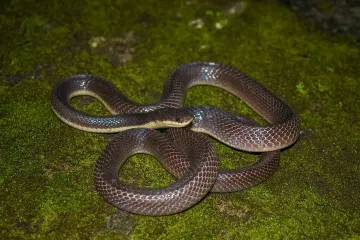
# Locomotion and Scale Structure
The way a krait moves can sometimes offer a clue, though this is less reliable in a panic situation than visual confirmation. [9] Kraits move in a relatively straight line, often referred to as "caterpillar-like" locomotion, rather than the sidewinding or zigzag patterns common in some other venomous snakes. [9] This method of movement is consistent with their body shape and scale arrangement. [9]
The scales themselves offer an important taxonomic and identification feature. As mentioned, kraits generally have smooth, glossy scales. [1][9] In many elapids, including kraits, the scales on the body are arranged in relatively few rows, often around 15 rows at midbody for the Common Krait. [1] This smooth, almost polished appearance is characteristic and contrasts with the rougher texture of many pit vipers or even some colubrids that mimic them. [1]
# Conservation and Management
Kraits, particularly the Common Krait, live in close proximity to dense human populations across South Asia. [1] This proximity means they are not necessarily threatened by habitat loss alone, but rather that human-snake conflict is an ongoing issue. [1] They play a role in controlling rodent populations in agricultural areas. [1]
Because they are so dangerous to humans, they are often killed on sight. [9] However, understanding their ecological role—that of a predator keeping pest populations in check—is important for maintaining local ecological balance, even when personal safety must be prioritized. [1] Effective public health messaging focuses less on eradication and more on prevention, especially regarding safe sleeping practices in endemic areas. [1]
If we consider the typical household in a rural Indian setting where Bungarus caeruleus is common, the risk management strategy should focus on securing living spaces. [1] For instance, ensuring that door and window gaps are sealed, and storing items like firewood away from the immediate walls of the home can significantly reduce the chance of a krait taking shelter nearby. [1] It is a mitigation strategy based on understanding the snake's requirement for dark, safe daytime retreats. [1]
# Neurotoxin Analysis
The pharmacological investigation of krait venom provides crucial insights into neurobiology and potential antivenom development. [10] The venom is a complex mixture, and the actions of its components are studied intensively. [10] The pre-synaptic and post-synaptic toxins work through different mechanisms to block nerve signaling. [10] While post-synaptic toxins typically bind quickly to receptors, leading to rapid symptom onset, pre-synaptic toxins, like alpha-bungarotoxin, cause irreversible damage to the nerve endings themselves, potentially leading to more prolonged recovery even after antivenom neutralizes circulating toxins. [10] This dual action contributes to the severity and sometimes stubbornness of krait envenomation cases. [10]
It is also observed that the venom yield from a krait during a defensive bite might be small compared to a large viper strike, but the potency compensates for the quantity. [9] A tiny dose of krait venom is lethal because the target—the neuromuscular junction—is highly sensitive to its specific toxins. [10]
# Behavior in Captivity and Observation
While wild encounters are dangerous, observations of captive kraits, such as those possibly depicted in video sources, can reveal behavioral patterns. [3][8] Kraits, when handled or provoked, generally rely on their potent defense mechanism rather than protracted aggression. [9] They may strike quickly and repeatedly after preliminary warning displays, or they may attempt to flee. [9] The Red-headed Krait, for example, is noted for being an intensely venomous snake that, when encountered, requires extreme caution due to its inherent danger. [6] Observing captive specimens, if done safely by experts, allows herpetologists to confirm details about their posture, head shape, and striking range, which are less clear during fleeting wild encounters. [3][8] For the general reader, however, such videos serve primarily as a stark visual reminder of the species' physical characteristics and inherent lethality. [3][8]
The fact that some sources focus on videos or striking images like the Red-headed Krait [6] versus clinical data on the Common Krait [1][10] illustrates the dual perception of these snakes: objects of intense biological fascination and immediate public health concerns. [5] Recognizing that several species exist within this dangerous genus, including newly described ones, means public awareness campaigns must be broad and species-aware where possible. [5]
# Identification Challenges at Night
The blending of habitat, nocturnal activity, and the existence of non-venomous mimics creates a genuinely challenging scenario for safety. [1] When considering the risk posed by the Common Krait, one must focus intensely on environmental management rather than relying on visual confirmation in a dark situation. A key practical takeaway, which goes beyond simple identification guides, is establishing a "low-light safety buffer" around sleeping areas in known krait territory. This means minimizing clutter where snakes can hide and ensuring bedding is raised off the floor if culturally appropriate and possible. [1] The risk assessment shifts from identifying the snake to excluding the snake from one's immediate personal space during peak activity hours. If a person steps onto a snake while walking in the dark, the immediate action should be to assume the worst-case scenario—a krait bite—and proceed to medical care, as the initial lack of pain can easily lead to a fatal delay. [1]
#Videos
Banded krait, a large deadly venomous snake which kills other snakes
WORLD'S RAREST KRAIT! Extremely venomous & beautiful!
Related Questions
#Citations
Common krait - Wikipedia
Krait | Sea Snake, Venomous & Nocturnal - Britannica
Banded krait, a large deadly venomous snake which kills other snakes
Krait - A-Z Animals
Meet 4 Deadly-Venomous 'Krait' Snakes—One Is Brand New To ...
The red-headed krait is a strikingly beautiful but highly venomous ...
Common Krait (Bungarus caeruleus) - iNaturalist
Krait - Real Monstrosities
Common Krait - an overview | ScienceDirect Topics