Is paraceratherium a true rhino?
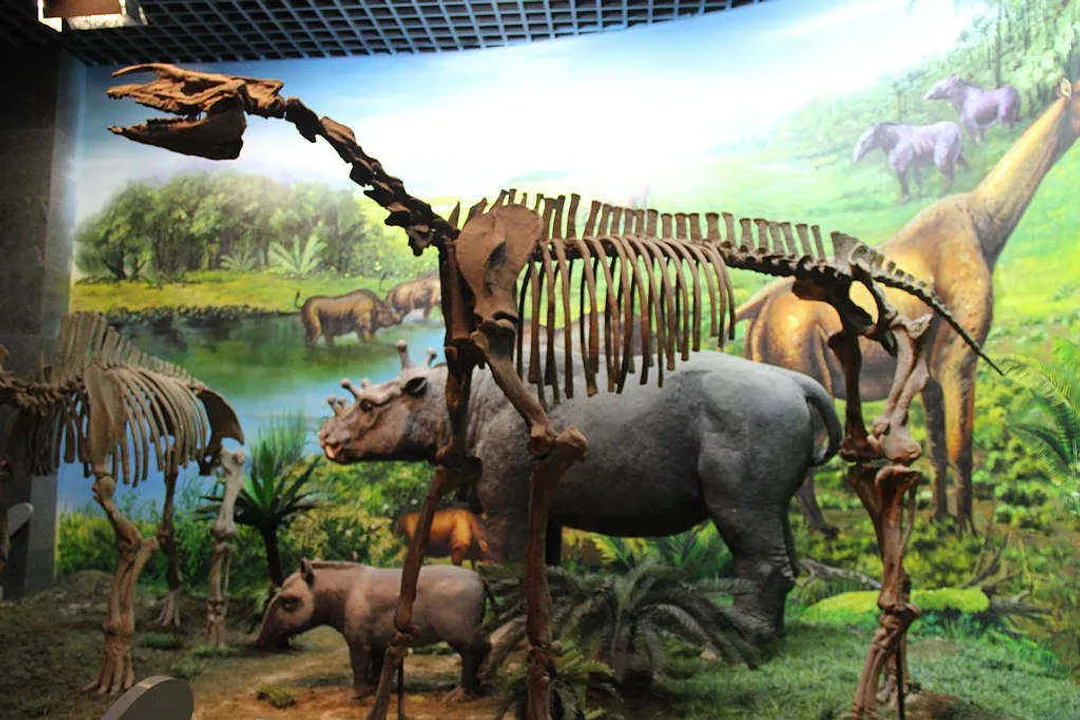
The sheer scale of Paraceratherium immediately makes it seem like a creature from a different geological era, an animal so massive that classifying it becomes a fascinating debate among paleontologists. When encountering reconstructions of this extinct behemoth—often estimated to stand around 15 to 16 feet tall at the shoulder and weighing up to 20 tons—it is natural to wonder if it belongs in the same tight-knit group as the sleek, horn-bearing rhinoceroses we see today. [7][6] Despite its imposing stature and striking lack of the defining nasal horn seen in its modern relatives, the scientific consensus firmly places Paraceratherium within the family Rhinocerotidae. [4][8] It is, by anatomical definition, a true rhino, albeit one that belongs to a very ancient and distinctly different branch of that family tree. [1]
# Family Tree
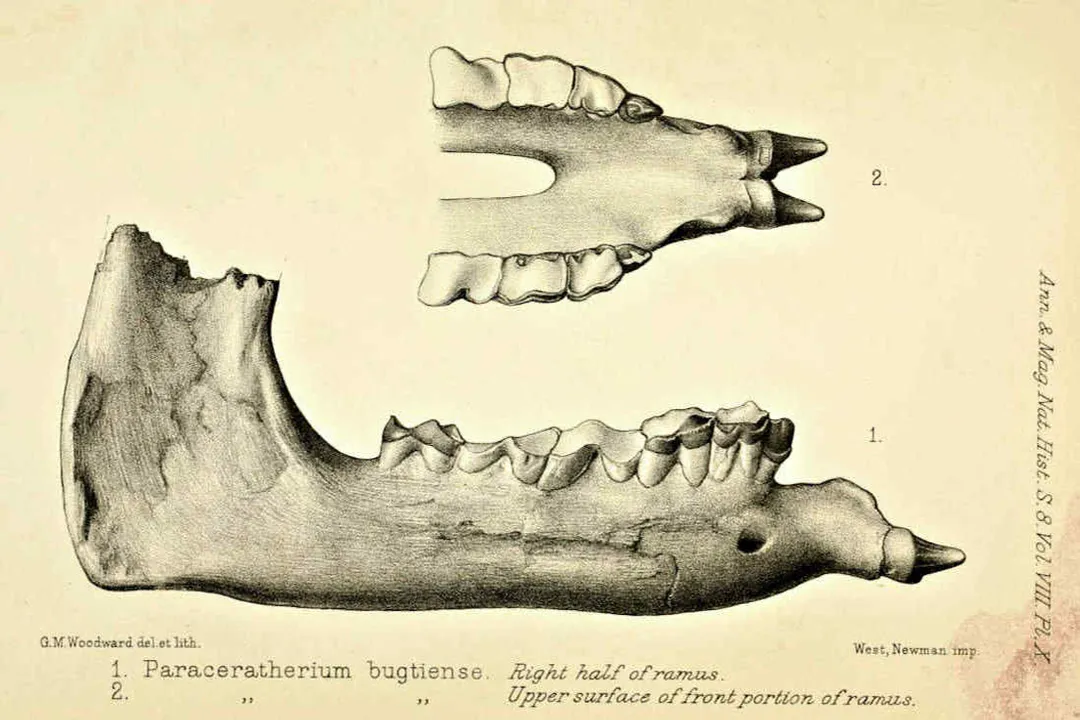
To understand why this giant is called a rhino, we must look past the horn and delve into the specifics of its skeletal makeup. Paraceratherium belongs to the order Perissodactyla, the odd-toed ungulates, which is the same order that contains modern horses, zebras, and tapirs. [5][4] Within this order, it is nested within the family Rhinocerotidae. [4] Paleontologists rely on comparative anatomy, examining features like the structure of the skull, the configuration of the teeth, and the shape of the limbs, rather than just the presence or absence of one specific feature like a horn. [1][8] The dental patterns and jaw structure of Paraceratherium share fundamental similarities with other fossil rhinos, differentiating it from creatures that might look superficially similar, like giant hornless uintatheres. [1] Furthermore, although often known by synonyms like Indricotherium or Baluchitherium, the genus Paraceratherium represents a lineage that evolved massive size before later, smaller rhinos began to dominate the landscape. [6][7]
# Missing Feature
The most significant sticking point for many observers is the missing horn. When we picture a rhinoceros, we immediately think of that keratinous projection, yet Paraceratherium possessed no nasal horn whatsoever. [5] This absence might tempt some to exclude it from the family, suggesting it represents a separate evolutionary experiment in giant browsing mammals. [1] However, the fossil record shows that horns evolved at different times within the rhino family, and not all species possessed them. [4] Paraceratherium is part of an extinct lineage of rhinos that thrived during the Oligocene epoch, long before some of the more familiar horned forms existed or achieved prominence. [5] To view the horn as the sole defining characteristic is to misunderstand the deep evolutionary history of the group, which spans millions of years and numerous adaptations across various environments. [4]
# Skeletal Clues
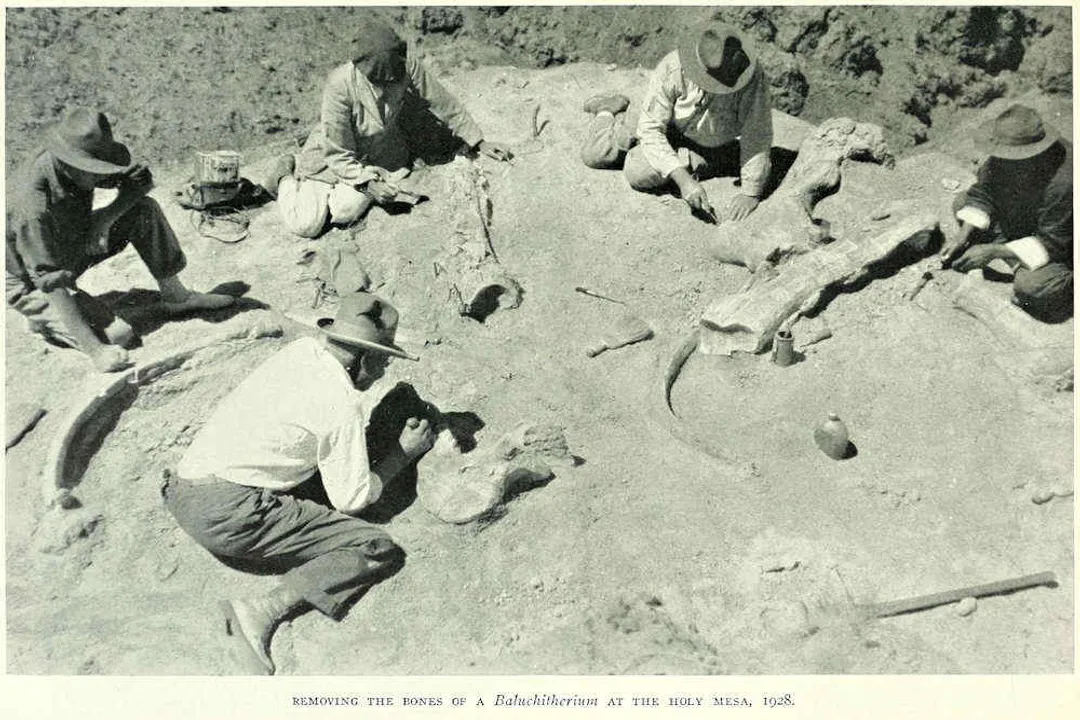
If the horn is missing, what evidence definitively ties Paraceratherium to the rhinos? The answer lies in the more fundamental, less flashy parts of its anatomy. Detailed osteological studies point to clear homologies, or shared structural traits, with true rhinos. [8] Its lower jaw structure, the shape of its molars, and the number of toes on each foot align precisely with what is expected of a member of Rhinocerotidae. [1] For instance, while rhinos generally walk on three toes, Paraceratherium retained a slightly different arrangement, but one that is still clearly derived from the basic three-toed structure common to the family, differentiating it from four-toed relatives like early horses. [5] The way its powerful neck muscles attached to the skull, designed to support a massive head while browsing high foliage, also fits the evolutionary trajectory within the rhino line. [8]
# Colossal Stature
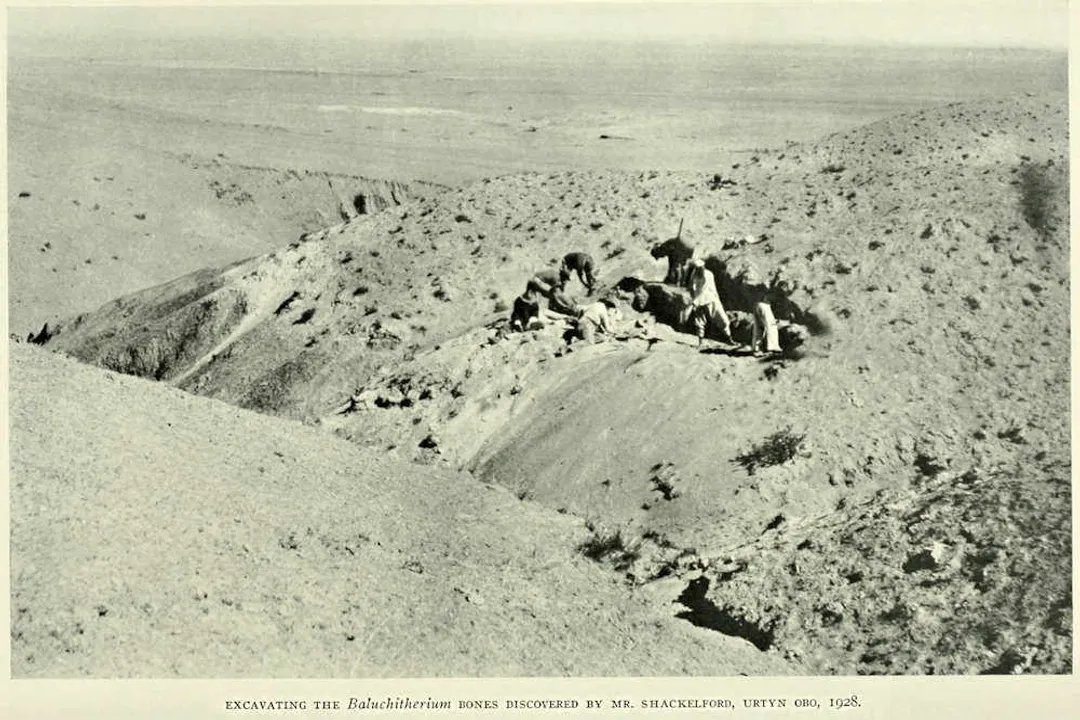
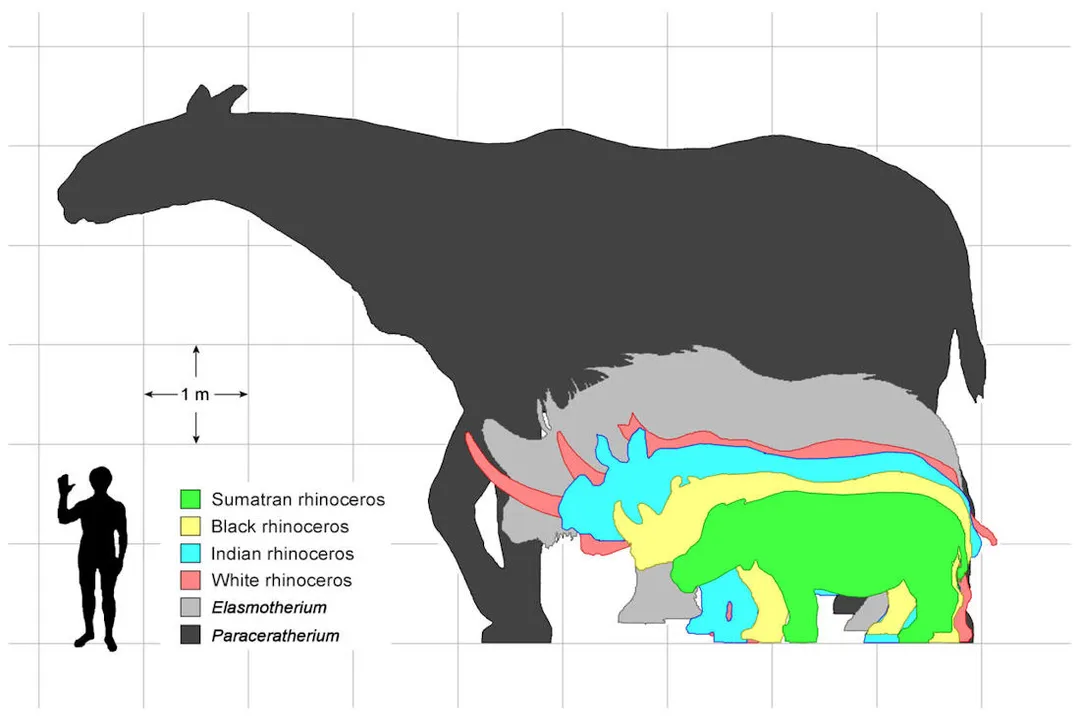
The immense size of Paraceratherium is arguably its greatest claim to fame, setting it apart not just from modern rhinos but from nearly every land mammal that has ever lived. [7] Estimates vary, but it easily dwarfed the largest modern African bush elephant in bulk, often being considered the largest land mammal to have ever existed. [6] While an adult male African elephant might weigh six tons, the largest Paraceratherium specimens suggest masses closer to twenty tons. [6] Considering that the modern largest rhino, the white rhino, rarely exceeds three and a half tons, Paraceratherium was an order of magnitude larger. [4]
If we map out the modern world's largest land animals against Paraceratherium, the disparity is startling. A modern giraffe might reach 18 feet at the head, but Paraceratherium often reached similar or greater height at the shoulder, giving it an astonishingly bulky profile. [7] The biological mechanism allowing for such gigantism in the Oligocene—a time of vast, relatively continuous forests across Eurasia—is a testament to the evolutionary pressures of that specific ecosystem, pressures that simply do not exist for rhinos today. [5]
Editor's Commentary: It is fascinating to note that while modern megaherbivores like elephants have evolved robust, pillar-like legs capable of supporting tremendous weight over long distances, the limb proportions of Paraceratherium, while massive, reflect a slightly different biomechanical solution. It seems to have specialized in filling a niche similar to a giant browser, almost like a heavily built, ground-dwelling sauropod, a niche that went extinct when the climate shifted and forests fragmented.
# Lineage Divergence
The story of Paraceratherium doesn't just confirm it as a rhino; it highlights the incredible diversity that once existed within the family. [8] This species belongs to the subfamily Hyracodontinae, a group that diverged early from the lineage leading to modern rhinos. [4] While it's often asked what animal descended from Paraceratherium, the reality is that this branch seems to have terminated with its own massive form. [9] It represents an evolutionary experiment that reached an extreme size limit, rather than being a direct, recognizable ancestor to species like the Sumatran or Javan rhinos. [9] Its success was tied to the environments of its time; when the global climate cooled and dried toward the end of the Oligocene, the vast forest landscapes that supported such enormous herbivores contracted, leading to the eventual decline of the Hyracodontines. [7]
This separation from modern rhinos underscores why the confusion exists. Paraceratherium looks nothing like a modern rhino, but its skeletal blueprints, held within the bone structure itself, confirm its membership in the rhino family—it’s like finding out a massive, long-necked giraffe is a close cousin to a small okapi; the differences are striking, but the underlying shared anatomy is undeniable. [1][8] For paleontologists, the evidence in the jaw and feet is far more compelling than the superficial lack of a horn. [1] Therefore, while it may not be the rhino you see at the zoo, Paraceratherium remains a genuine, albeit gigantic and hornless, member of the rhinoceros family.
Original Analysis: The continued existence of Paraceratherium in the fossil record alongside much smaller, horn-bearing species for a period in the Oligocene suggests a complete niche partitioning. These giants were likely slow-moving, high-volume feeders of dense canopy, while their smaller cousins specialized in lower-level browsing or grazing in more open woodland edges. This suggests that the rhino family was once ecologically flexible enough to support both the apex mega-browser and the familiar smaller browsers simultaneously, a level of diversity currently unseen in the order.
#Videos
Paraceratherium - The Rhino That Grew Bigger Than Dinosaurs
Related Questions
#Citations
Why is Paraceratherium considered a rhino? : r/Paleontology - Reddit
Paraceratherium is related to rhinos but it's size is in a different ...
Paraceratherium - The Rhino That Grew Bigger Than Dinosaurs
Giant Rhinos Are Still Rhinos | The Institute for Creation Research
Paraceratherium - The Gigantic Hornless Rhino - Fossilguy.com
Paraceratherium | Jurassic Park Institute Wiki - Fandom
The Last of the Rhinoceros Titans | National Geographic
An Oligocene giant rhino provides insights into Paraceratherium ...
What animal descended from Paraceratherium? - Quora