What is a Babui Pakhi known for?
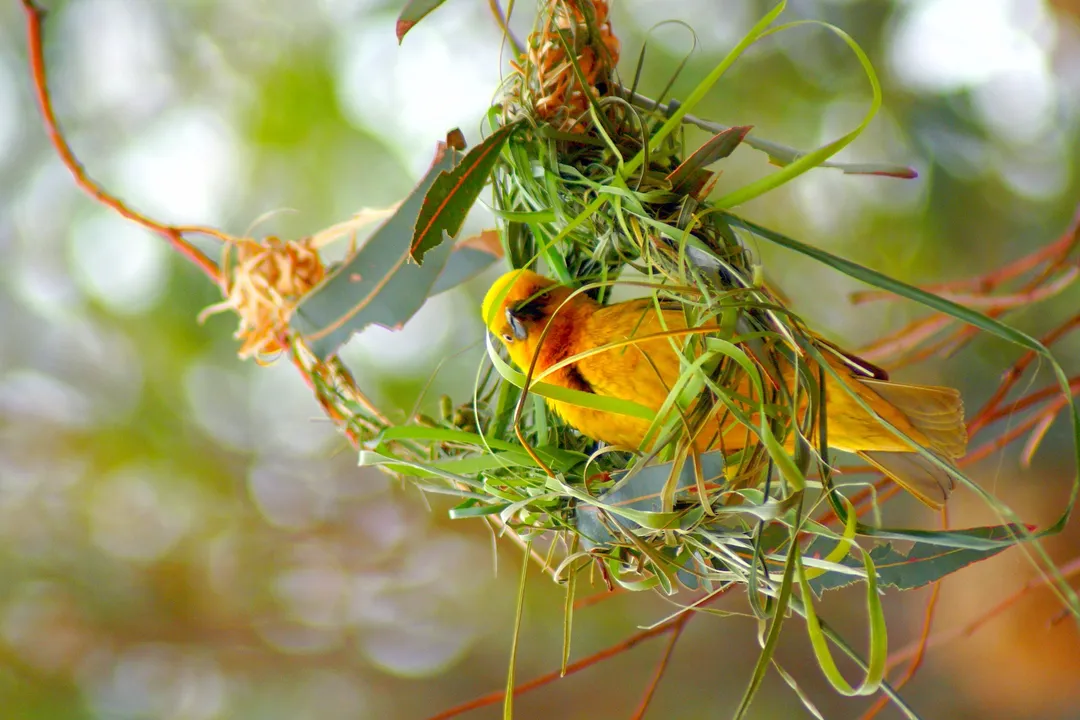
The bird known locally in parts of South Bengal as the Babui Pakhi is better recognized across broader ornithological circles as the Baya Weaver (Ploceus philippinus). [1] This small, sparrow-sized avian is a member of the Ploceidae family, a group whose members are universally named for their defining characteristic: the intricate, woven construction of their nests. [3] While their presence is widespread across the Indian subcontinent and Southeast Asia in grasslands, scrub, and cultivated areas, it is the male weaver’s engineering prowess that truly sets it apart and earns it a place in local folklore and agricultural history. [2]
# Physical Form
To the casual observer, especially outside the breeding season, the Baya Weaver might be easily overlooked, resembling a common house sparrow. [2] They are small, typically measuring around 15 centimeters in length, possessing a stout, conical bill and a short, square tail. [2] In their non-breeding plumage, both sexes appear similar: streaked dark brown and buff above, with unstreaked whitish or fulvous feathers below. [2][3] The bill is usually horn-colored, and there is no distinct facial mask. [2]
The transformation during the breeding season is striking, particularly for the male. This change is governed by environmental cues like day length, marking the start of the monsoons. [2] The male develops a brilliant bright yellow crown and a pronounced dark brown or black mask across his face. [2][3] His upper parts become dark brown streaked with yellow, and his breast turns a vibrant yellow, contrasting with cream buff underparts. [2][3] This seasonal dimorphism is a clear visual signal of readiness to construct and court. [4] Interestingly, one source notes that the male's color change involves lipid metabolism in the crown region, where lipids transport the yellow carotenoid pigments that are later metabolized. [2] Females generally maintain a duller appearance compared to the breeding male, though they might be slightly brighter than non-breeding individuals. [4]
# The Architect
The primary claim to fame for the Babui Pakhi rests squarely on its architectural skill. Weavers are aptly named because their nests are meticulously woven structures resembling baskets, constructed almost entirely from long strips of plant material. [3] The Baya Weaver specializes in creating a distinctive hanging, retort shape. [2]
# Materials and Method
The male meticulously gathers nesting material, often taking long strips, between 20 and 60 centimeters in length, torn from paddy leaves, rough grasses, or palm fronds. [2] This process demands incredible dedication; a single male can make up to 500 trips just to collect the necessary strands. [2] They use their strong beaks not just to strip and collect these strands but also to carefully weave and knot them into place. [2]
The construction proceeds through distinct phases. Initially, the male weaves a partial structure, which often reaches an intermediate "helmet stage"—a process that can take about eight days. [2] At this stage, the structure has two downward-facing openings. [2][4] The male then begins his courtship display while hanging from this partial nest, attracting and impressing prospective mates. [2]
The engineering is complex, featuring a central nesting chamber and a long, vertical tube serving as the entrance and exit tunnel. [2] The female’s acceptance marks a commitment; the male then completes the structure by adding the final entrance tunnel. [2] While the male is the primary builder, the female may add finishing touches to the interior, and both sexes have been observed adding blobs of mud and dung to the chamber, possibly to help stabilize the structure against strong winds. [2][4]
The time invested is considerable, with estimates suggesting that about 18 days are required for the complete construction of a finished nest. [2] Observing this dedication, it is understandable why the Babui Pakhi is often referred to as an "engineer-artist". [4]
# Site Selection
Location is as crucial as design. Baya Weaver colonies typically form in trees, often favoring thorny varieties like Acacia, or palm trees, frequently choosing those that overhang open water. [2][4] This positioning over water, or high up, offers a natural defense against terrestrial predators, such as lizards or rodents that might attempt to take over or destroy the nest. [2] Some reports suggest an old preference for building on the eastern side of trees to shelter from the Southwest Monsoon, though this orientation preference can change later in the breeding season. [2] In urban settings, they might surprisingly be found using avenue trees or even hanging nests from telephone wires. [2]
A note on selection behavior: While the elaborate structure is universally praised, recent studies focusing on female choice suggest that nest location might actually be a more critical factor for the female than the nest structure itself when selecting a mate. [2] Females reportedly prefer nests situated high in trees, those located above dry land, or those hanging from thinner branches. [2] This suggests that the perceived safety of height or site stability might outweigh the architectural beauty in terms of reproductive success.

# Social Life and Reproduction
Baya Weavers are inherently social and gregarious birds, usually found foraging in flocks that execute complicated maneuvers in the air. [2]
# Breeding Dynamics
The breeding season aligns with the monsoon period. [2] The system is generally polygamous, with males aggressively building multiple partial nests to attract several females. [2] A male only commits to finishing the intricate entrance tunnel once a female has accepted a specific, partially built nest. [2] This display behavior involves the male flapping his wings and calling while suspended from his creation. [2]
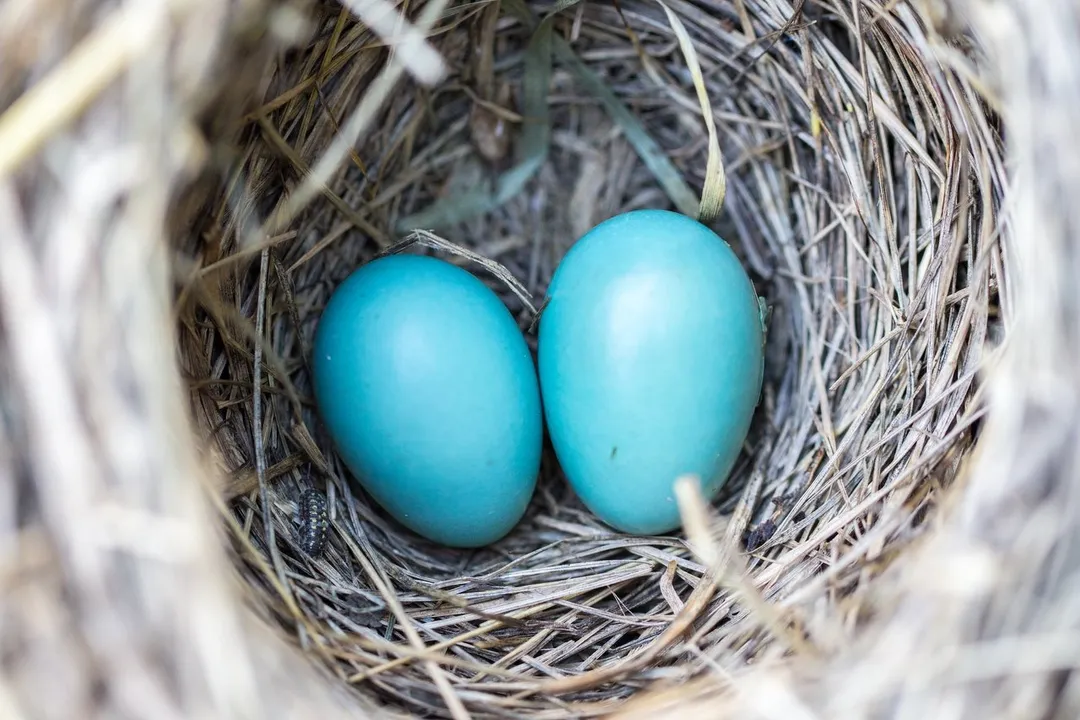
Once paired, the female typically lays two to four white eggs, which she incubates for approximately 14 to 17 days. [2] While the male is busy courting other females at other sites, he may assist in feeding the chicks once they hatch. [2] The young fledge after about 17 days. [2] Interestingly, reproductive maturity differs between the sexes; females can breed after one year, but males require about six months longer. [2]
The species also exhibits intraspecific brood parasitism, meaning females sometimes lay their eggs in the nests of other Baya Weavers. [2] Furthermore, abandoned nests are not left unused; they are sometimes occupied by other species, such as various munias or even mice. [2]
# The Firefly Myth
One enduring piece of cultural lore surrounding the Babui Pakhi is the belief that the bird deliberately sticks fireflies to the walls of the nest to illuminate the interior at night. [2][4] While a romantic notion, the scientific reality is that the bird does incorporate mud and dung into the nest chamber. [2] It is likely that the mud/dung contributes to structure, but the myth speaks volumes about the awe the perfectly enclosed, seemingly lamp-lit dwelling inspired in observers. [4]
# Crop Pests and Historical Utility
The Baya Weaver’s fondness for grain, particularly rice and wheat in regions like South Bengal, has frequently placed it in direct conflict with human agriculture. [1][2] Because they feed on grain in harvested fields and can damage ripening crops, they have historically been labeled "pest birds". [2] In areas where wheat cultivation has declined due to disease, the pressure on rice grains has become even more pronounced for the remaining flocks. [1]
However, this close association with human activity has not always been adversarial. Historically, the Babui Pakhi was renowned for its intelligence and docility when trained. [2] Sources note that street performers in India utilized these birds for entertainment, teaching them to perform feats such as picking up small coins, loading miniature cannons with powder, or even delivering sweetmeats to ladies. [2] A record from around 1590 noted that the bird was "extremely intelligent, obedient and docile" and that its nest construction defied clever artificers. [2] This historical utility underscores a deep, long-standing interaction between the bird and local communities, one that goes beyond simple agricultural conflict.
Considering the bird’s adaptability, one might extrapolate that its intelligence, proven by historical training and complex nest building, allows it to thrive in environments altered by humans. The readiness to nest on wires or near buildings shows an ecological flexibility, meaning that habitat loss might not be as devastating as the loss of reliable food sources or suitable nesting support structures like large palm or thorny trees. [2][4] Protecting the few remaining large, traditional nesting trees, like the palm tree by the pond mentioned in one local account, becomes an effective, hands-on way to support the local population, irrespective of their pest status. [4]

# Local Context and Diversity
While Ploceus philippinus is the common species, the broader Weaver Bird family (Ploceidae) includes about 117 species globally, though only a few are found in Asia. [3] Bangladesh, for instance, hosts three species. [3] Beyond the Baya Weaver, other Asian species include the Black-breasted Weaver (Ploceus benghalensis) and the Streaked Weaver (Ploceus manyar), which occupy slightly different niches, such as reed-beds for the latter. [3]
The Baya Weaver itself has recognized variations, with five subspecies noted across its range, including P. p. travancoreensis in southwest India and P. p. burmanicus extending into Southeast Asia. [2] These subtle differences in appearance—like darker upper parts in the Travancore race—demonstrate how specialized these birds can become within their specific environmental pockets. [2]
The variety of local names across the subcontinent—from Sugaran in Marathi to Gijigaḍu in Telugu and Thukanam Kuruvi in Tamil—testifies to the bird's ubiquitous and long-established presence in the regional consciousness. [2] This cultural saturation is a testament to a bird that is not just an object of nature but a familiar feature of the landscape, whether seen as a nuisance devouring grain or as a master architect building suspended homes. [1][2] The continued presence of these nests, even as the bird’s habitat faces pressure, serves as a tangible connection to the natural heritage of the region. [4]
Related Questions
#Citations
Baya weaver - Wikipedia
Weaver Bird - Banglapedia
Master craftsman Babui Pakhi. By @sumon03 - Steemit
Nest of Baya Weaver(Babui Pakhi) - Waivio
Baya Weaver and Hawkmoth larva - Science Reporter