What do jerboas drink?

The jerboa, that distinctive, long-eared desert rodent, presents one of the most fascinating paradoxes in mammalian adaptation: they survive without ever taking a drink of standing water. [1][3] For most creatures, hydration is a daily necessity, often requiring active seeking of rivers, ponds, or dew. The jerboa, however, has evolved a strategy that renders external water sources entirely obsolete for its survival. [1] This radical independence is achieved through a highly specialized combination of diet and internal physiology, allowing them to thrive in the arid expanses of North Africa and Asia. [2][6][8]
# Dietary Water
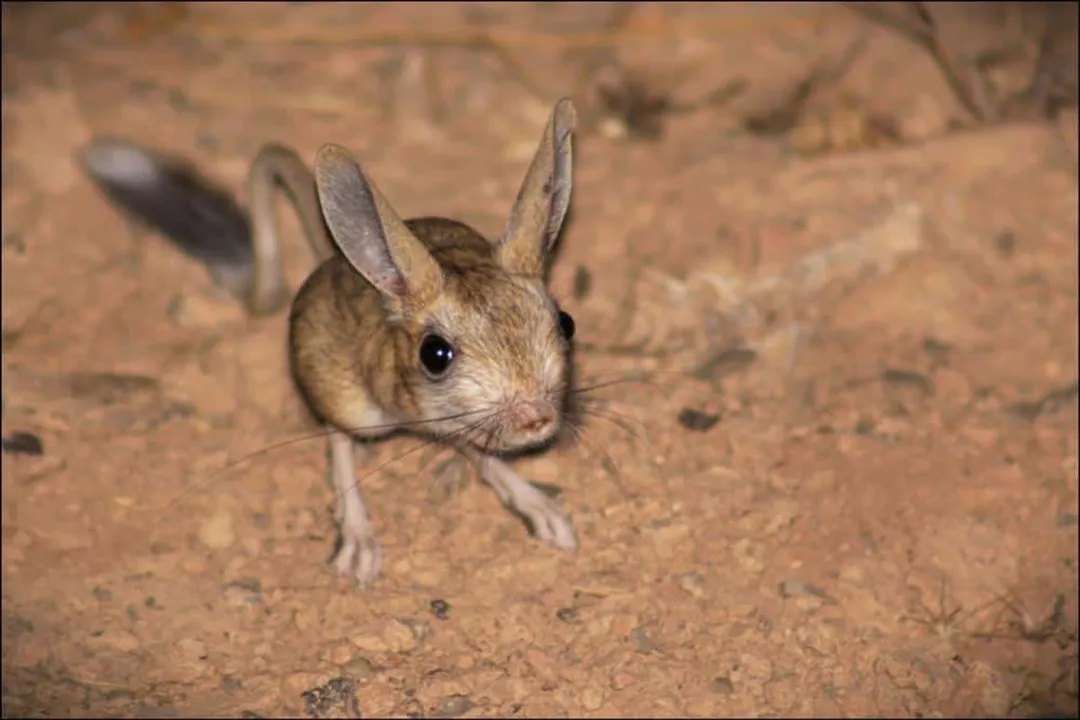
The secret to the jerboa’s hydration begins with its menu. These small mammals derive all the necessary moisture they require for life directly from the food they consume. [1][3] While we might associate desert survival with finding scarce pools, the jerboa finds its water locked within its typical diet, which often consists of seeds, grains, and occasionally insects. [1][3]
This reliance on food necessitates a specific metabolic pathway. When a jerboa digests dry seeds, the chemical breakdown of the complex carbohydrates and fats within that food releases metabolic water as a byproduct. [1] This process is remarkably efficient, effectively turning stored food energy into the necessary fluid for bodily functions. Their entire existence hinges on this internal water generation, making them masters of resource utilization in environments where external liquid water is nonexistent or too risky to access. [4]
It is worth noting that because their entire water budget is allocated through food intake, a sudden or forced dietary shift could prove disastrous. While a human might see a sudden abundance of moist food as a benefit, an animal whose system is finely tuned to extract every molecule of water from low-moisture, high-energy seeds might struggle to process a new diet lacking that specific energy-to-water ratio. Their bodies are optimized for arid efficiency, not opportunistic, high-moisture consumption. [1]
# Physiological Efficiency

Survival in extreme dryness demands more than just clever eating; it requires an internal plumbing system capable of minimizing output. The jerboa possesses extraordinary adaptations in its renal system to ensure that what little water it gains metabolically is conserved at all costs. [2][7]
# Kidney Specialization
The kidneys of the jerboa are legendary among zoologists for their ability to concentrate urine to an extreme degree. [2] This means they can excrete waste products with the absolute minimum amount of water loss possible. [7] By producing highly concentrated urine, they conserve vital fluids that other mammals would flush away daily. [2] This level of renal efficiency is one of the primary physiological pillars supporting their terrestrial existence without drinking. [7]
# Respiratory Control
Water is also lost passively through respiration—the simple act of breathing releases water vapor. Jerboas have evolved mechanisms to mitigate this seemingly unavoidable loss. [2] While the details of these mechanisms are complex, the result is a significant reduction in water lost simply through air exchange, further closing the gap between water intake and expenditure. [2]
# Lifestyle Adaptations
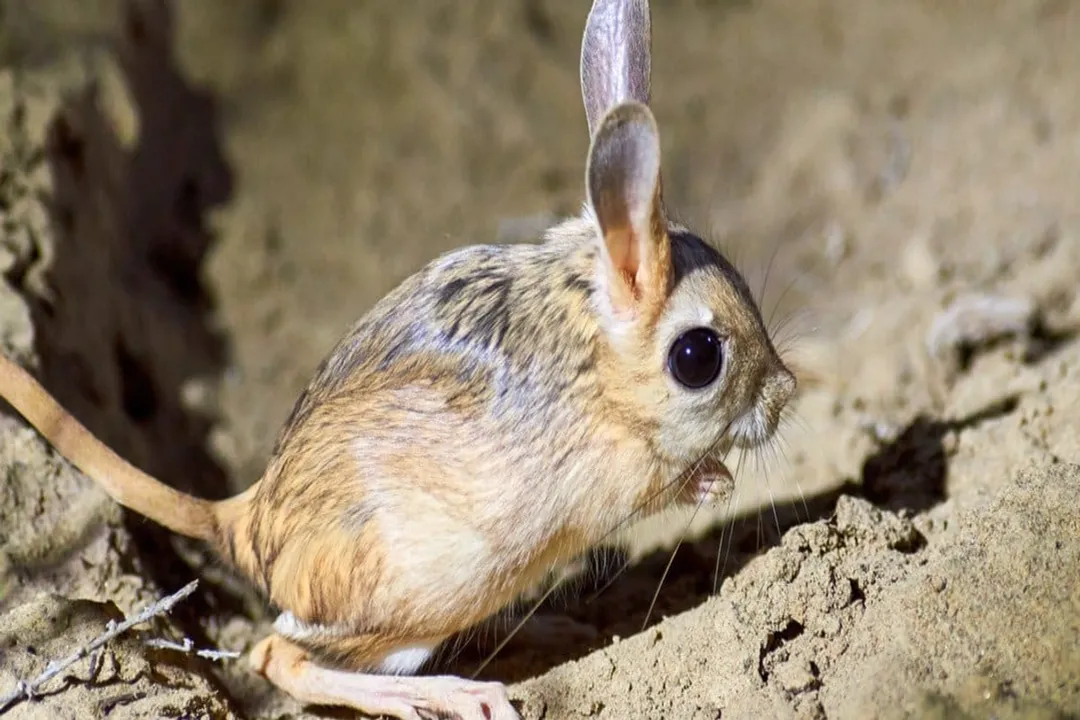
The jerboa's physical adaptations are perfectly complemented by its behavioral patterns, which further reduce exposure to heat and dry air, thereby lowering the overall physiological demand for water.
# Burrow Living
Jerboas spend the hottest, driest parts of the day safely underground in their extensive burrow systems. [2][4] These burrows act as microclimates, remaining significantly cooler and more humid than the scorching desert surface above. [2] By retreating into this subterranean refuge, they drastically lower their body temperature regulation needs and reduce the rate of evaporative water loss from their skin and breath. [4]
# Nocturnal Activity
Consistent with many desert dwellers, jerboas are primarily nocturnal. [5] They emerge from their burrows under the cover of darkness when ambient temperatures drop and humidity levels, however marginally, are higher. [5] This behavioral choice is a critical component of their water conservation strategy; avoiding the intense solar radiation of the day is as important as conserving water internally. [2]
# Forms and Distribution
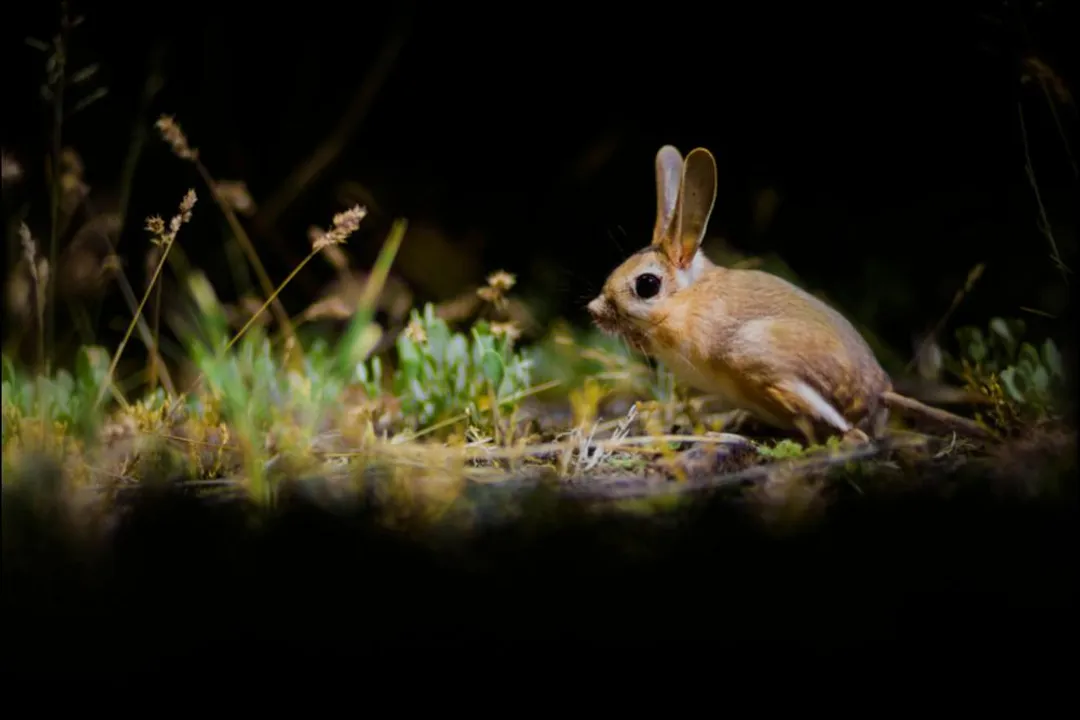
Jerboas are not a single animal but a group belonging to the family Dipodidae. [2] They are characterized by their small stature, with some species being quite tiny, and their distinctly long hind legs, which allow them to hop or leap across the sand in a bipedal fashion. [2][7] They possess relatively short forelimbs, which they use for digging and handling food. [7]
Different species are adapted to various desert environments across their range, which stretches across large parts of the arid zones of Asia and North Africa. [2][6] For instance, the Gobi jerboa is adapted to the harsh conditions of the Gobi Desert, [3] while the Lesser Egyptian Jerboa inhabits the deserts of North Africa. [7] Although their physical characteristics—like ear size and tail length—may vary between species, the fundamental adaptation for water conservation via diet remains a unifying feature across the group. [2][7]
| Feature | Description | Water Implication |
|---|---|---|
| Diet | Seeds, grains, insects [1] | Provides metabolic water during digestion [1][3] |
| Kidneys | Produce highly concentrated urine [2] | Minimizes water lost through excretion [7] |
| Activity | Primarily nocturnal [5] | Avoids peak daytime heat and desiccation [2] |
| Shelter | Deep, complex burrows [2] | Maintains a cooler, more humid microclimate [4] |
This specialized existence means they are perfectly suited to their niche. Their reliance on dry seeds for both sustenance and hydration locks them into an ecosystem where water scarcity is the defining feature. [1]
# Human Encounters
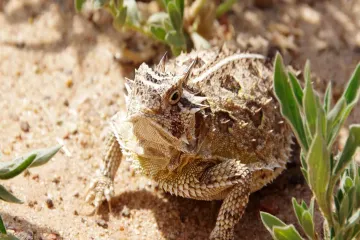
Despite their highly specialized biology, the jerboa's appearance and desert habitat sometimes lead to romanticized or misinformed encounters. There are documented instances where humans have observed jerboas that appeared to be seeking water from them, creating compelling, though biologically contradictory, anecdotes. One widely shared account tells of a thirsty jerboa approaching a man in the desert, seemingly begging for a drink.
This sort of interaction highlights a fundamental gap between human perception and animal reality. While the little creature might be approaching out of curiosity, or perhaps in search of any foreign object in its environment, its physiological need is satisfied internally. [1] The act of drinking, for a jerboa, is not a daily ritual tied to external sources but a constant, unseen byproduct of eating. [3] Seeing a creature so perfectly adapted to not need external water reinforces the incredible lengths evolution will go to allow life to persist in the world's most unforgiving landscapes. [2] Their ability to thrive in environments where other mammals would perish from dehydration makes them true icons of desert survival. [4]
Related Questions
#Citations
Jerboas do not drink water. They get all their moisture from ... - Reddit
Jerboa - Wikipedia
Gobi Jerboas don't drink water. They get all their ... - Facebook
10 Facts About the Fascinating World of the Jerboa
Jerboa Animal Facts - A-Z Animals
Surprisingly for desert creatures, jerboas rarely actually drink any ...
Lesser Egyptian Jerboa - Facts, Diet, Habitat & Pictures on Animalia ...
Egyptian Jerboas: Greater, Lesser, Characteristics, Behavior
Thirsty Jerboa Approaches Man In Desert Asking For A Drink Of Water