Do insects have bones?
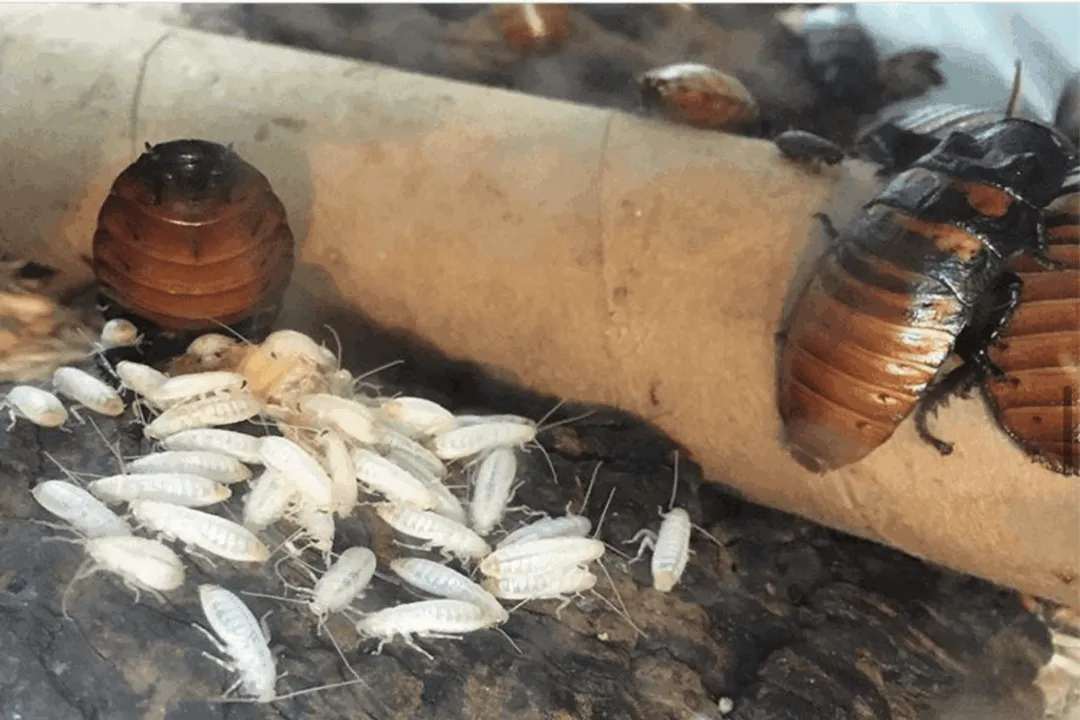
The fundamental structure supporting an ant, a grasshopper, or a butterfly is dramatically different from that of a dog, a fish, or a human. If you were to carefully dissect a vertebrate, you would quickly find the familiar architecture of bones—the internal scaffolding that gives our bodies shape and allows for movement. However, if the same careful approach were taken with an insect, you would find nothing of the sort internally. Insects, belonging to the phylum Arthropoda, do not possess bones. [5] This absence of an endoskeleton is one of the defining features that separates them from animals we typically consider vertebrates. [2]
# Skeletal Absence
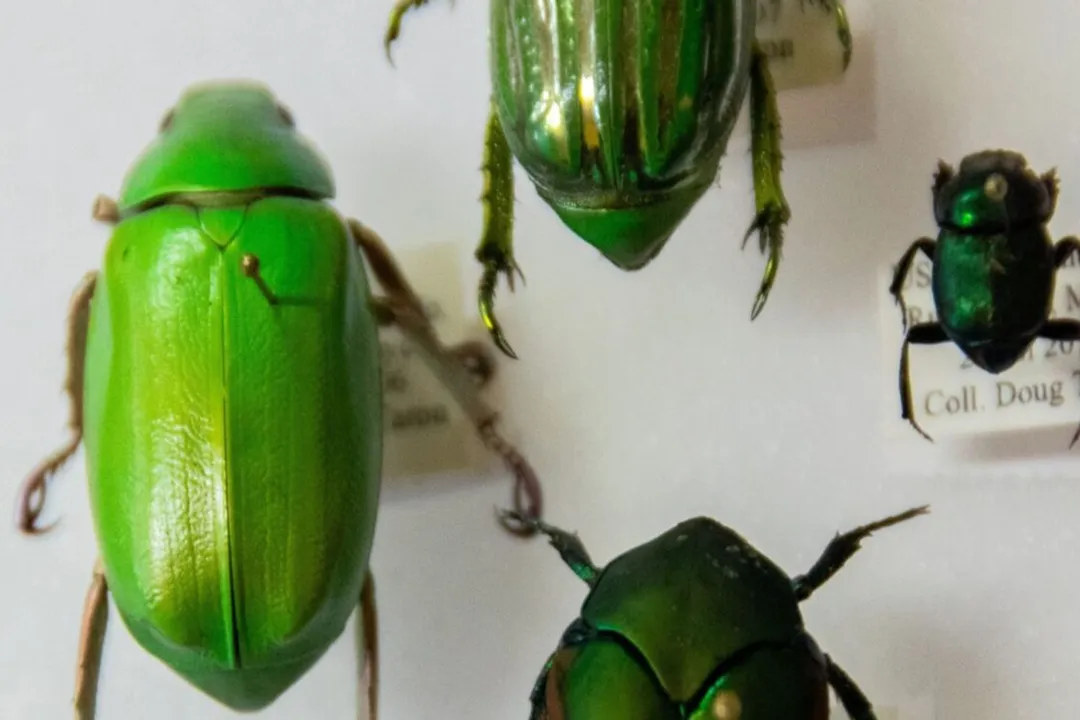
The question of internal bones in insects is answered with a definitive no. Instead of bones providing structure from the inside out, insects rely on a completely different system: an exoskeleton. [4][10] This external casing serves the function of support, protection, and muscle attachment, tasks that internal bones perform for us. [4][8]
To put this difference into perspective, consider the evolutionary path. Vertebrates evolved the endoskeleton, where cartilage and bone form an internal framework that grows with the animal, allowing for massive size potential—think of the blue whale. Insects, conversely, committed to an exoskeleton—a hard, external covering. [4] This external armor is incredibly effective for small creatures, offering immediate, rigid protection against physical threats and environmental changes. [2] Because the support structure is outside the body, the way an insect moves, grows, and protects its delicate internal organs is entirely dictated by this exterior shell. [4]
# External Support
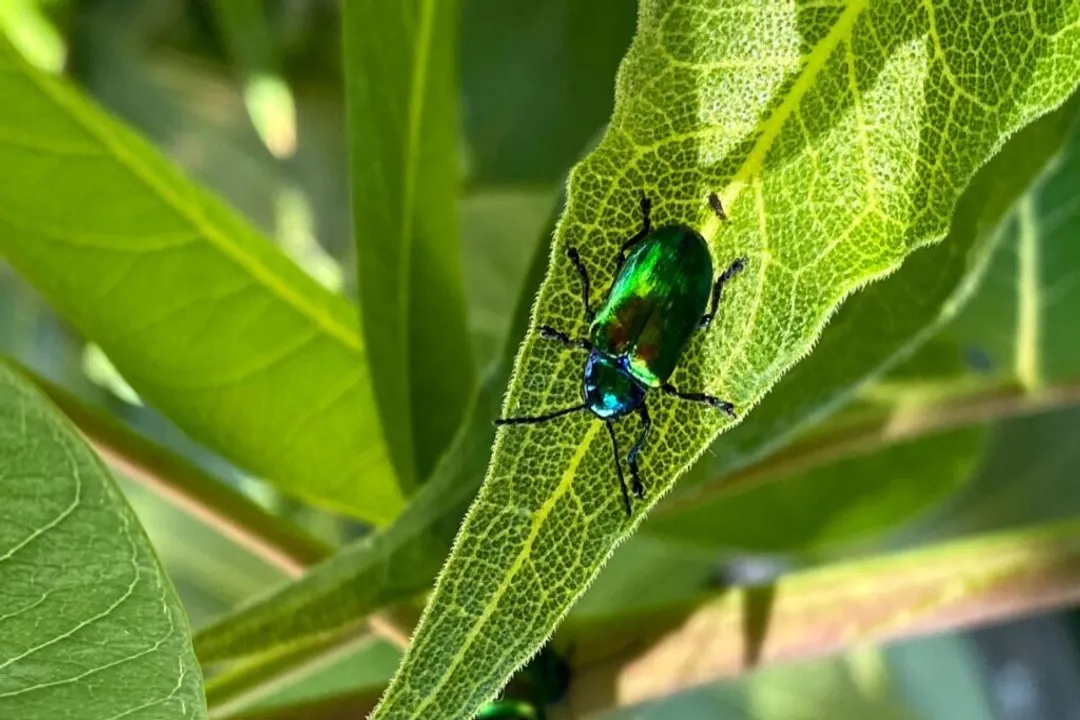
The exoskeleton is far more than just a passive shell; it is a living, though non-growing, part of the insect’s anatomy. [4] The primary material making up this armor is chitin, a tough polysaccharide, which is often layered with proteins to give it varying degrees of hardness and flexibility. [4][8] This combination is responsible for that characteristic sound when one accidentally steps on a beetle: the crunch. [8]
Insects utilize this external framework for muscle attachment, much like we use our bones. Insect muscles fasten to the interior surface of the exoskeleton. [4] When a muscle contracts, it pulls against this rigid exterior surface, resulting in movement at the joints. [4] Different regions of the exoskeleton have varying levels of thickness and composition. Areas that need to be highly protective or bear the brunt of stress are heavily sclerotized, meaning they are very hard, while other areas remain thin and pliable to allow for necessary flexibility. [4]
If you examine the anatomy of even a common housefly, you can see the structural differences mapped onto its body sections—the head, thorax, and abdomen. Each section is covered by these hardened plates, or sclerites, which are connected by flexible, membrane-like joints. [4] While some may wonder if the sclerites themselves are equivalent to bones, they are fundamentally different; they are external plates, not internal struts of calcium phosphate like our femurs or ribs. [5]
It is fascinating to consider the strength-to-weight ratio these natural composites achieve. A vertebrate skeleton must support the entire mass of the body against gravity from within, requiring significant bulk, especially for larger land animals. The insect’s chitinous armor, by contrast, provides excellent protection for its smaller mass without the substantial weight penalty that would come from an internal bone structure scaled up to human size. This trade-off—excellent lightweight structural support and armor versus size limitation—is arguably why arthropods dominate the small forms of life while vertebrates dominate the large ones.

# Shedding Skin
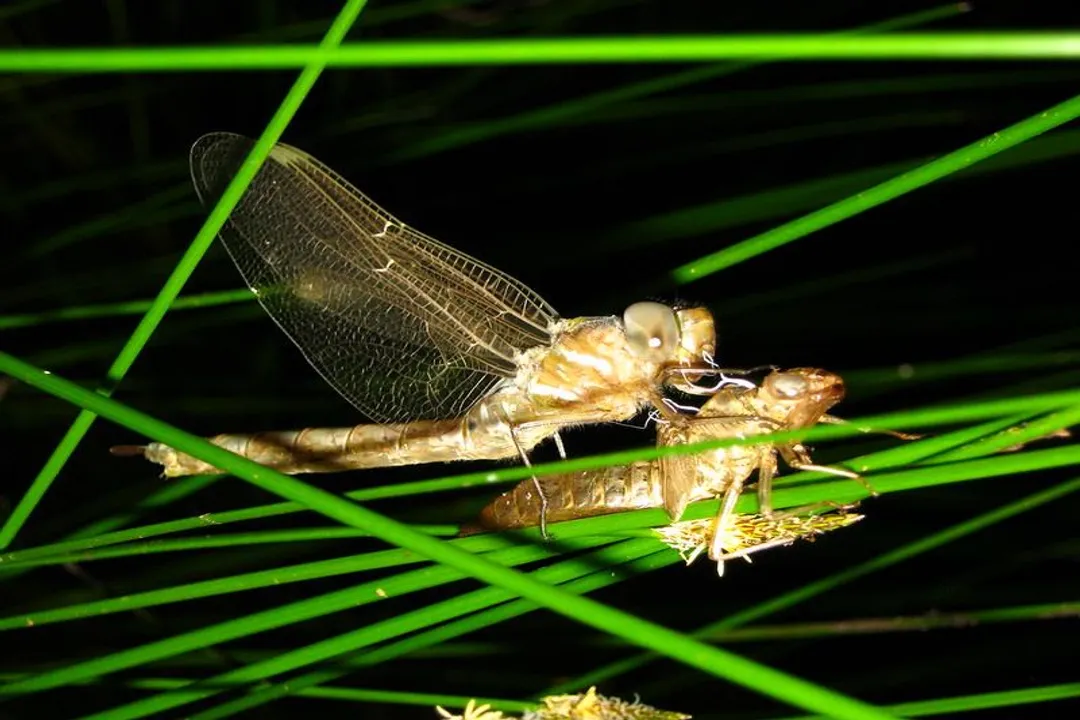
The biggest drawback to having such a fantastic external suit of armor is apparent when the insect needs to get bigger. Bones grow along with the animal’s soft tissues. The exoskeleton, being hard and relatively inflexible, cannot simply stretch or expand significantly. [4]
This limitation necessitates a dramatic process known as molting, or ecdysis. [4][8] To grow, the insect must periodically shed its entire old exoskeleton and replace it with a new, larger one formed underneath. [4] Before the molt, the insect secretes a new cuticle layer beneath the old one. [4] Once the new shell is ready, the insect splits the old one, usually along the back, and wriggles out, often appearing soft and pale immediately afterward. [4]
This period of vulnerability is critical. Immediately after shedding, the insect must rapidly pump body fluid (hemolymph) into the new shell to expand it to its maximum possible size before it hardens. [4] During this time, the insect is much softer, slower, and highly susceptible to predators or physical damage until the new chitin fully cross-links and hardens—a process that can take hours or even days depending on the species and environment. [8] This biological requirement—growth only through complete structural replacement—is a direct consequence of choosing an external skeleton over an internal one.
# Inner Workings
The lack of an internal skeleton also correlates with differences in other internal systems when comparing insects to vertebrates. For instance, where we rely on a circulatory system driven by a multi-chambered heart moving blood through arteries and veins, insects possess a much simpler, open circulatory system. [2] Their hemolymph circulates more freely throughout the body cavity, rather than being strictly contained within vessels. [2]
Furthermore, respiratory mechanisms differ greatly. Humans and other large terrestrial animals rely on lungs to exchange gases through a relatively complex network of airways. Insects, however, breathe through a network of tiny tubes called tracheae that open to the outside via small holes called spiracles. [2] These tubes deliver oxygen directly to the tissues, a highly efficient method for small bodies where oxygen diffusion distance is minimal, but one that severely limits how large an insect can grow due to the physics of passive gas exchange. [2] The simple internal cavity created by the lack of a bony cage also influences the arrangement and scale of the digestive and nervous systems relative to larger, endoskeletal animals.
When thinking about managing insect populations, whether for conservation or control, recognizing this fundamental structural difference offers a practical advantage. For example, knowing that the chitinous shell is the primary defense means that certain chemical treatments can be designed to specifically disrupt the formation or hardening of this new layer during the vulnerable molting stage, a strategy that is completely irrelevant when targeting an animal with a calcium-based internal skeleton. Understanding the physics of their external support also explains why many common insect pests are easily crushed by simple mechanical actions, despite their armor appearing formidable to the naked eye.
Ultimately, the insect body plan—defined by segments, jointed appendages, and a rigid outer covering—is a highly successful evolutionary strategy. While they may never develop the massive sizes seen in bony fish or mammals, their exoskeleton grants them unparalleled strength for their weight, superb protection in miniature form, and the ability to colonize almost every terrestrial niche on Earth. [4][10] They traded the complexity and potential mass of an internal skeleton for the efficiency and immediate defense of external armor.
Related Questions
#Citations
No way somebody looked at this and said “oh yea that makes sense”
How are the insides of an insect different from a human?
Insects - Bill Nye
What Makes an Insect? - Arthropods and Exoskeletons - MyLearning
Why do insects not have bones? - Quora
Curious questions, small bugs, big answers
internal versus external skeletons in humans and insects - Facebook
Exoskeletons - The Part That Goes Crunch - Urban Programs Travis ...
Weird (and Cool) Facts You Didn't Know About Insects - Blog | CWE
[PDF] Insect Facts! | Hoyt Arboretum