Do agouti shoot sperm?
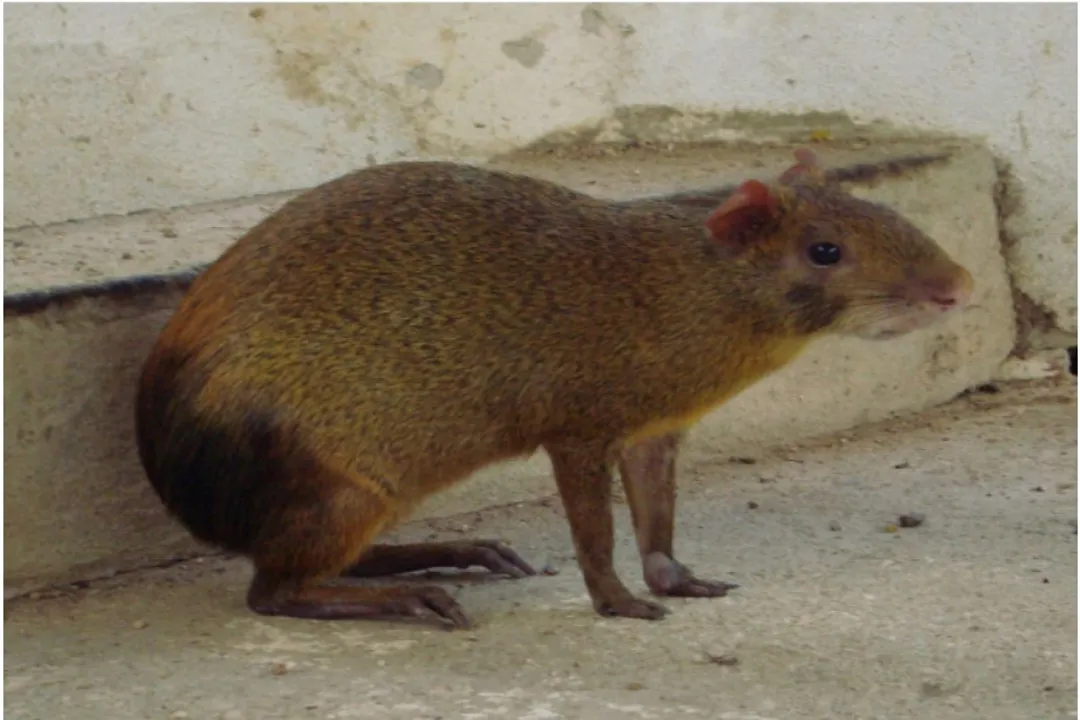
The sight of a startled or highly agitated agouti exhibiting a rapid, forceful expulsion of fluid often leads to questions about their reproductive habits and capabilities. This behavior, captured in various informal settings, seems astonishingly swift, prompting the colloquial query about whether these rodents "shoot" sperm. While the term is informal, it points directly to the observation of a sudden, perhaps powerful, discharge during moments of high excitement or during sexual congress. To understand the reality behind this spectacle, one must turn to the scientific literature, which reveals much about agouti ejaculation, even if that knowledge is primarily derived under laboratory conditions.
# Induced Ejaculation Studies
The scientific community has dedicated considerable effort to understanding the reproductive capabilities of the agouti (Dasyprocta leporina and related species) because of their economic importance as a meat source and their potential as a model for other hystricomorph rodents. A major hurdle in this research is the agouti’s natural instinct: they are highly flighty and struggle violently when restrained, making traditional semen collection methods, like the artificial vagina (AV), impractical.
This necessity has driven the development and refinement of electro-ejaculation (EE) as the primary technique for obtaining male gametes in a controlled setting. The EE process itself is far from casual; it requires chemically restraining the animal using anesthetics like ketamine, often combined with other agents like xylazine. Researchers have invested time comparing various anesthetic and electrical stimulus protocols to find one that is effective yet minimizes stress or potential damage to the animal. In fact, one comparative review highlighted that while one protocol achieved a perfect $100%$ success rate for collecting ejaculates, it required five different anesthetic agents, raising welfare concerns.
# Mechanics of Forceful Release
The methods developed to artificially induce ejaculation give a strong indication of the underlying mechanics. Ejaculation is achieved by introducing a lubricated probe into the rectum and applying sequential electrical stimuli to mimic the nerve impulses required for the reflex. The research literature is surprisingly precise about the required timing, which suggests that ejaculation in this species, whether natural or induced, is a tightly regulated event.
For instance, in one foundational study on D. leporina, the mean ejaculation time was nearly five and a half minutes ( min), achieved with voltages ranging between $6$ and $12$ V. Crucially, researchers noted an inverse relationship between the duration of stimulation and the volume of the collected ejaculate. This means that if the electrical stimulation continues too long—suggesting the physical ejaculation process is prolonged—the resulting semen yield decreases significantly. The conclusion drawn was that the maximum effective ejaculation time should not surpass six minutes. This suggests that the natural process might be characterized by a relatively concentrated, forceful, and brief expulsion phase, as extending the time appears detrimental to the sample volume.
Another critical finding related to maintaining the force of the release involves the off periods during EE. If the electrical current is stopped for too long (e.g., the $5$ seconds used in early trials), the animal loses its erection. The recommendation to shorten these rest periods to just $3$ to $4$ seconds indicates that sustaining the physical conditions necessary for a robust ejaculation requires near-continuous, carefully timed stimulation. The very nature of these optimized, high-success protocols—aiming for a rapid, sustained response—supports the idea that the natural act of ejaculation can be quite forceful.
# Composition and Collection Success
When researchers successfully induce ejaculation, the resulting fluid contains spermatozoa, but the success rate itself is variable. In one key study, only $30%$ of the collected ejaculate samples actually contained sperm. When sperm was present, the mean volume collected was quite small, averaging mL, with a concentration of approximately spermatozoa/mL. Furthermore, the sperm collected via EE exhibited significant morphological abnormalities, averaging around $35%$.
It is interesting to compare this to samples obtained post-mortem via retrograde epididymal washing, a technique that bypasses the ejaculation process entirely. Epididymal samples recovered from euthanized animals showed much higher concentrations, sometimes reaching over spermatozoa/mL, and better membrane integrity compared to the ejaculated samples. This difference underscores the challenge: the act of ejaculation itself, or the conditions required to elicit it, appears to affect the quality or concentration of the final output recovered via EE.
# Distinguishing Spray from Ejaculate
Given that the observed phenomenon in casual videos often involves a sudden spray in response to excitement—such as being offered food—there is a significant possibility of misidentification. Anecdotal reports from individuals familiar with related rodents suggest a possible alternative explanation: urine spraying.
For instance, one commentator mentioned keeping a Patagonian Mara, a relative of the agouti, noting that it sprays urine when excited by food, and the standard management technique is to step aside or gently push its head down to prevent the behavior. Agoutis, like other rodents, may exhibit similar excited behaviors that involve spraying fluids. If an animal is startled or intensely excited (e.g., by the presentation of a preferred food item like a sweet potato, as referenced in one online discussion), the resulting expulsion may be a chemically distinct fluid like urine rather than semen. The sheer visual impact of a sudden spray, regardless of the fluid's origin, easily leads to the conclusion that the animal has forcefully projected its reproductive material.
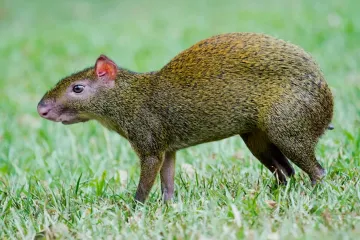
# Anatomical Context
The physical structures involved in the act also add a layer of complexity. The agouti penis is not simple; it is known to be covered with penile spines, which are keratinized structures, alongside lateral penile cartilages. The erection process is documented through four distinct stages, culminating in the protrusion of these keratinous spicules and the ejaculation event. This specialized, spiny anatomy is part of a complex organ that facilitates copulation, and its involvement in a forceful event—whether reproductive or stress-induced—is anatomically plausible.
When attempting to reconcile the scientific data with the vivid observations made in informal settings, it becomes clear that the agouti does possess the physiological capacity for a powerful expulsion, as evidenced by the need for careful electrical pacing to control the timing and volume during EE. However, the extreme nature of the "shooting" often reported in non-clinical settings may sometimes be the result of a startling urinary expulsion triggered by excitement, which mirrors the suddenness of a true ejaculate, especially given the animal's generally nervous disposition. The reality is that the controlled, measured deposition achieved by reproductive scientists via EE contrasts sharply with the instantaneous, high-intensity nature of the event captured on video, making the latter an impressive, if sometimes misidentified, display of rodent excitement. The successful development of reproductive technologies for the agouti is therefore a testament not only to understanding their sperm but also to understanding the elaborate, highly reactive nature of their entire reproductive system.
#Videos
Agoutis Love Seeds - YouTube
Related Questions
#Citations
A preliminary technique for electro-ejaculation of agouti (Dasyprocta ...
Electro ejaculation of two species of agouti (Dasyprocta spp.) in ...
I didn't see that coming : r/WTF - Reddit
A preliminary technique for electro-ejaculation of agouti (Dasyprocta ...
Reproduction in agouti (Dasyprocta spp.) - PubMed Central - NIH
Reproductive Technologies Used in Male Neo-Tropical ...
Agoutis Love Seeds - YouTube