What is Macrauchenia?

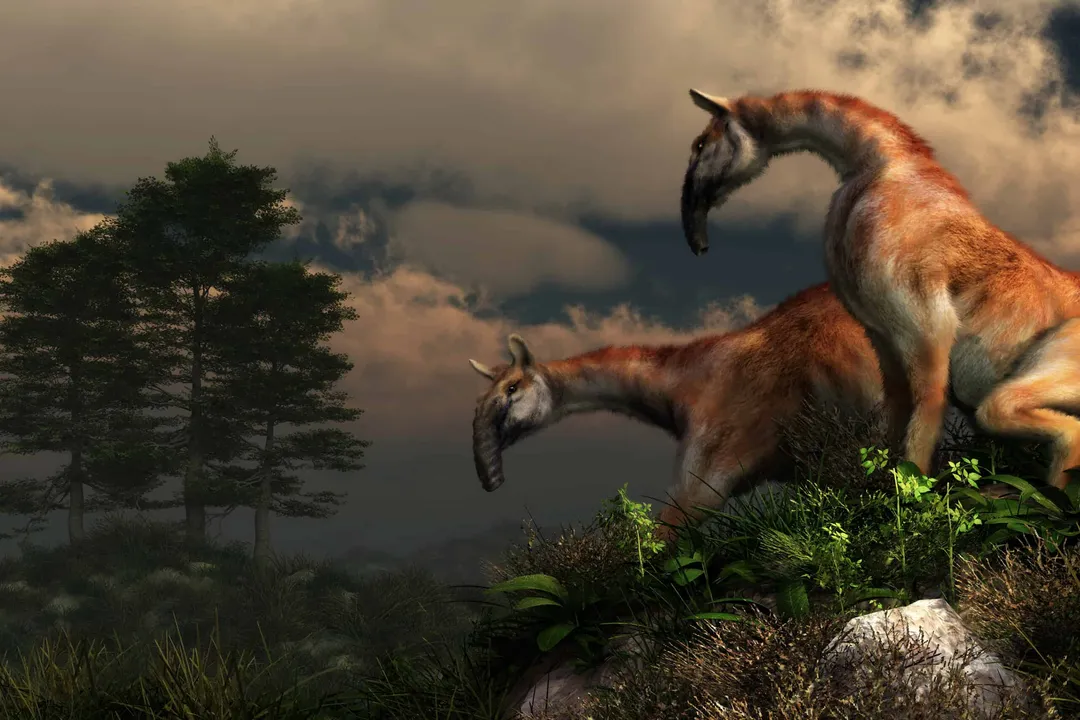
The creature known as Macrauchenia presents one of the most fascinating puzzles in South American paleontology. Imagine an animal walking the landscape over ten thousand years ago that seemed to borrow features from several unrelated modern mammals, yet was entirely unique. It possessed a body shape reminiscent of a llama or camel, a long neck like a giraffe’s relative, and, most strangely, a short, fleshy nose structure resembling a miniature proboscis, though it was not related to elephants. [1][4][9] This extinct mammal lived during the late Pliocene and Pleistocene epochs, thriving until it vanished alongside much of the continent’s megafauna. [1][8] Its name, Macrauchenia, translates roughly to "long-necked," a clear nod to its most prominent feature. [2]
# Strange Body
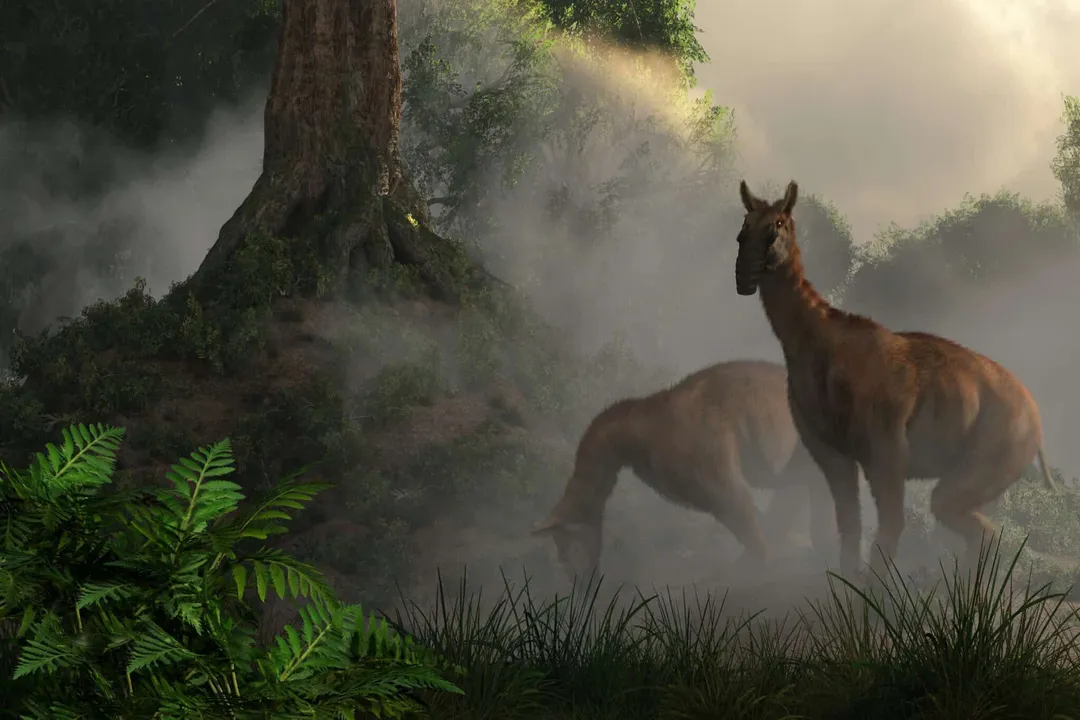
When first unearthed, scientists were perplexed by Macrauchenia. Early specimens, such as those described by Richard Owen, led to confusion over its exact placement in the animal kingdom. [1] The animal was clearly an ungulate, an odd-toed or even-toed mammal, but it didn't fit neatly into either category known at the time. [9]
One of its defining characteristics was its relatively long neck and the unusual structure on its face. While often described as having a short trunk, this feature was significantly smaller than that of a tapir. [1] Paleontologists theorize that this appendage, situated between the eyes, was likely muscular and prehensile, perhaps used for browsing on high vegetation or pulling leaves towards its mouth, functioning as a specialized grasping tool. [1][7] Estimates place its shoulder height around that of a modern llama or slightly larger, perhaps comparable to a large horse in overall mass. [2][6]
The feet of Macrauchenia offer another key to its identity. Unlike horses, which are perissodactyls (odd-toed ungulates) with a single functional toe, or camels, which are artiodactyls (even-toed ungulates) with two, Macrauchenia possessed three distinct toes on each foot. [1][7] While this configuration shares superficial similarities with extinct rhinos or early horses, the specific structure—with robust lateral digits—suggests a unique adaptation for locomotion on the varied terrains of ancient South America. [1] Considering its supposed evolutionary closeness to other South American ungulates, the three-toed foot represents a distinct evolutionary pathway; for instance, while early horses settled firmly onto a single toe for cursorial speed across open plains, Macrauchenia retained a broader base, suggesting an adaptation prioritizing stability or perhaps faster acceleration over sustained top speed on that specific substrate. [1]
# Evolutionary Link
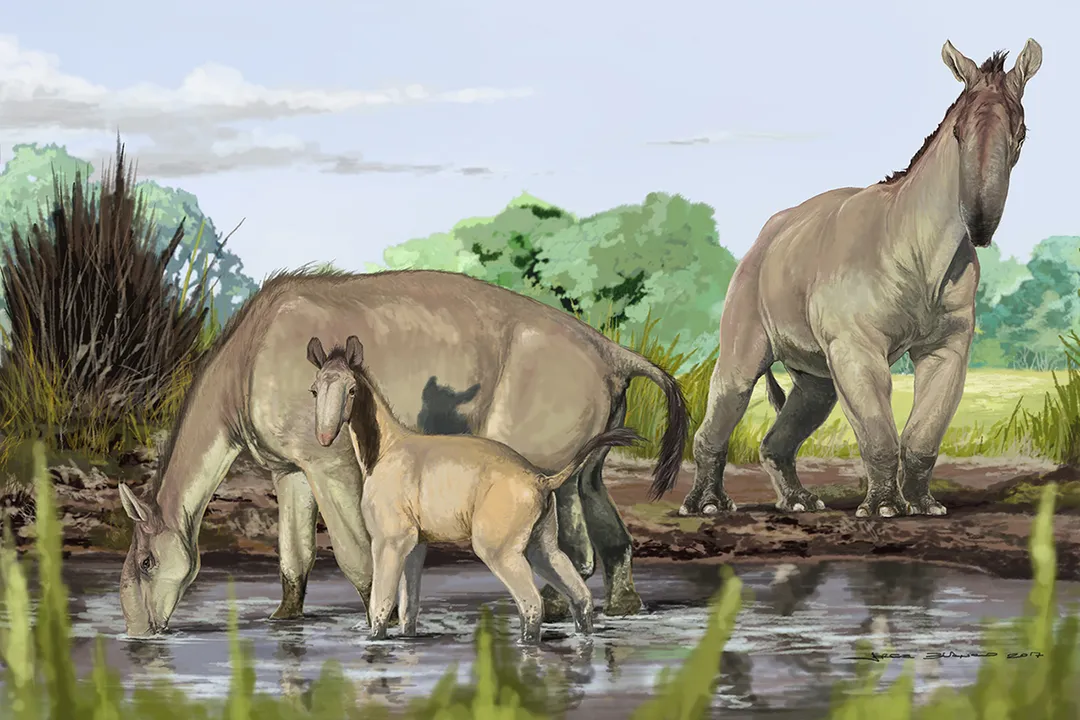
Macrauchenia belonged to the order Litopterna, an entirely South American group of hoofed mammals that evolved in isolation on the continent for millions of years. [1][5][9] This isolation is what allowed such unique body plans to develop. The Litopterns were the native equivalent to the horses, rhinos, and camels that evolved elsewhere in the world. [9] Macrauchenia is generally considered a member of the family Macraucheniidae within the Litopterna. [1]
It is crucial to separate Macrauchenia from its modern relatives. Despite the camel-like body and even the presence of a soft trunk, Macrauchenia is not a camel, nor is it closely related to elephants, tapirs, or rhinos. [1][9] It represents a successful, long-running experiment in ungulate evolution unique to Gondwana’s fragmented landmass. [9] Its closest relatives within South America included smaller, more swift-running forms like Thoatherium, which had hooves more akin to a modern gazelle. [1] This comparison highlights the diversity within the Litopterna itself—one group evolving large browsers with three toes, while another specialized in lighter, faster grazers. [1]
# Ancient Home
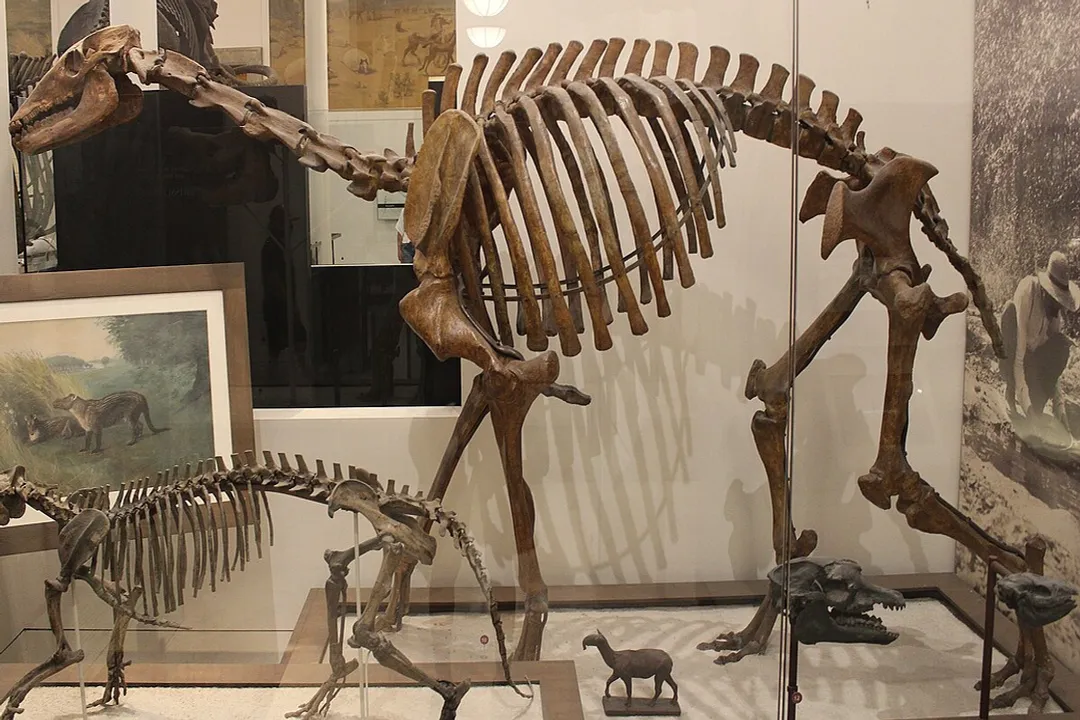
The specific species most often discussed is Macrauchenia patagonica, a testament to the region where many of the best fossils have been recovered. [1][8] These animals roamed across what is now Argentina and parts of the wider continent. [1][3] Their existence spanned the relatively warm Pliocene, where they adapted to environments that were likely a mix of open grasslands and shrubland, and into the cooler, more fluctuating conditions of the Pleistocene. [1]
The fossil evidence suggests that Macrauchenia was a widespread and perhaps relatively common herbivore during its peak period. [3] For example, specimens housed in major collections, such as those managed by institutions like the Natural History Museum, provide continuous data on their morphology and range across this long time span. [3] Understanding their prevalence helps reconstruct the overall structure of the Pleistocene ecosystem before the final wave of extinctions swept through. [8]
# Final Days
The end for Macrauchenia came around the close of the Pleistocene, approximately 10,000 years ago. [1][4] This timing places its demise squarely in the late Quaternary extinction event, a period marked by significant global climate shifts and the arrival of Homo sapiens in the Americas. [1][8]
The precise reason for its disappearance remains debated, as is often the case with megafaunal extinctions. [8] One primary theory involves human interaction. Early human populations entering South America would have encountered large, potentially slow-moving herbivores like Macrauchenia, making them attractive targets for hunting. [4] Another significant factor is environmental change. As the climate warmed and glacial periods ended, the vegetation zones that Macrauchenia relied upon for sustenance would have shifted dramatically, potentially creating mismatches between the animal’s browsing habits and the available flora. [1][8] It is highly plausible that the extinction resulted from a combination of these pressures—an already stressed population being further impacted by newly arrived, highly effective predators. [8]
The fact that Macrauchenia survived numerous glacial cycles only to disappear shortly after the arrival of humans in some regions strongly suggests that the final blow was delivered by this new ecological factor. The disappearance of Macrauchenia patagonica marks the end of an evolutionary lineage that spanned millions of years, signaling the final major faunal restructuring of the South American continent as it transitioned into the Holocene. [8] The vacuum left by these large, unique herbivores was eventually filled by smaller, more generalized modern mammals, fundamentally altering the ecological landscape that remains today.
Related Questions
#Citations
Macrauchenia - Wikipedia
Macrauchenia | Walking With Wikis - Fandom
What was Macrauchenia? - Natural History Museum
Meet Macrauchenia, an extinct mammal that lived in South America ...
Macrauchenia patachonica was amongst the most bizarre creatures ...
Macrauchenia - A-Z Animals
Macrauchenia - Animal Details
Macrauchenia patachonica - The Extinctions
DNA Solves 200-Year-Old Mystery of Weird Ice Age Creature
Macrauchenia | Wildlife Park 2 Wiki | Fandom