Do Patagonian cavies dig burrows?
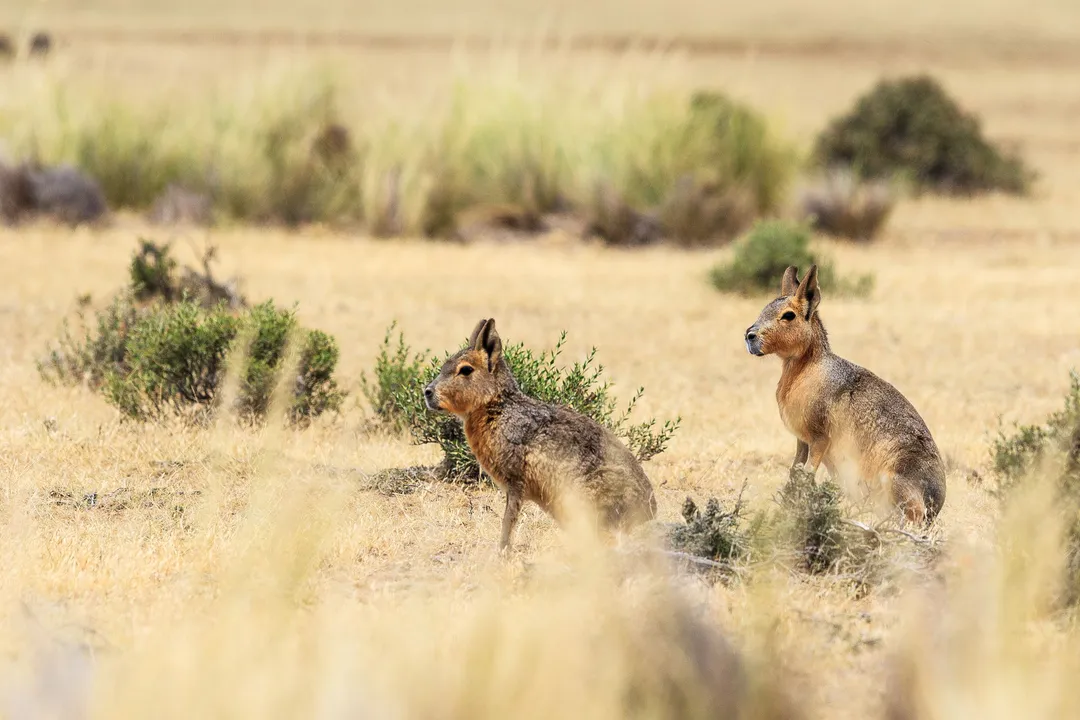
The Patagonian cavy, often recognized by its striking rabbit-like ears, long legs, and guinea pig body, presents a fascinating case study in South American adaptation. As visitors observe these unique animals moving across the arid plains, one natural question arises regarding their domestic arrangements: Do these animals excavate the earth to create their own subterranean homes? The reality of their living situation is more nuanced than a simple yes or no, pointing toward a clever strategy of utilizing what the harsh Patagonian environment already offers.
# Patagonian Habitat
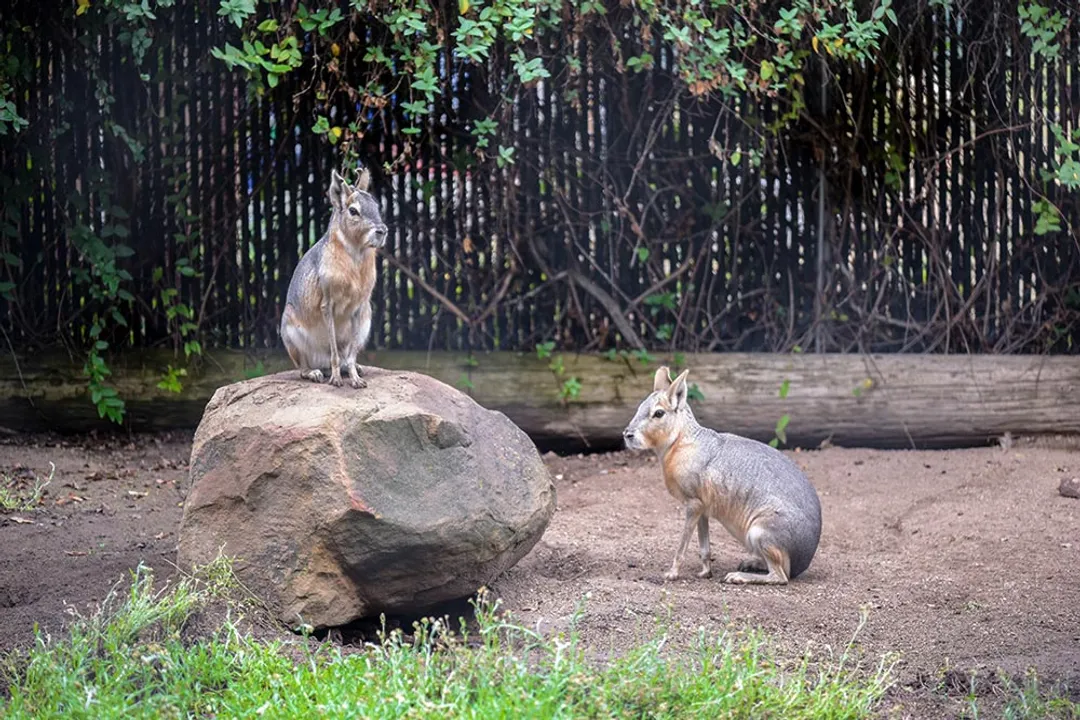
The native environment of the Patagonian cavy, or Patagonian mara, strongly influences its behavior, including where it seeks refuge. These medium-sized rodents are found in the arid and semi-arid regions of Patagonia, spanning areas like southern Argentina. The landscape they call home is typically characterized by open ground and sparse vegetation, offering little in the way of thick woodland or dense cover.
In these expansive, dry environments, visibility is high, which is advantageous for spotting predators like pumas or birds of prey. However, this openness means that secure, permanent shelter from the elements or immediate danger is scarce. Their survival hinges on being swift runners, a necessity born from living in such exposed terrain.
# Shelter Tactics
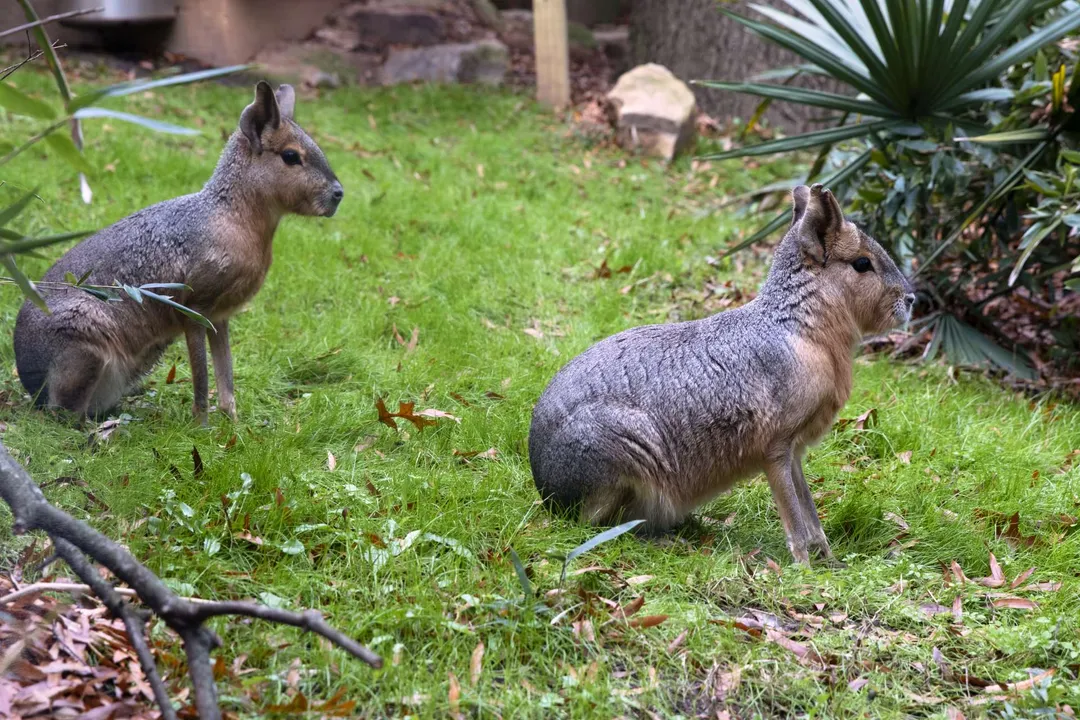
When considering shelter, the Patagonian cavy demonstrates a remarkable degree of resourcefulness rather than being industrious diggers themselves. The general consensus from observations is that they do not typically excavate extensive, self-dug burrows for day-to-day living or permanent residence. While they are highly terrestrial creatures, their primary strategy involves employing ready-made accommodations.
The cavy will readily take advantage of existing structures. This often means seeking refuge in burrows created by other, more dedicated excavators of the region. Specifically, they may utilize abandoned tunnels dug by animals such as armadillos or burrowing owls. If no abandoned burrow is available, shelter can be found beneath the sparse shrubs and scrubby vegetation that dots the landscape. Some sources note that they might scratch out shallow depressions in the earth for resting, but these are not the complex, multi-chambered tunnels associated with true burrowing mammals.
This reliance on the excavations of others sets the Patagonian mara apart from some other large rodent families. For instance, while cavies share a common ancestry with guinea pigs, the behavior seen in the wild mara is distinctly different from the domestic pet's needs, and ecologically distinct from species like the capybara, which often creates shoreline burrows or shelters in dense reeds. The Patagonian mara’s strategy prioritizes opportunistic conservation of energy in an environment where digging through tough, arid soil would be costly [Analysis]. Their ability to quickly assess and commandeer existing shelter is an essential survival trait in the unforgiving steppe.
# Communal Living
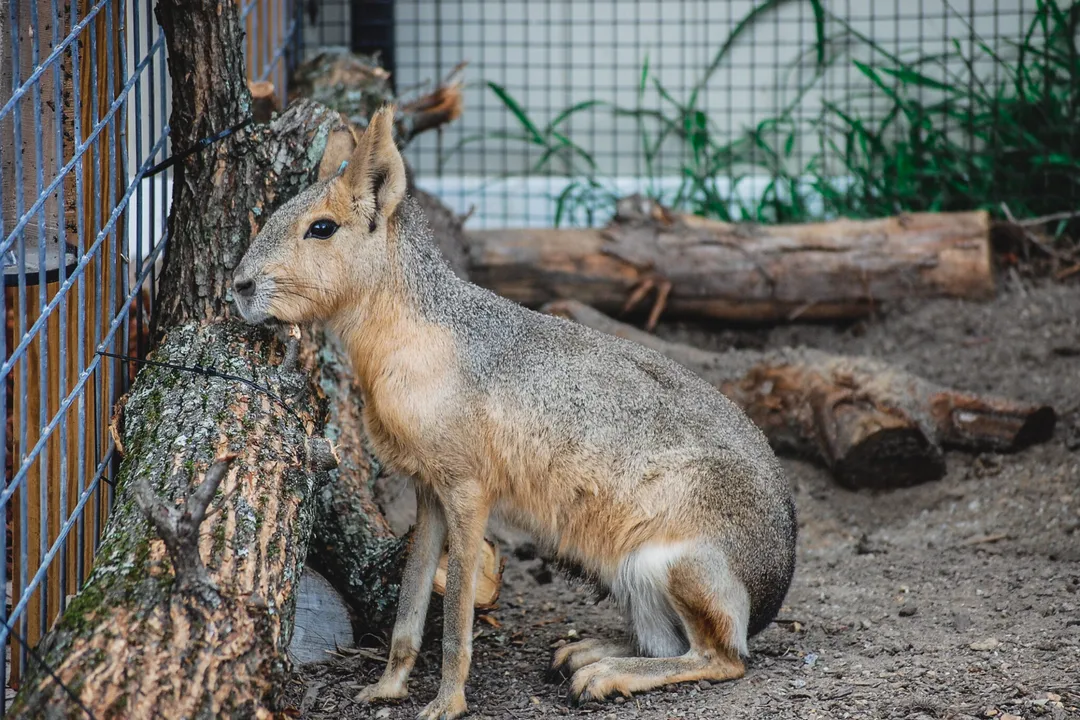
The social structure of the Patagonian cavy further explains their shelter habits, particularly concerning raising young. While they are often seen moving in monogamous pairs, their reproductive strategy involves creating communal nurseries. This means that several pairs will share a single, centralized location for their offspring.
This nursery site is often one of those pre-existing, deeper burrows or a secure spot under dense cover. Multiple females will give birth in or near the same structure, and the young from different litters will nurse indiscriminately from any available female mother in the creche. This communal care system maximizes the protection offered by the chosen shelter, as the odds of any single juvenile falling victim to predation decrease when protection is shared among many adults and peers [Analysis]. The choice of a single, robust, pre-existing shelter, rather than numerous small, self-dug ones, concentrates the limited available security resources.
# Physical Profile and Digging Capacity
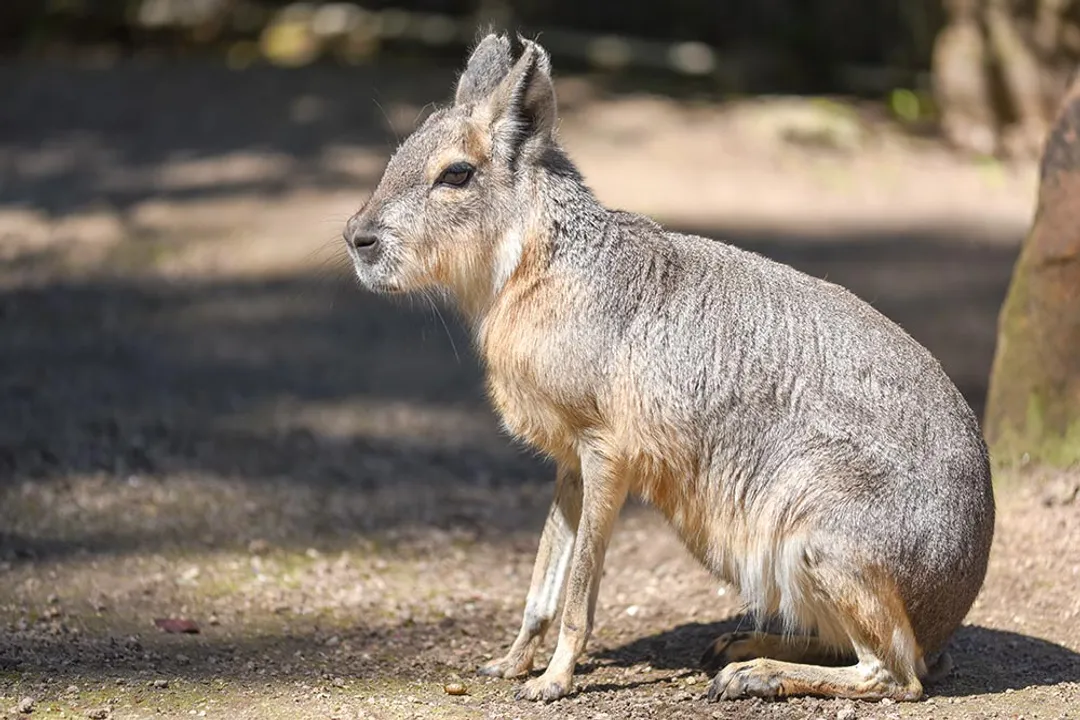
Understanding their physical makeup helps contextualize why digging extensive tunnels might not be their strong suit. Patagonian cavies are built for speed across open ground. They possess long, slender legs that are proportioned much like a small deer or antelope, giving them a unique, bounding gait. This morphology is an adaptation for fast, evasive running over long distances.
Their body structure emphasizes terrestrial movement rather than subterranean engineering. While they certainly have claws suitable for scratching out brief resting depressions or perhaps enlarging an existing entrance, their limb structure is not optimized for the sustained, powerful excavation required to tunnel through hard-packed Patagonian earth. Their attention seems better directed toward maintaining an expansive line of sight across the plains, supporting their role as cursorial (adapted for running) herbivores.
# Life in the Steppe
The cavy’s life revolves around balancing the need for safe harbor with the need to forage constantly in open territory. Their diet generally consists of grasses and other vegetation found in their arid habitat. Since they cannot rely on a personal underground fortress against predators like foxes or birds of prey, they must remain vigilant.
If a sudden, localized weather event like a brief, intense Patagonian storm hits, an existing burrow or a thick bush offers immediate, necessary cover. The energy saved by not digging a new home every few days can instead be spent on finding more nutritional forage in an area where high-quality food sources are spread thin. This pattern—forage widely, shelter opportunistically—is a hallmark of successful steppe dwellers.
| Shelter Type Used | Primary Function | Energy Cost to Secure | Primary Excavator |
|---|---|---|---|
| Abandoned Burrow | Rest, predator escape, nursery | Very Low (Cleaning/Enlarging) | Armadillo, Owl |
| Shrub/Bush Cover | Immediate rest, brief cover | Minimal (Lying down) | N/A |
| Shallow Depression | Short-term rest stop | Low (Scratching) | Patagonian Cavy |
It is important not to mistake brief scratching for true burrow construction. A shallow scrape, easily made by scraping backward with the hind feet, serves for a momentary rest or to disrupt morning dew, but it offers negligible security against a determined predator or prolonged exposure to the elements compared to a fully established tunnel system. The evidence points clearly to the Patagonian cavy being an efficient adapter that prefers the social and energetic benefits of communal, pre-existing shelter over the solitary, high-energy investment of creating its own underground domain.
Related Questions
#Citations
Patagonian Cavy Facts | Hedrick's 'Around The World In One Display'
Patagonian Mara - Zoo Atlanta
Patagonian Cavy (Mara) - Animals
Patagonian mara | Smithsonian's National Zoo and Conservation ...
Patagonian Cavy - Visit the Virginia Zoo Animals Today!
Patagonian cavies a.k.a. Maras live in South America in arid, open ...
Patagonian Cavies - Gramma Roses Petting Zoo
Patagonian mara - Wikipedia
Should You Keep a Patagonian Cavy (Mara) as a Pet?