Why do hagfish knot themselves?
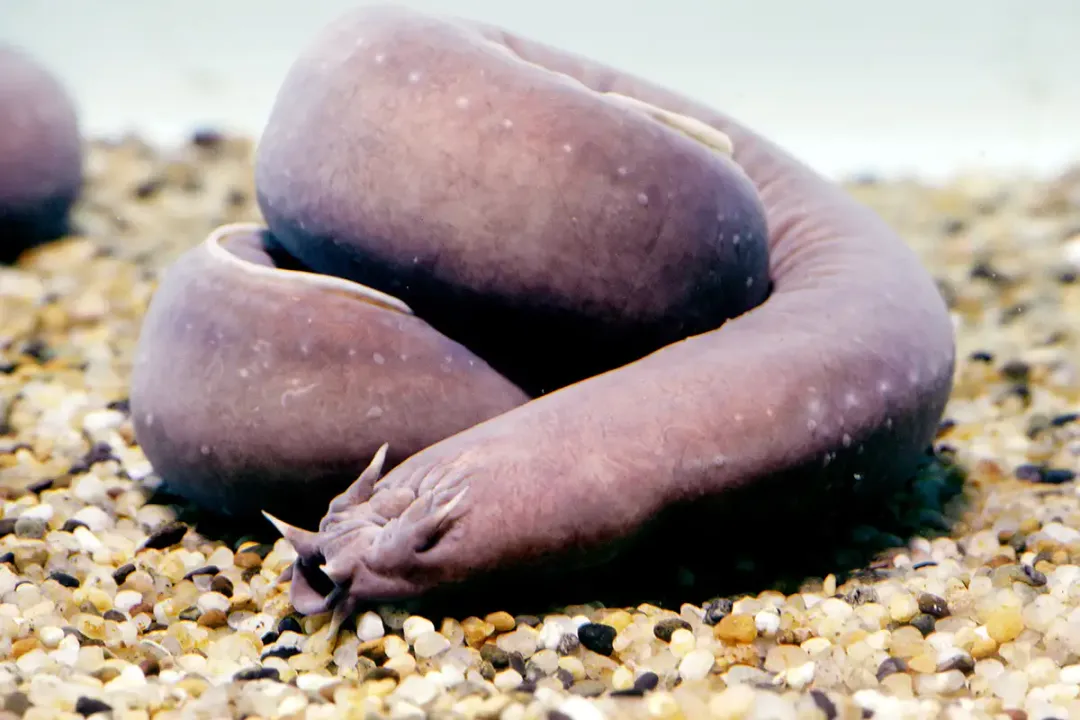
The image of a slime-producing, jawless, eel-like creature tying itself into a tight loop is one of the most bizarre and fascinating sights in marine biology. This behavior, known as knotting, is not a display of confusion or simple muscular spasm; rather, it is a deliberate and highly effective survival tactic employed by hagfish when facing intense pressure, whether from a predator or environmental constraints. These deep-sea scavengers, existing for hundreds of millions of years essentially unchanged, have perfected this unique method of locomotion and self-maintenance.
# Knot Mechanics
To understand why the knot is useful, one must first appreciate how it is physically achieved. The hagfish achieves this remarkable feat by contracting its body muscles in a highly coordinated manner, looping its tail end forward and around its own body, often passing it between its ventral slime glands. Depending on the situation, the hagfish can execute a simple loop or tie a much more complex knot.
The key to the effectiveness of this action lies in the mechanics of force generation once the knot is formed. When a hagfish ties itself, the resulting knot serves to anchor the posterior (tail) portion of its body. Studies analyzing this behavior in the Pacific hagfish, Eptatretus stoutii, show that the knotting action creates significant tractive forces on the section of the body that is tied. These forces are directed longitudinally—meaning along the length of the body—allowing the hagfish to exert a powerful pulling motion against whatever is constraining it. Imagine trying to pull yourself free from a snag; if you can anchor one part of your body firmly, the contraction of your other muscles becomes far more effective in achieving release. For the hagfish, the knot is that anchor. Crucially, this impressive immobilization technique is not permanent; the hagfish can rapidly untie itself once the threat or need has passed.
# Defense Strategy
The most dramatic application of knotting involves escaping immediate danger, particularly from potential predators like sharks. When attacked, the hagfish often releases massive quantities of its signature slime, a substance so effective at clogging gills that it can incapacitate an attacker. However, the predator might still manage to grab the slime-covered hagfish before succumbing to the suffocating effect.
This is where the knot becomes a matter of life and death. If a shark or other large animal seizes the hagfish, the fish knots itself to create leverage. By anchoring its posterior section via the knot, it can use its strong body contractions to pull against the grip of the attacker. The tractive force generated by the knotting mechanism can be substantial enough to wrench the fish free from the predator’s jaws or to pull the snagged body part away from a tight crevice. This action effectively maximizes the mechanical advantage the hagfish has in a tug-of-war against a much larger adversary.
Consider the sheer energetic cost of constantly producing slime, which is triggered by stress. If the slime defense is deployed but fails to deter the attack instantly, the hagfish must have a reliable secondary escape plan. The knotting behavior seems perfectly evolved to bridge this gap, transforming the slime-coated body from a mere irritant into a leverage tool.
# Hygiene Function
While escaping a shark attack is certainly a high-stakes motivation, the hagfish uses its knotting ability for more mundane, yet vital, daily maintenance as well: grooming. Hagfish inhabit silty, sometimes abrasive, environments and spend significant time burrowing and feeding on decaying matter. This lifestyle necessitates regular cleaning to remove debris, external parasites, or even shed outer layers of their own skin.
Knotting serves as a physical mechanism for this cleaning process. By tying its body, the hagfish can effectively rub its knotted section against the substrate—the seafloor or surrounding objects—to dislodge anything adhering to its skin. It is an ancient, biological form of self-scrubbing. It has been observed that hagfish use the knot to move irritants along their bodies, often directing them toward the tail end to be physically scraped off.
This dual-use nature is fascinating from a bio-mechanical perspective. The same complex muscle coordination that allows for instantaneous, high-force escape anchoring is also repurposed for slow, deliberate cleaning motions.
# Slime Connection
The slime that makes hagfish infamous is inextricably linked to their knotting behavior, acting as both a cause and a context for the knot. The slime is produced by specialized mucous glands located along the sides of the hagfish's body. This defense mechanism is triggered by stress, meaning the very act of being handled or attacked initiates the slime production.
When the fish is knotted during an attack, the intense mechanical flexing and pulling required to achieve the anchor point might also serve to work the thick, mucilaginous slime over the entire body surface, ensuring maximum coverage against the threat. Conversely, if the fish is simply grooming, the knotting process might help physically work away excess, spent, or irritating layers of slime that have accumulated during burrowing or feeding. The interaction is cyclical: stress causes slime; the slime often necessitates escape; escape is achieved via the knot.
If we consider the energy investment, slime production is metabolically expensive. Any behavior that helps the hagfish conserve energy or maximize the effectiveness of its defenses is highly valuable. The knot provides that maximization, whether by securing an escape or cleaning off the residue of a failed defense attempt.
# Behavioral Efficiency
The ability of the hagfish to deploy such a specialized behavior for two distinct needs—high-intensity defense and low-intensity maintenance—speaks to an extremely efficient evolutionary pathway. It’s rare to find a single, complex physical action that perfectly services both urgent survival needs and routine upkeep. Most animals develop separate, specialized appendages or motor skills for fighting and cleaning. The hagfish, however, has streamlined its entire posterior anatomy into a versatile tool.
Think of it this way: a human needs to use their hands to open a jar (maintenance) and to brace themselves against a falling object (defense). The hagfish has evolved its body itself to perform both anchoring functions using the same core muscular mechanism. This redundancy in function, achieved through physical flexibility rather than duplicated anatomy, offers significant conservation of biological structure. The simple, yet powerful, loop of the tail is the physical expression of this efficient design philosophy, allowing the hagfish to persist in the murky depths where quick, reliable adaptations are paramount for survival across geologic timescales.
Related Questions
#Citations
How the slimy hagfish ties itself up in knots—and survives ...
Expert: Andrew Clark & Hagfish Knots | WhaleTimes, Inc.
Hagfish tie their bodies into complicated knots to escape ...
Characterization of body knotting behavior used for escape ...
Hagfish produce copious amounts of slime is a remarkable ...
Characterization of body knotting behavior used for escape in ...
Hagfishes and Slime | Douglas Fudge