What is the genus Cerastes?
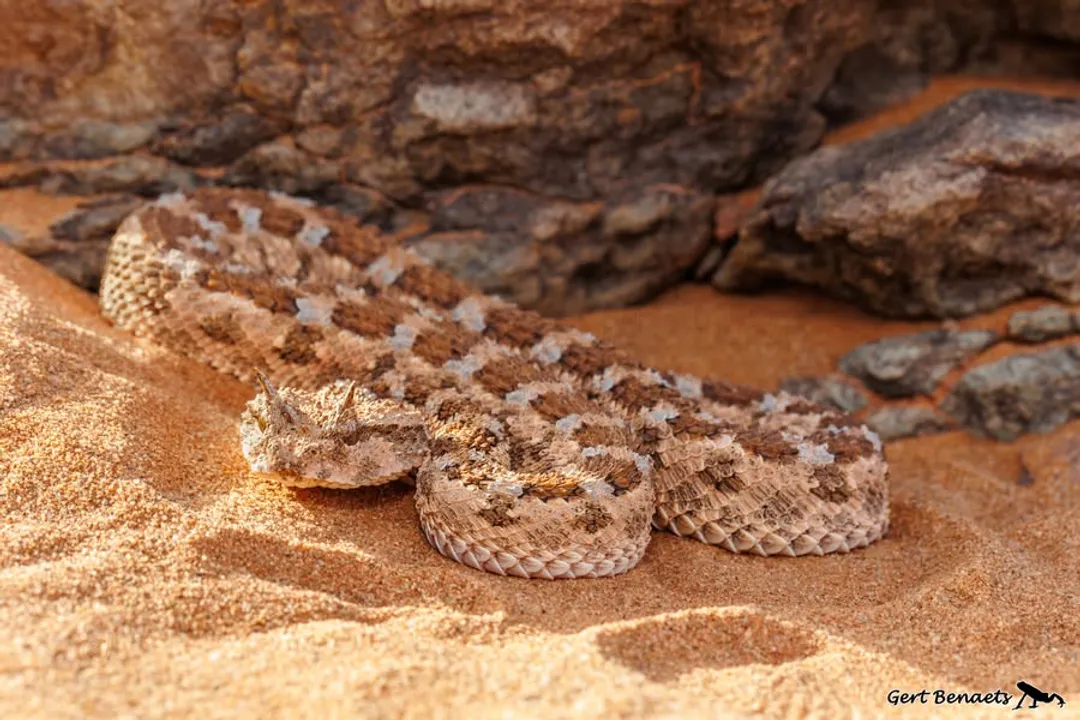
The genus Cerastes encompasses a group of snakes instantly recognizable by their association with arid landscapes, primarily known as the horned vipers due to a distinguishing feature present in some of its members. [1][2][3] Belonging firmly within the family Viperidae, these reptiles are medically significant venomous snakes inhabiting sandy deserts and semi-arid regions across North Africa and the Arabian Peninsula. [1][4][5] Their appearance, often featuring heavy bodies and broad, triangular heads typical of vipers, serves as a clear warning in their harsh environments. [3]
# Genus Classification
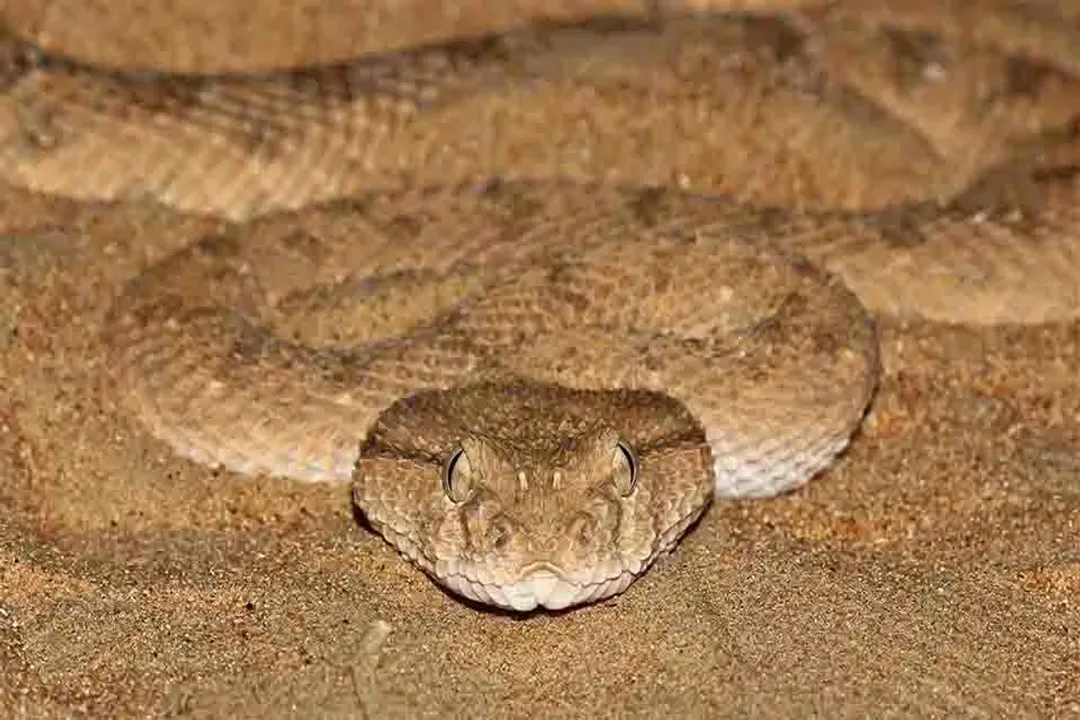
Within the classification hierarchy, Cerastes is a distinct genus of snakes. [1] It falls under the subfamily Viperinae, which groups the true vipers. [1] The taxonomy places them near other desert-dwelling relatives, though they maintain unique characteristics that separate them into their own grouping. [4] Generally, the genus is understood to contain three recognized species, though taxonomic reviews can sometimes cause minor shifts in classification among regional populations. [1][5] The designation Cerastes itself is Greek, relating to a horned creature, referencing the most famous member of the group. [3]
# Physical Characteristics
The most striking feature often associated with Cerastes is the presence of prominent, rigid structures above each eye, commonly referred to as horns. [1][2] These are actually modified supraocular scales. [1] However, it is crucial to note that the presence and size of these horns are not universal across the genus. For instance, while the Desert Horned Viper, Cerastes cerastes, typically possesses these structures, other species like Cerastes vipera often lack them entirely, or they are significantly reduced. [2][5] This variation suggests an interesting evolutionary gradient within the genus, perhaps related to microhabitat differences where camouflage or scale disruption is more or less advantageous. [2]
Beyond the horns, Cerastes snakes share several general viperine traits. Their bodies are typically stout and relatively heavy for their size, which aids in burrowing and navigating loose substrate. [3] The scales are strongly keeled, meaning they possess a raised ridge down the center, which gives the snakes a distinctly rough texture. [1][5] Their coloration is usually cryptic, blending remarkably well with the sands and rocks of their native habitats, running the gamut from sandy yellow and light brown to reddish hues. [1][3] The head is distinctly triangular and broad compared to the neck, housing the venom glands, a standard feature in most vipers. [3]
# Species Included
While the genus is small, the species within it occupy geographically significant areas and possess distinct characteristics worth comparing. [1]
The most widely known species is often considered to be Cerastes cerastes, the Saharan Horned Viper. [1] This snake is the primary bearer of the prominent horns, although even within this species, horn presence can be variable or entirely absent in certain populations—a fascinating case of polymorphism in a genus defined by this very structure. [2] C. cerastes is found across a vast swath of the Sahara Desert and surrounding arid zones. [1]
Another major component is Cerastes gasella, the Saharan Sand Viper or Rhino Viper. [1][5] While it shares habitat with C. cerastes, C. gasella is often distinguished by having one or two distinct horns, though sometimes these can be less pronounced than in C. cerastes. [5] Its distribution centers more toward the Arabian Peninsula and adjacent regions. [1]
A third species historically included is Cerastes vipera, the False Horned Viper or Sand Viper, although older classifications sometimes placed it in Cerastes while modern ones may group it differently or consider it synonymous with other forms; however, for practical identification in the field, it is often recognized by its lack of prominent horns. [2][5] Recognizing these specific species is important for understanding precise distribution patterns and potential differences in venom composition, which can vary even between closely related desert dwellers. [4]
# Desert Distribution
The genus Cerastes is strictly associated with deserts and extremely dry environments. [1][3] Their geographic range spans North Africa, extending from Morocco eastward through the Sahara into Egypt, and further into the Middle East, including areas like the Arabian Peninsula. [1][5] This distribution pattern confirms their specialized adaptation to environments characterized by high temperatures, low precipitation, and often sandy substrates. [4]
In these environments, microhabitat selection is key to survival, particularly regarding temperature regulation. Because they are ectothermic, these snakes must manage their body heat effectively. [3] They are frequently found in areas where the sand surface temperature is manageable, often utilizing the cooler subsurface layers during the hottest parts of the day. [3] If you were tracking these snakes, you would likely find them near dune edges, rocky outcrops, or sparse scrubland where they can find shade or burrow quickly when the sun is high. [5] This reliance on specific thermal gradients dictates their presence even within the vast emptiness of the desert.
# Movement Patterns
Given their sandy habitat, Cerastes snakes have evolved a specialized method of locomotion critical for efficient movement across loose sand: sidewinding. [1][3] This motion involves throwing the body into a series of J-shaped curves, where only two points of the body make contact with the ground at any given time. [3] This technique minimizes contact area, preventing the snake from sinking into the sand and allowing for rapid travel over unstable surfaces. [3]
They are generally nocturnal or crepuscular, meaning they are most active during the night or twilight hours, which helps them avoid the extreme daytime heat of the desert. [1][5] During the day, they often employ a behavior called 'belly burying,' where they vibrate their bodies to sink beneath the surface layer of sand, leaving only their eyes or the characteristic horns exposed, which offers both camouflage and insulation from extreme heat or cold. [3][5] This combination of specialized movement and resting behavior demonstrates a high degree of expertise in surviving extreme heat.
# Toxin Profile
As members of the Viperidae family, all Cerastes species are venomous. [1][3] The venom is predominantly hemotoxic, meaning its primary action is on the circulatory system, causing damage to blood vessels and tissues. [1] Bites from these snakes are serious medical events and require immediate professional attention. [3]
While the venom composition can vary slightly between species and even between individuals within a species, the effects generally involve significant local pain, swelling, tissue destruction (necrosis), and potential systemic effects such as bleeding disorders. [1] The effectiveness of their strike and the potency of their venom make them a significant hazard in the areas they inhabit, even though they are generally reluctant to bite unless provoked or stepped upon due to their reliance on camouflage for defense. [3]
# Adaptations Versus Danger
The adaptations that allow Cerastes to thrive in their environment—perfect camouflage, specialized locomotion, and potent venom—are exactly what make them dangerous to humans who might accidentally intrude upon their territory. [3] Unlike snakes that flee quickly, the Cerastes instinct when threatened, especially if partially buried, is often to remain motionless until the last possible moment. [3]
One interesting point of comparison arises when considering the speed of their strike versus the efficiency of their sidewinding. While their strike is lightning-fast, their overall speed across open hard ground is slower than snakes utilizing concertina or rectilinear movement. [3] This highlights an evolutionary trade-off: maximum efficiency is sacrificed on solid ground in exchange for near-perfect mobility on their preferred, loose, sandy terrain. For anyone traversing desert environments where these snakes live, understanding this defensive posture—remaining still—is key. It means that the majority of bites occur when a person moves onto the snake, triggering a defensive reaction, rather than when the snake actively chases a threat. [3] Recognizing the substrate camouflage—looking for patterns in the sand that seem too regular—can be a non-intrusive way to spot them before they feel the need to defend themselves.
The genus Cerastes thus represents a specialized lineage of Old World vipers, perfectly sculpted by the relentless pressures of desert life, where every scale and every movement is tuned to conserve energy and evade detection in the sand. [1][4]
Related Questions
#Citations
Cerastes (genus) - Wikipedia
Cerastes cerastes (Desert Horned Viper) - Animal Diversity Web
Cerastes | Desert, Horned, Vipers - Britannica
Cerastes (genus) - Citizendium
Phylogenomics unravel an unexpected evolutionary history for the ...
A Grammatical Dictionary of Botanical Latin
Cerastes: facts, distribution & population - BioDB
Cerastes cerastes - The Reptile Database
Desert horned viper - Cerastes cerastes - Morocco 10/2024