What is a fangtooth?
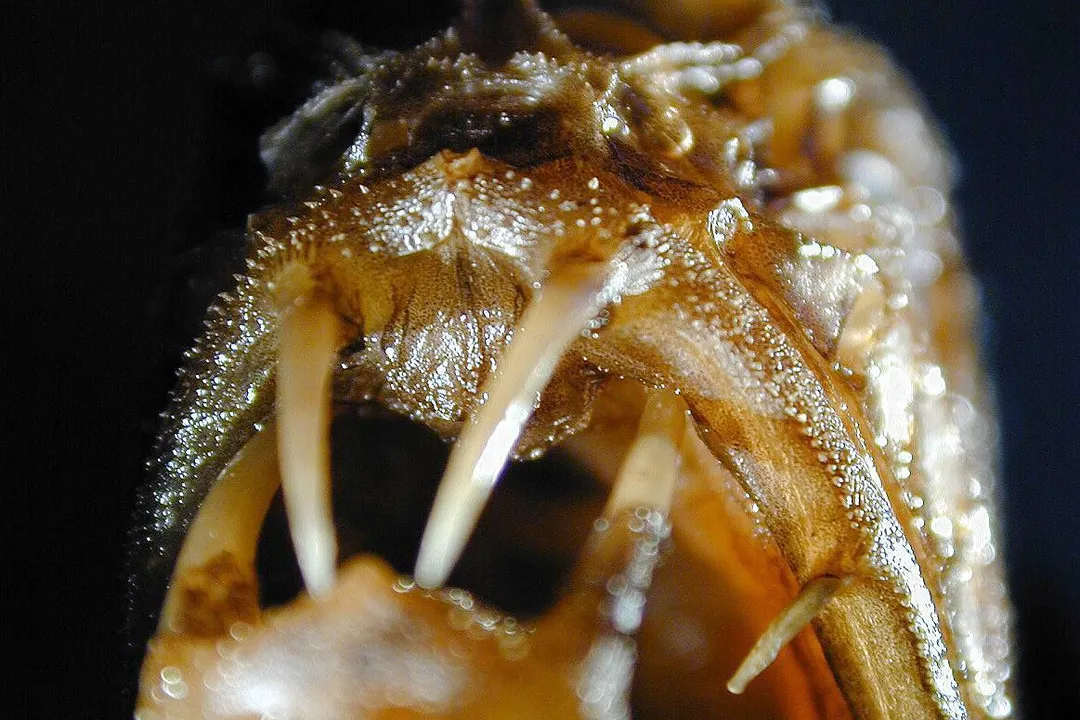
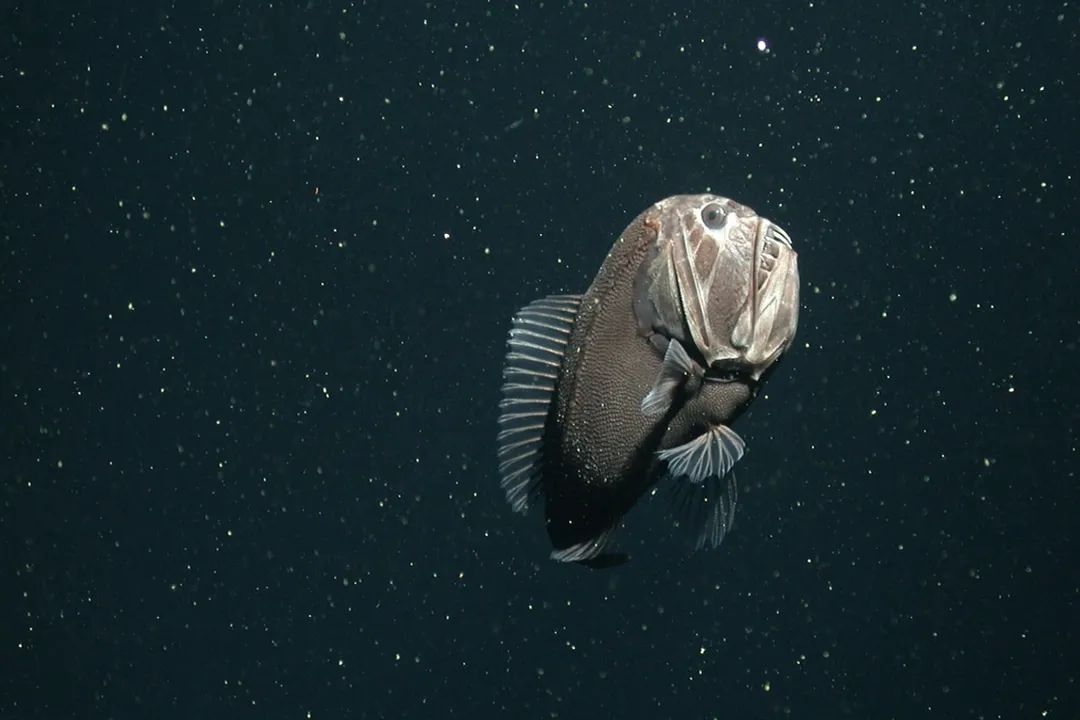
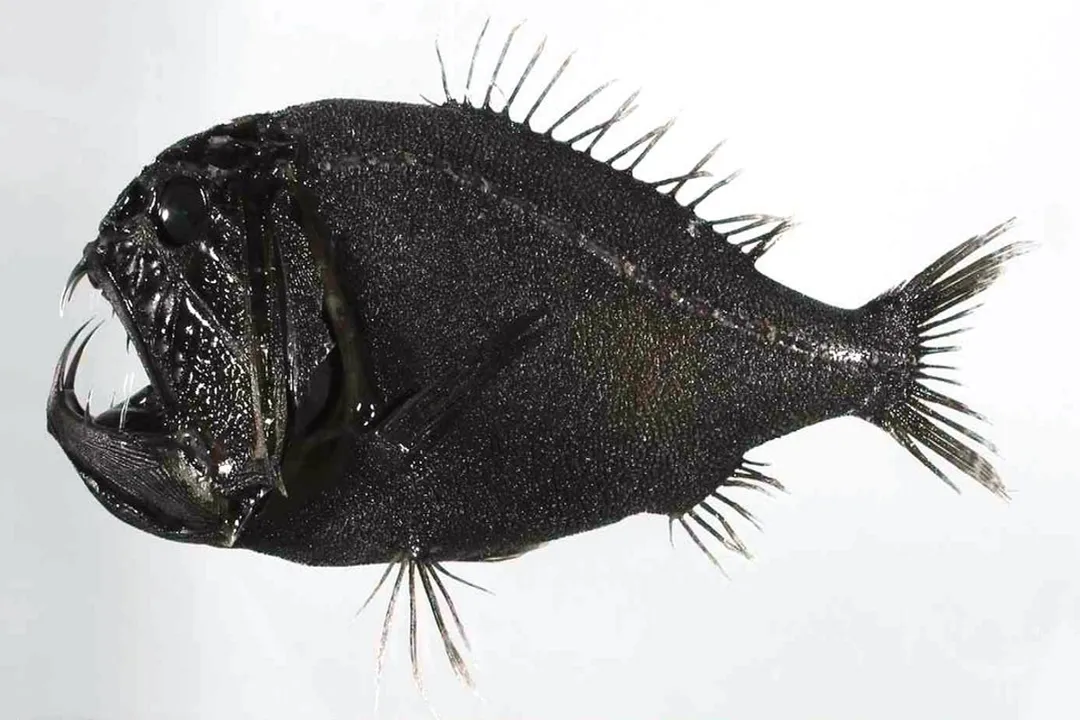
The fangtooth fish, scientifically known as Anoplogaster cornuta, presents one of the most startling visages from the ocean's twilight and midnight zones. Despite its terrifying appearance, which is dominated by exceptionally long teeth, this creature remains relatively small, typically reaching a maximum length of about 6.5 inches or 16 centimeters. [1][3][5] Found across the world’s tropical and temperate oceans, this species is a true deep-sea resident, often inhabiting waters thousands of feet below the surface. [1][2][3][9] Its common name is an immediate clue to its most remarkable feature, setting it apart from many of its deep-dwelling relatives. [1]
# Fearsome Dentition
The defining characteristic of the fangtooth is undeniably its dental armamentarium. The name itself derives directly from these impressive teeth. [1] In fact, the fangtooth possesses the longest teeth relative to its body size of any fish in the ocean. [1][3] Its large jaws are equipped with two prominent fangs on both the upper and lower jaws, which are so disproportionately long that they appear almost comical on such a small body. [1][4]
When the fangtooth closes its mouth, these massive lower teeth fit neatly into specialized sockets located in the roof of its skull, near the braincase. [1][3][4] This ingenious adaptation prevents the teeth from piercing the fish's own brain tissue, a necessary feature when your primary weapons are longer than your eye diameter. [3] The interlocking nature of its teeth suggests an evolutionary pressure toward securing prey immediately and decisively. [1] While visually intimidating, these features are perfectly suited to the low-energy, high-pressure environment in which it lives. [1][4]
# Dark Dwelling
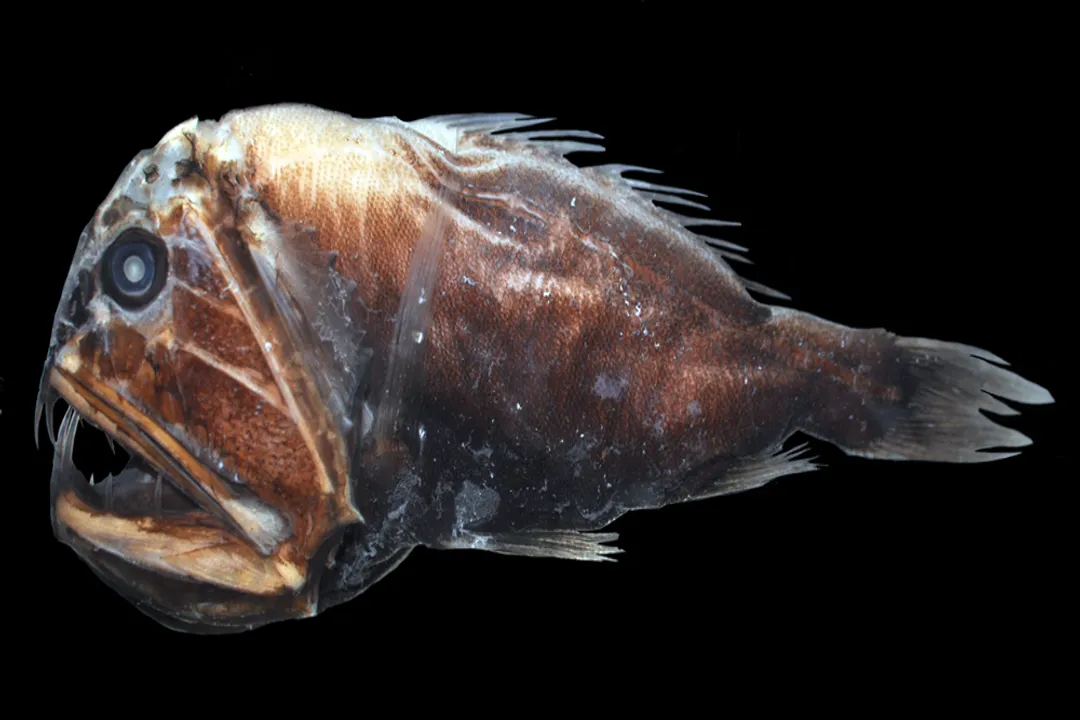
The fangtooth generally exhibits a dark coloration, appearing black or very dark brown, which aids in camouflage in the perpetual darkness of its habitat. [1][9] Its eyes are large, suggesting a high degree of light sensitivity, which is essential for detecting the faint glimmers of bioluminescence from potential prey or mates in the deep. [1][3]
This fish occupies a vast vertical range within the ocean. While adults are most commonly found in deeper waters, sometimes descending below 5,000 feet (1,600 meters), [1][2][3][9] the species shows a pronounced difference in depth preference based on age. Juveniles tend to inhabit shallower, more surface-proximal waters, often staying above 3,300 feet (1,000 meters), whereas adults migrate much deeper. [1][2][4] This distributional shift suggests that the young might exploit different food sources or avoid predation in the upper layers before descending into the adult environment. [4]
For a fish like the fangtooth, spending most of its life below 1,000 meters means it exists in an environment where available food resources are extremely sparse, making its specialized ambush equipment, however fearsome, a necessity for survival rather than just an advantage. [1][2] The enormous fangs are an evolutionary commitment; in the low-light, low-energy environment of the deep ocean, having such large, seemingly unwieldy teeth suggests that successful predation, when it occurs, must be decisive, as the energetic cost of growing and maintaining such structures is significant for a slow-moving deep-sea dweller. [1][3]
# Deep Ecology
As a member of the twilight zone and below, the fangtooth is firmly placed in a carnivorous niche. [2][3] Its diet consists primarily of smaller fish and various crustaceans that drift or swim within its reach. [3][9] Unlike many other deep-sea predators that might rely on specialized lures or large, distensible stomachs to capitalize on rare, large meals, the fangtooth seems equipped for a more immediate, perhaps opportunistic, strike against available smaller prey. [1]
One interesting observation comes from aquariums that have successfully kept these fish alive for study, such as the Monterey Bay Aquarium. [2][5] In these controlled settings, researchers can directly observe their feeding habits, confirming their carnivorous nature. [2] It is important to note that the fangtooth does not produce its own light, unlike many fish inhabiting the same dark zones; it relies entirely on ambient or biological light sources, positioning it as a hunter rather than a lure-based predator. [2]
# Classification Details
The fangtooth belongs to the order Stomiiformes, a diverse group often associated with deep-sea environments. [1][8] Specifically, it is classified within the family Anoplogastridae. [8] The scientific name, Anoplogaster cornuta, refers to its classification, with cornuta relating to the horns or pointed features, likely a reference to its massive teeth. [8] While the common name is singular, it represents a single extant species within its genus. [8]
This fish exhibits a level of hardiness that allows it to survive the immense pressure changes encountered when being brought up from the deep, although this survival is often temporary for research or display purposes. [2][5] Researchers studying the species have often relied on remotely operated vehicles (ROVs) to observe them in their natural habitat, as capturing live specimens from extreme depths without injury is inherently challenging. [4][5] The ability to observe them in situ helps scientists understand their movement and behavior under natural conditions, which is far superior to simply examining specimens retrieved via trawling nets. [4]
#Videos
Fangtooth Facts: a FREAKY FISH Animal Fact Files - YouTube
Related Questions
#Citations
Fangtooth - Wikipedia
Fangtooth | Animals - Monterey Bay Aquarium
Fangtooth Fish | Smithsonian Ocean
Fangtooth - MBARI
Fangtooth Facts: a FREAKY FISH Animal Fact Files - YouTube
Creature Feature: Fangtooth - The Ocean Twilight Zone
The fangtooth (Anoplogaster sp.) is a deep sea fish is named after ...
Fangtooth, Anoplogaster cornuta (Valenciennes, 1833)
Common Fangtooth | Oceana
Fangtooth | Weird n' Wild Creatures Wiki - Fandom